The Fudan–Washington University EMBA Program presents the Life Energy Field series, inviting you to converse with our students and alumni and experience the energy shared across diverse life journeys.
Sara Ma leads Commercial Excellence for Medtronic’s Diabetes business and is an outdoor climber who has summited a 6,200-meter snow peak. Navigating between her career and mountain pursuits, this Class 19 alumna of the Fudan–Washington University EMBA Program has found her own Life Energy Field. In this session, she talks with Paul Shao, Program Director, about energy replenishment, extreme challenges and teamwork.
How do you understand the concept of an "energy field"? And how do you usually recharge or energize yourself?
For me, recharging happens on three levels. Physical: early nights and early mornings, healthy eating, three to four workouts a week, plus weekly Traditional Chinese Medicine care — an order I build into a busy life. Mental: constant reading and learning, painting Chinese art in my spare time, and connecting with like-minded friends — my classmates still gather regularly — which fuels my focus, learning, and creativity. Spiritual: in recent years I've spent more time outdoors, reconnecting with nature and exploring faith, which brings me inner calm and certainty. Climbing snow mountains, to me, is where all three levels of energy come together.
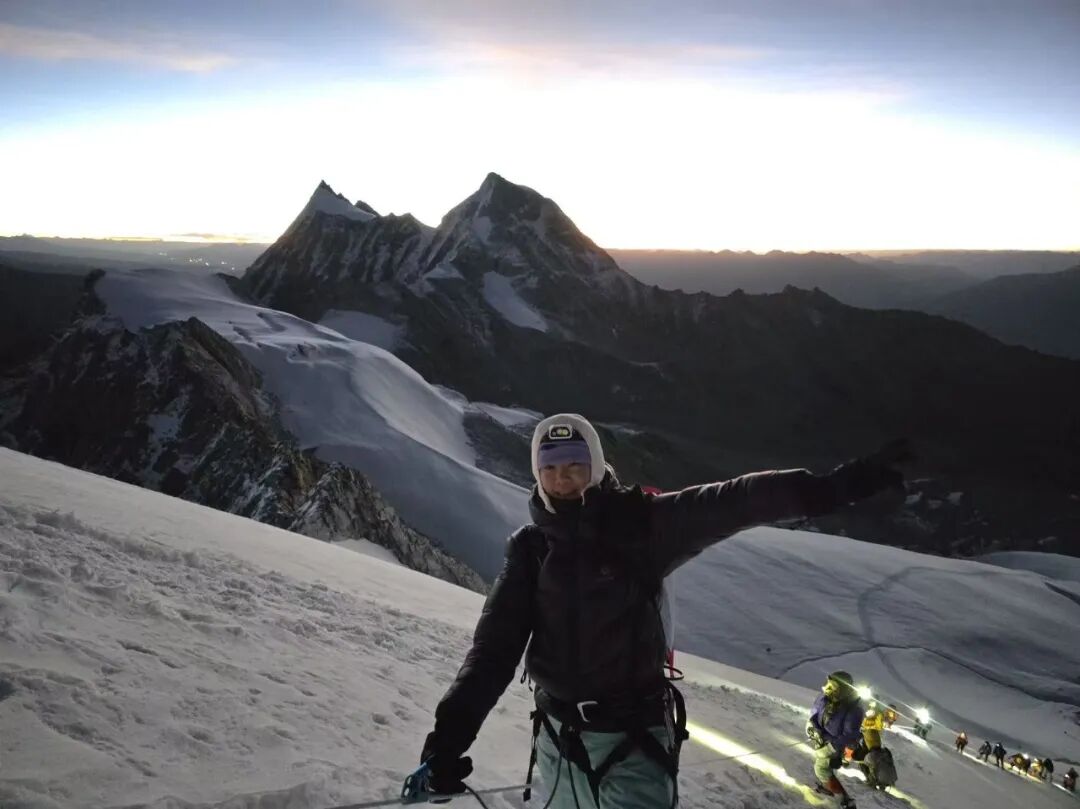
When did you first realize that the outdoors could give you energy?
During my time in the Fudan University–Washington University EMBA program, after too many hours indoors, I found myself craving sunshine and a connection with nature. That's when I took up camping and hiking, and then the algorithm pushed a video of Haba Snow Mountain my way. I thought, "I can do that" — so I tried. Call it the fearlessness of the ignorant, but the experience gave me far more than I expected.
First, I learned I don't get altitude sickness — which matters a lot. Second, before my first climb, I trained seriously: snow climbing uses the same muscles as running, so I ran or did stair climbing daily to build my glutes and legs. Third, gear must meet the standard — your life depends on it. The rule of thumb: if you can comfortably run 10K, three months of training will get you up a 5,000-meter snow mountain.
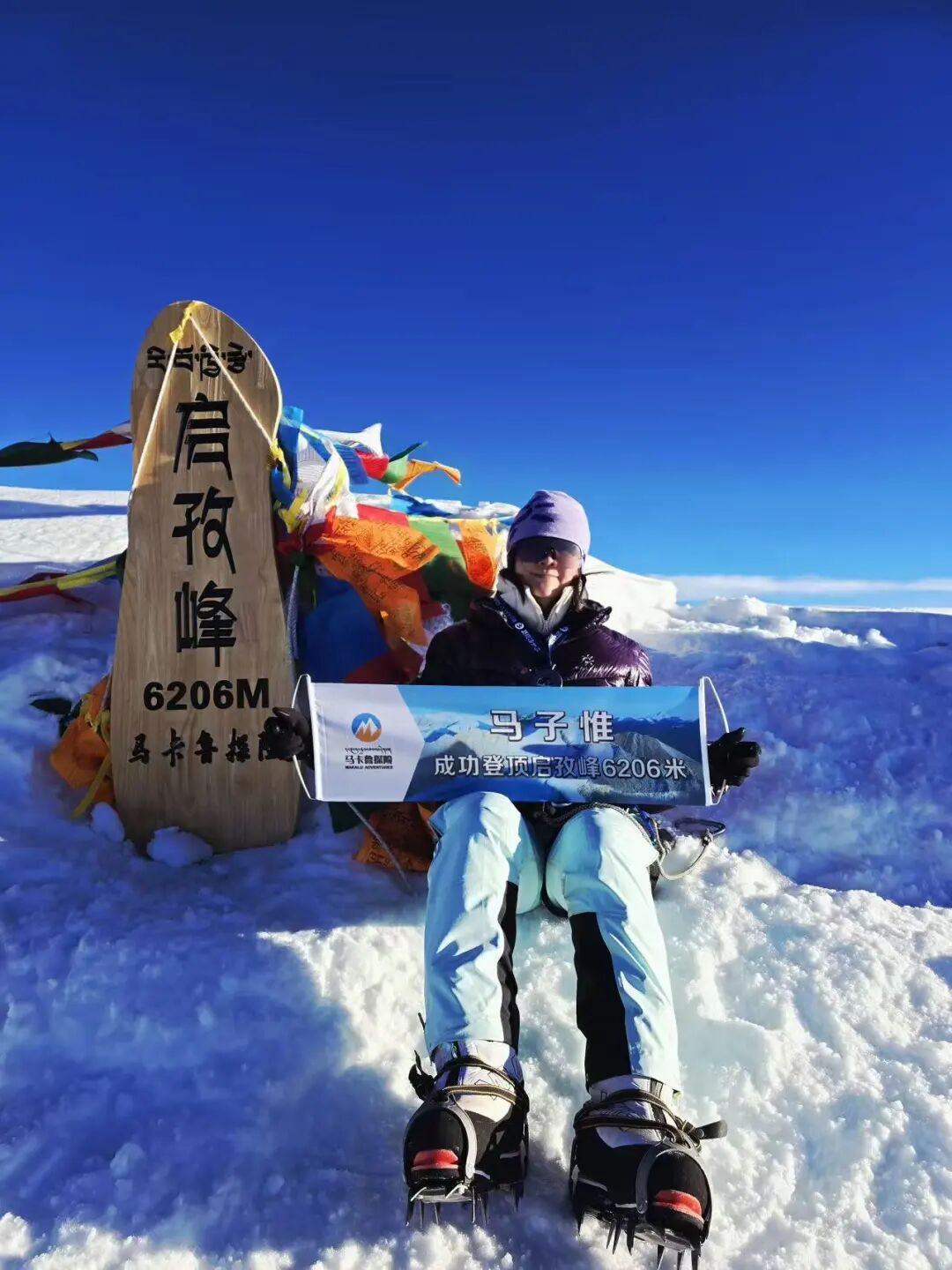
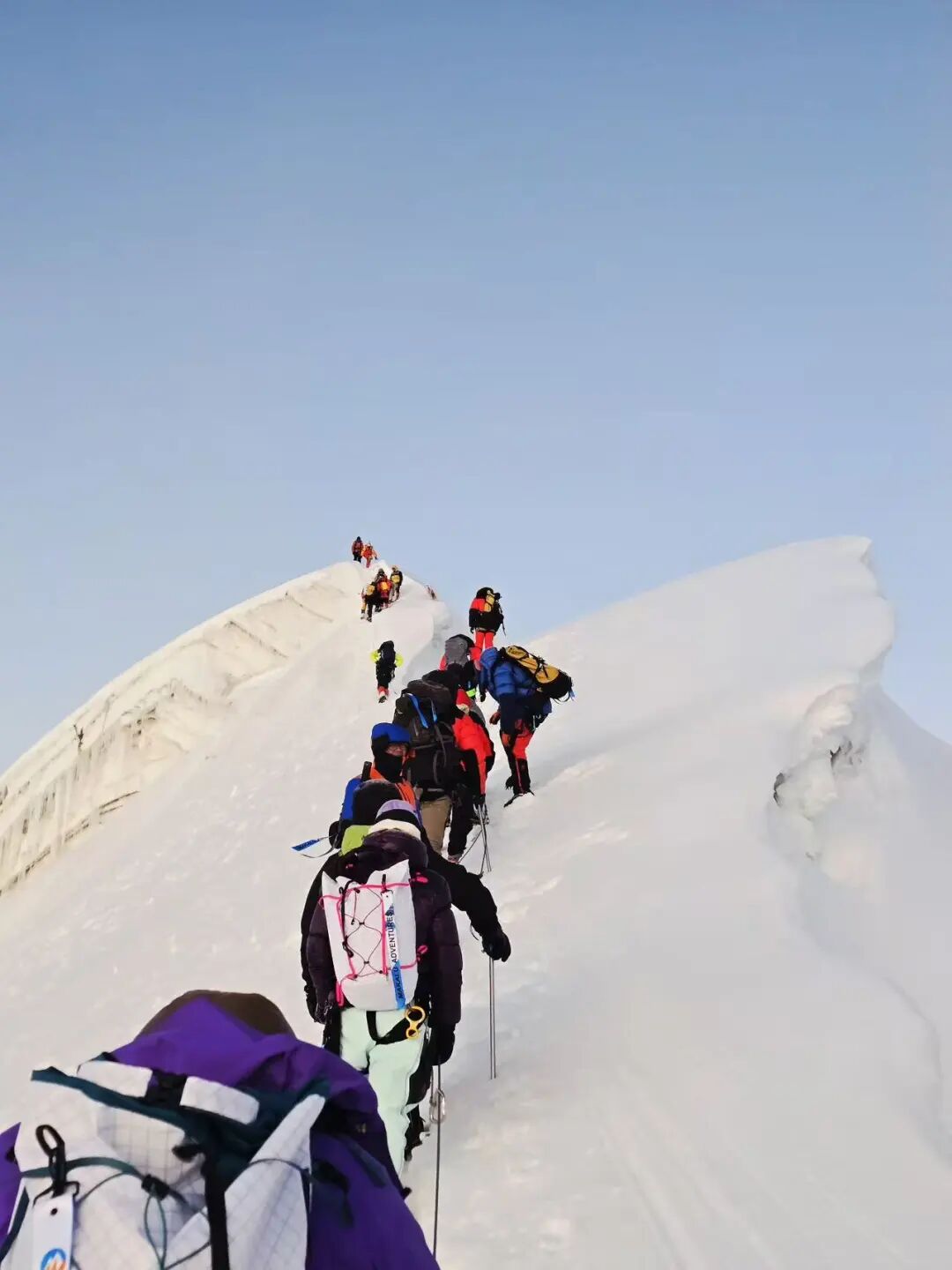
那At that moment, what kept you pushing onward and upward? And how did you feel after reaching the summit?
I didn't dare look up, and I didn't dare look down — I could only focus on each breath, each step. That near flow-state experience is something I rarely get from everyday work. Reaching the summit brought only a brief sense of achievement; what stayed with me more was a calm kind of fear. The ridge at the top was narrow — each of us could stay just five minutes for a photo before making way for the next climber. But the real reward of climbing a snow mountain isn't in the moment you summit; it's in the entire journey.
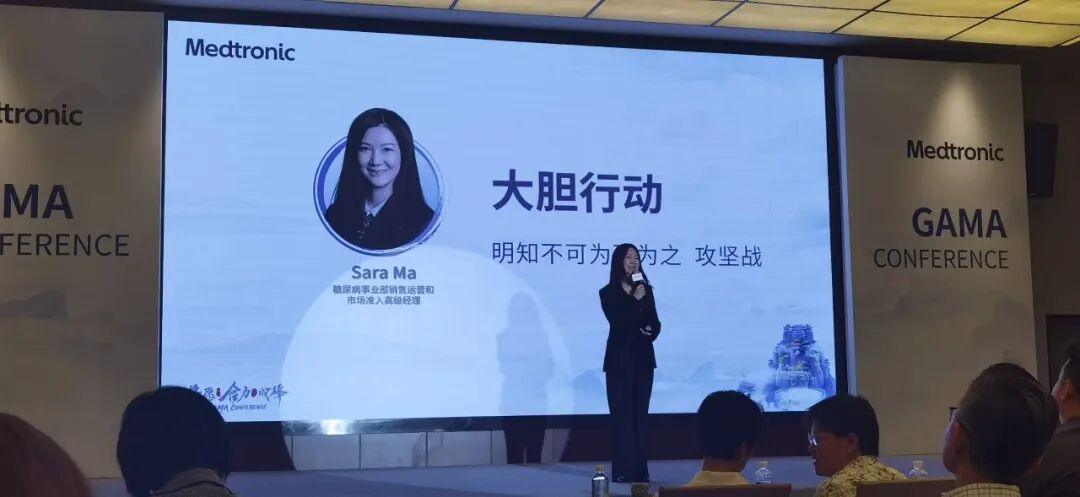
After experiencing a real climb, what do you see as the biggest gap between the Everest simulation and reality?
In real life, I came to understand the importance of teamwork on a much deeper level. I remember that in one of the course simulations, I was assigned the role of team medic — and even though it was just a simulation, I still feel a sense of regret about it. The course was designed to teach us collaboration, but it wasn't until I got outdoors that I truly grasped what it means. Climbing is never about individual heroism — even in commercial mountaineering, you climb with guides.
What stays with me is a moment on Qizi Peak. There was a near-vertical ice wall, close to 90 degrees. My hands were frozen stiff, and without a moment's hesitation, my guide gave me his gloves. That kind of encouragement from a teammate carried me through the climb. In that moment, I truly understood what it means for a team to have yourback.
Back in the business world, how has your snow mountain climbing
experience influenced the way you manage your team?
My team is like the "oxygen supply" and the "safety rope" — when business teams feel suffocated or drained in complex environments, our job is to help them clear a path and replenish their energy. And like a fixed rope, we need to support and back them up as they push forward, making sure everyone can reach the summit and see views they could never see before.
Do you have any tips for easing anxiety that you could share with young people?
Turning 35 is like standing halfway up a mountain: looking down, you can see the path behind you; looking up, the summit is still far away. My own takeaway is this: if we shift our attention away from the fixed track and venture into the wider open field of life — say, climbing a mountain, or picking up a hobby with no practical purpose — this "free and 'useless'" energy will give you a different kind of inner strength.
Take myself, for example. When facing intense work and study, I practice "physical separation": in class, I leave my work phone and laptop outside so my role is purely that of a student. During breaks, instead of rushing to answer emails, I stretch, look into the distance, or chat with classmates. I treat every assignment like a climb — the sense of achievement it brings is different from what work gives me. Managing energy isn't about allocating scarce resources; it's about becoming a creator of energy — replenishing yourself for each role, rather than draining yourself.