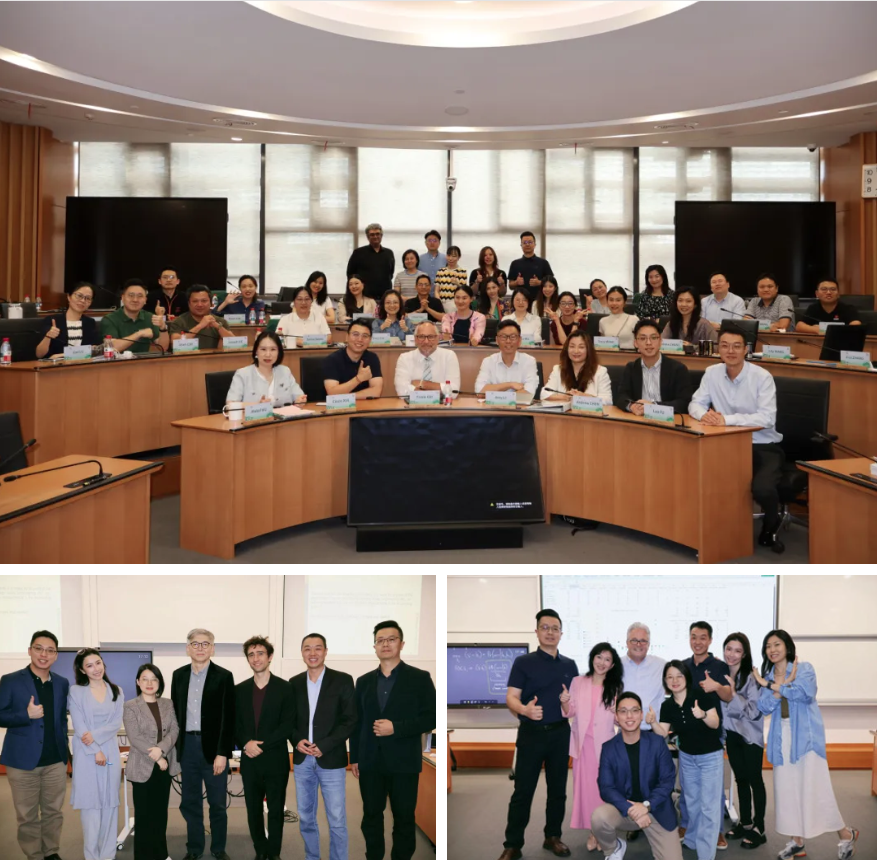
Flying across a thousand miles every month from Taipei to Shanghai, Andrew Chen of Class 23 of the Fudan University–Washington University EMBA program specializes in financial technology and behavioral risk management, pursuing a balance between his finance career and cross-regional learning.
In this episode of "Life Energy Field", he sat down with Paul Shao, Director of the Fudan–Washington University EMBA program, for a conversation on positive and negative energy, teamwork, and AI empowerment. Join us as we explore how he has built his own energy-management system through exercise, reading, and the application of technology.
Q1 How do you understand the concept of "energy field"? Could you share one or two short stories about energy with us?
I see energy as having two poles—positive and negative. Positive energy is, at its core, drive: the urge to better oneself, and it is precisely what motivates me to fly here every month. Companionship is what matters most.My classmates and teammates—our monthly modules are intense, and it is through mutual support, help, and encouragement that we push through and complete our work with real momentum. There is also a sense of team honor: my peers are formidable, and I have no wish to be the weak link.
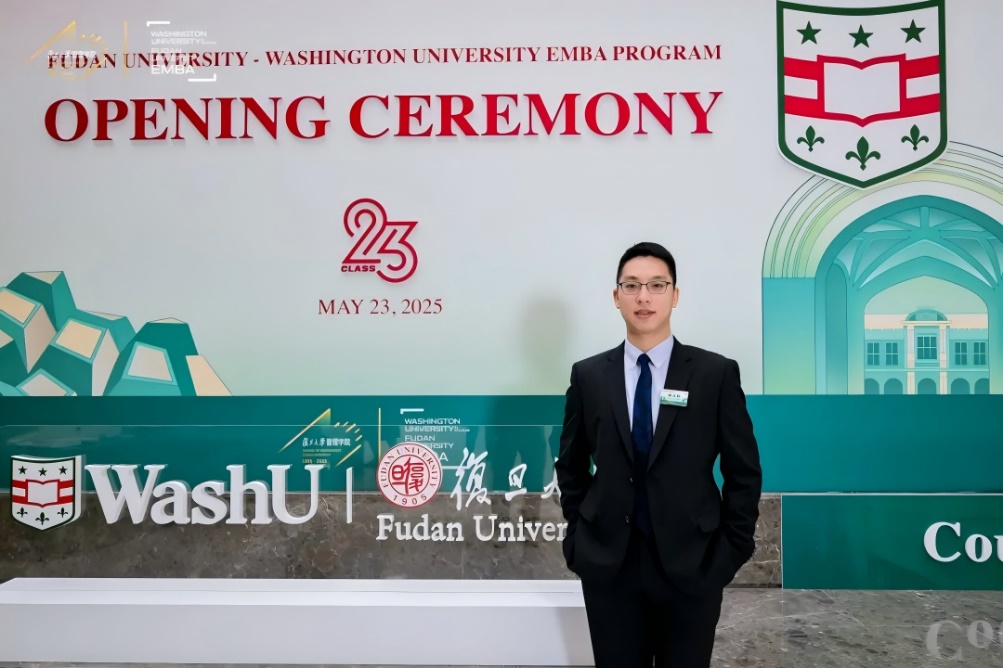
We are often told that positivity is essential and pessimism must be avoided. Yet I view negative energy as a necessary counterweight—a braking mechanism. When we insist "I'm fine, I've got this," the occasional flicker of anxiety actually gives us cause to step back and take stock. When I applied to the Fudan–Washington University EMBA, I saw how accomplished its students and alumni were, and I worried about keeping pace with such peers. That very unease led me to examine my strengths, reconsider what I could contribute to the cohort, and candidly assess my weaknesses.
Q2 Beyond your busy professional life, what activities do you favor in your leisure time, and in what way do they enhance your energy?
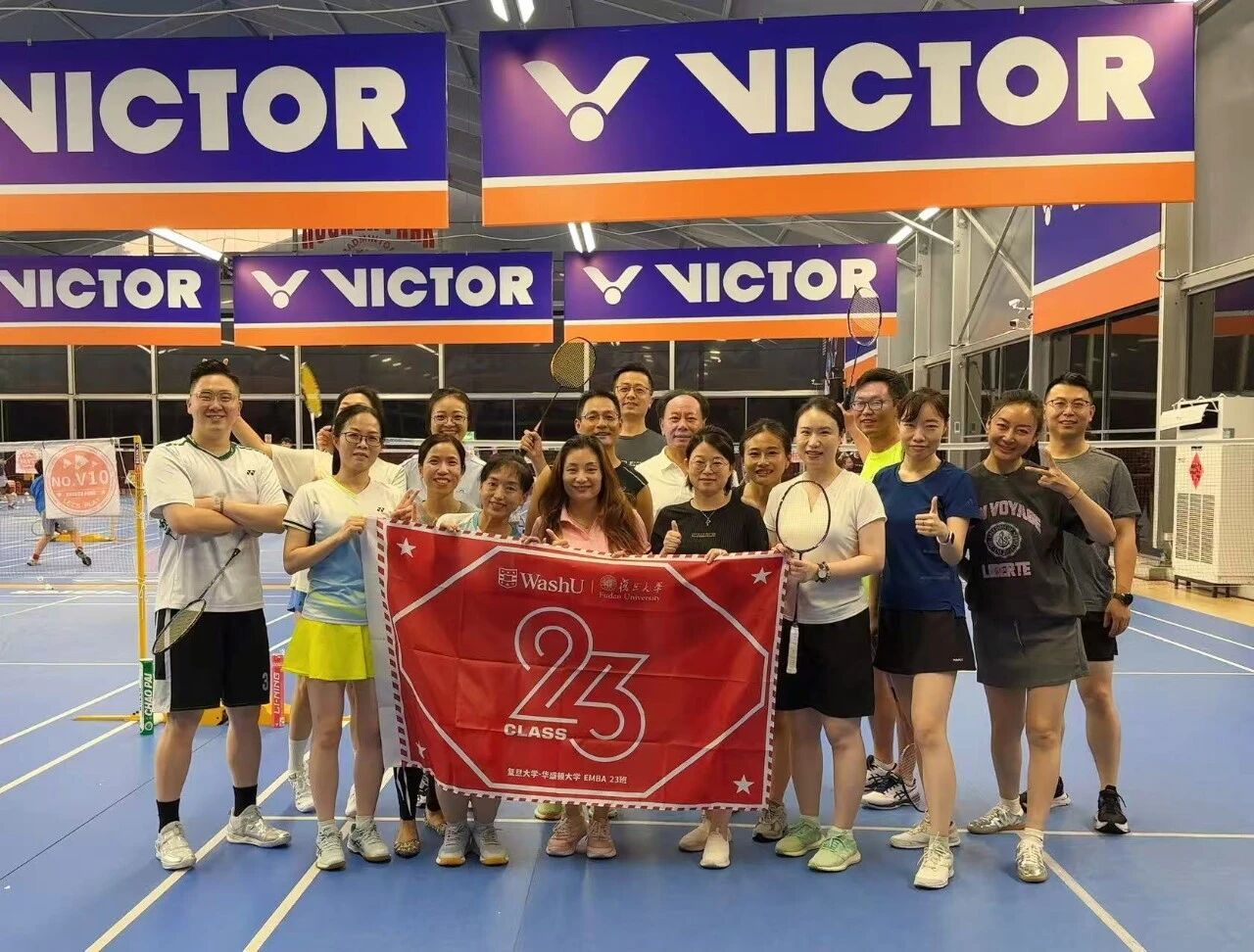
My greatest passion is sport—badminton and swimming above all. Since joining the program, I play badminton with classmates each month, and on court I came to appreciate the importance of "covering" for one another. Say I anticipate your move while you assume I'll cover your position; without timely communication, that false sense of rapport lets the shuttle drop. It mirrors cross-functional collaboration at work: rapport is one thing, but it can never replace proactive communication.
Swimming is the other pillar. As a former competitive swimmer, we had a term—"hitting the wall." However, seasoned the athlete, there comes a stage when the muscles give out and you stall at a plateau. The only way through is disciplined, almost mechanical repetition—stroke, kick, breathe—until you break through into a new state.
For me, swimming is also a release: clearing the mind to process emotion. It is a kind of "dynamic meditation"—submerged, the world goes quiet, and you settle into breath and rhythm, entering a state of flow. Together, these sports sustain my fitness and help me find clarity and equilibrium between motion and stillness.
Q3 Each month you make a dedicated trip from Taipei to Shanghai for class, immediately followed by four straight days of intensive study. What prompted this choice—and how do you manage your time and energy?
My drive to fly here each month is simply the desire to better myself. The mutual support, help, and encouragement among classmates give us the positive momentum to finish our work, and our shared sense of team honor is what sustains my two-city commute. I also manage my energy by building good "small habits." Reading Atomic Habits lately, I've learned to start with tiny actions, let energy accumulate, and let compounding do the rest. Rather than resolving "I will exercise every day," begin with "I'll put on my workout clothes." The point is to build a cue–routine–reward loop that makes good habits sustainable. I apply the same method to study and work—setting work devices aside before class, stretching briefly between sessions to reset. These small rituals help me shift smoothly between roles and keep recharging. Sport, too, is vital to regulating energy: my weekly games with classmates both relieve stress and keep me fit.
Q4 What is your vision for your future in the field of digital finance?
Ever since I entered consulting, my work has been about systematization—converting human tasks into computer-assisted, even automated, processes. Adopting AI tools on the job is simply the next stage of that evolution.
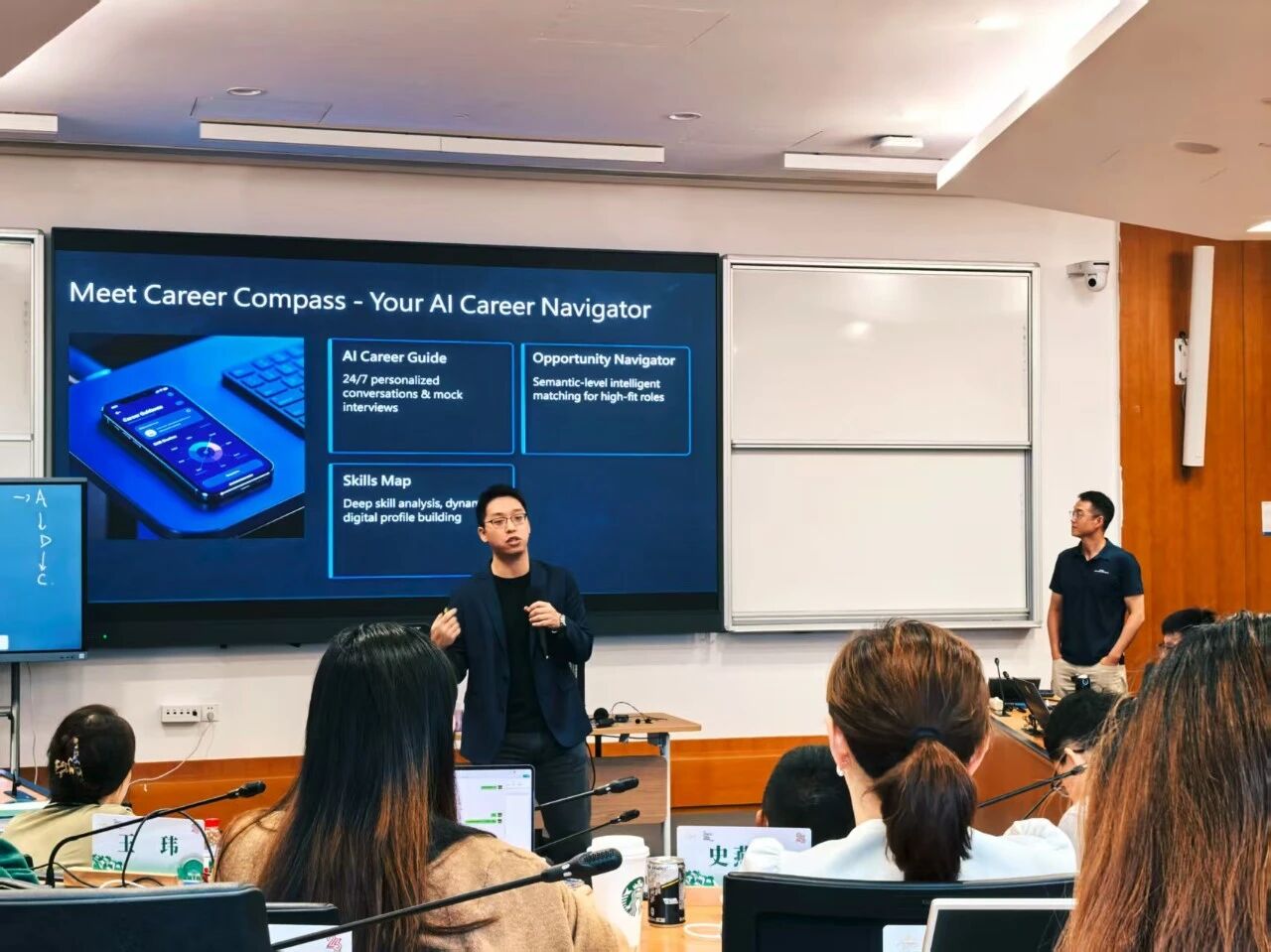
From how we think to how we manage day to day, AI integrates seamlessly. Going forward, I aim to keep deepening my expertise in fintech and embed AI into corporate strategy and governance. In risk management, for instance, AI can analyze vast, complex datasets—especially in emerging areas like crypto—delivering monitoring and insight that were once out of reach. I hope to keep exploring where technology meets finance, driving the industry toward greater digitalization and intelligence.
Q5 What was your greatest hope in applying to this program, and what experience would you like to share with us?
Beyond the systematic knowledge of organizational management andteamwork I gained from the curriculum, I found in my classmates a wealth of diverse perspectives and hands-on experience. Our cohort's atmosphere is remarkable—everyone shares openly. On AI tools, for instance, classmates exchange ideas on using them as thinking aids rather than mere production tools. Such high-quality interaction fuels my continual growth and reaffirms the value of this learning journey.