Pain, Breakthrough, and Transformation: A Deep Dialogue on How Technology Enterprises Navigate Economic Cycles
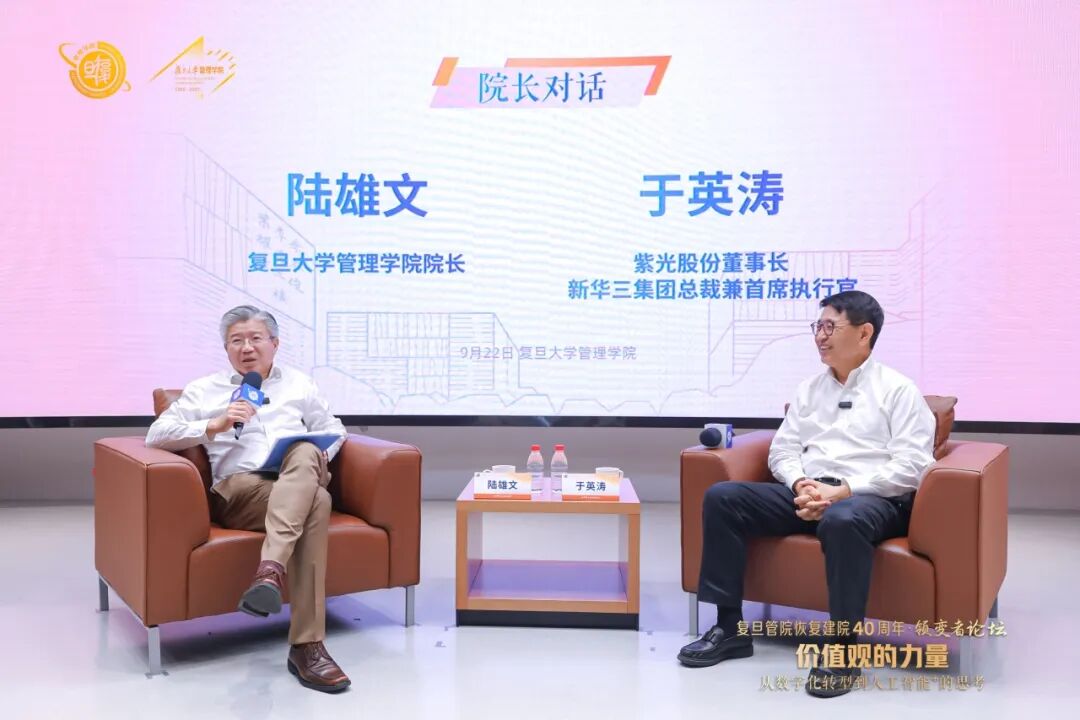
Dean Xiongwen Lu in Conversation with Yingtao Yu, CEO of H3C Group
Why was H3C Group able to break the so-called "death trap" of mergers between companies of similar scale -- a fate that has undone many corporate integrations worldwide? How did this leading provider of digital and AI solutions, combining the entrepreneurial drive of a Chinese private enterprise with the openness and professionalism of a multinational corporation, identify a breakthrough path within the competitive landscape of large-scale firms? And as being "subject to U.S. sanctions" has increasingly become an unconventional marker of success for Chinese technology companies, how can Chinese enterprises safeguard their technological foundations amid geopolitical contestation?
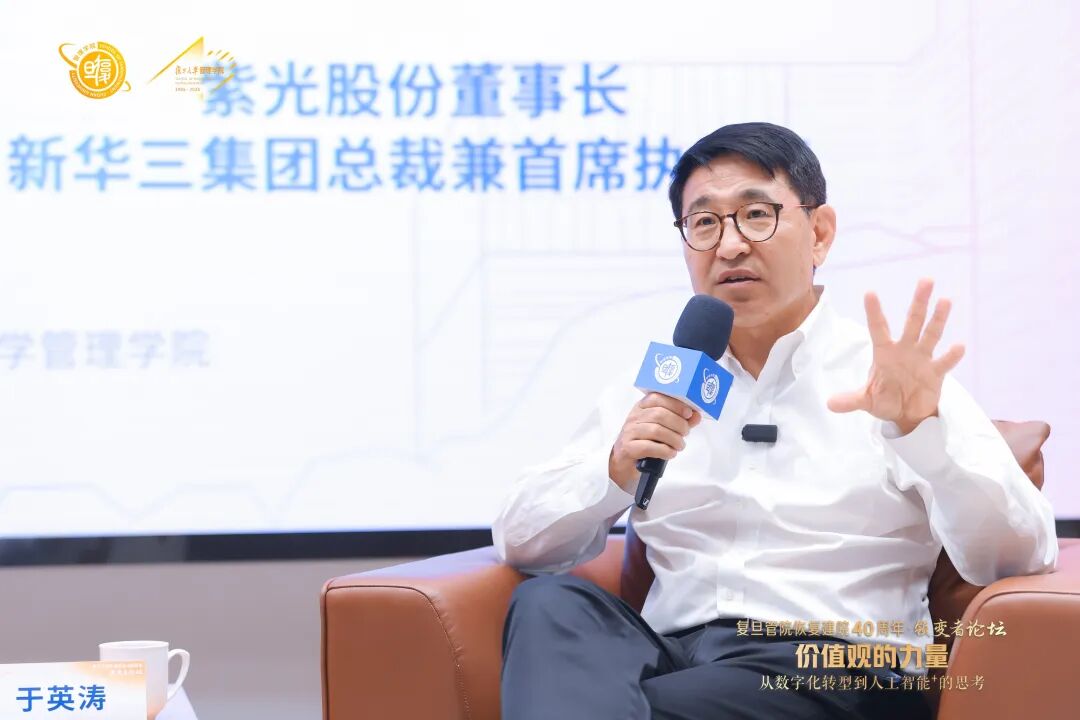
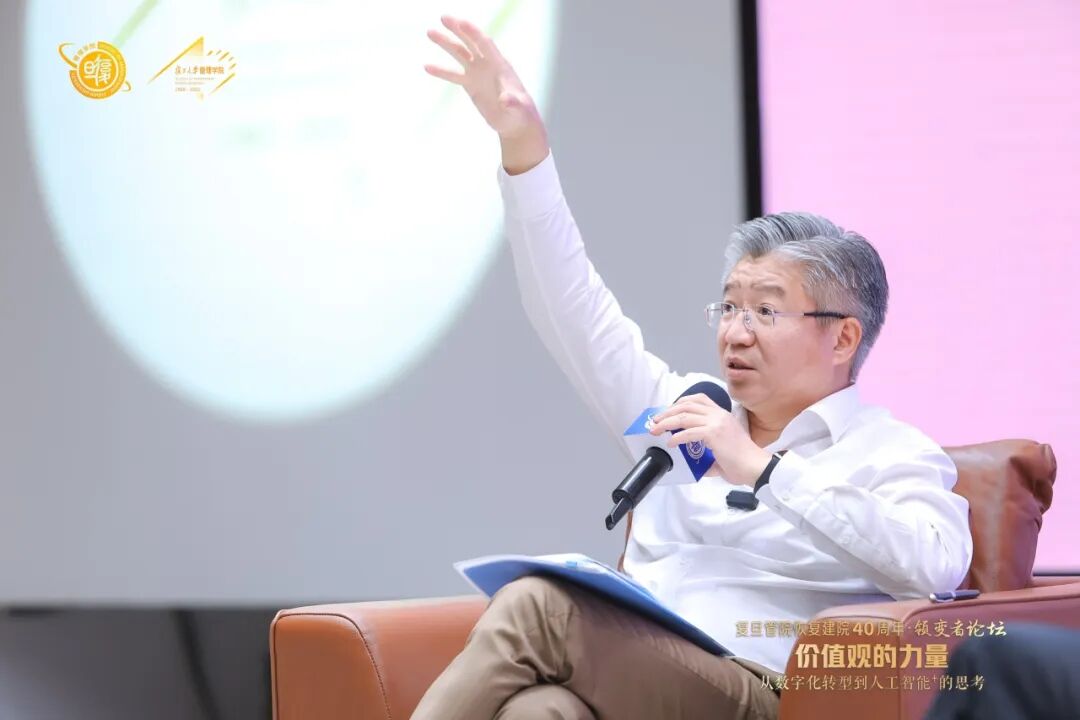
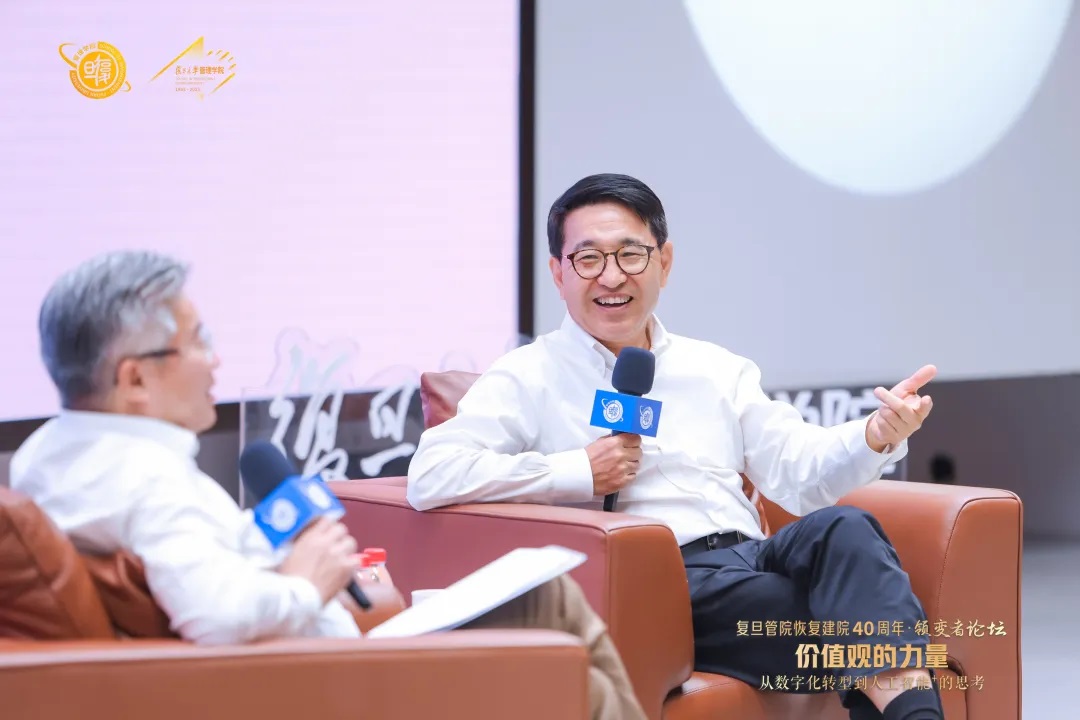
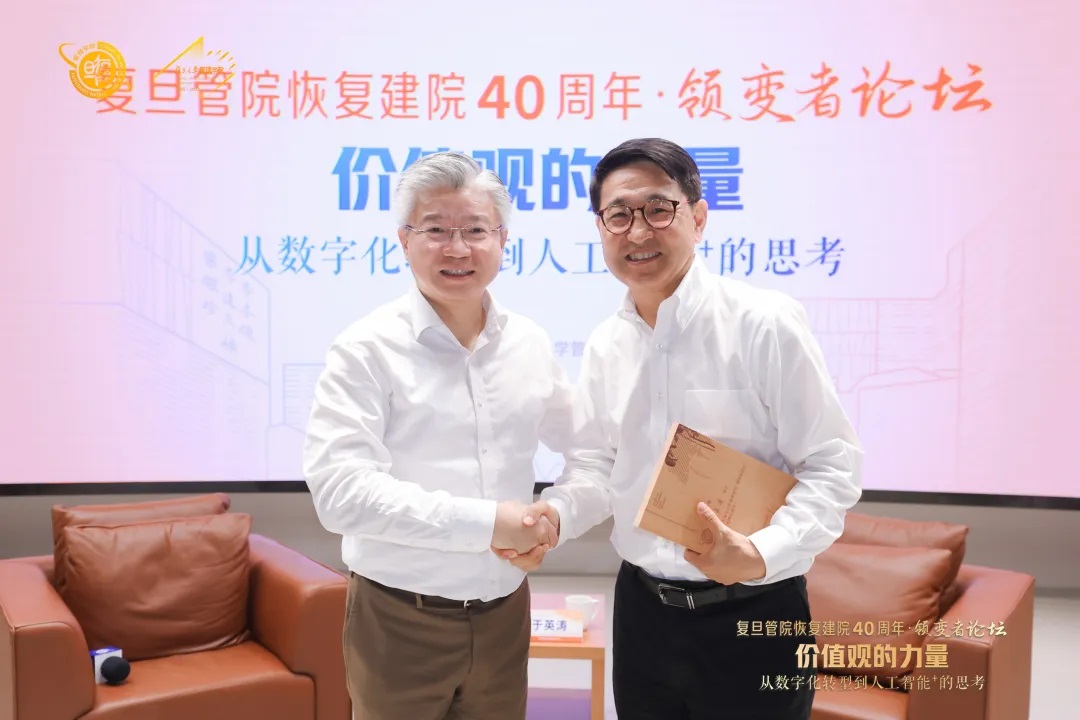
Recently, at the "Trailblazers Forum" held in celebration of the 40th anniversary of the re-establishment of School of Management at Fudan University, Yingtao Yu, Chairman of Tsinghua Unigroup, and President and Chief Executive Officer of H3C Group, engaged in an in-depth dialogue with Professor Xiongwen Lu, Dean of School of Management, Fudan University. Their conversation explored core issues including corporate integration, cultural reconstruction, R&D strategy, technological "moats," and talent mobility -- unpacking the growth trajectory of H3C while reflecting broader lessons on survival and breakthrough for China's high-tech enterprises in an era of profound transformation.
On Corporate Culture: Shared Values as the Foundation of Collective Strength
Dean Lu:
In global merger cases, integrations between companies of comparable size often fail due to mutual resistance. Even when a large company acquires a smaller one, integration may still falter, ultimately leading to separation. During H3C's integration process, many key personnel departed, yet after a brief decline, sales rebounded quickly. Of that rebound, where did the reported 63% contribution primarily come from? Was it driven by the local DNA of Hangzhou H3C, or by the multinational heritage of Hewlett-Packard (HP)?
Mr. Yu:
At the time, HP China functioned primarily as a branch organization with sales and service teams, but without in-house R&D capabilities, whereas H3C (Hangzhou) was a fully independent company with comprehensive R&D teams. The two organizations differed fundamentally in personnel structure. Ultimately, the recovery in performance resulted from joint contributions.
Employees from HP emphasized inclusiveness, openness, and professionalism, with stronger expertise in computing and storage. Employees from H3C embodied a strong spirit of dedication and innovation, with deeper expertise in networking. At that time, H3C had more than 3,000 R&D engineers, providing a significant advantage in research and development.
We took several key actions.
First, we rapidly adjusted sales policies and reorganized teams through cross-training, forming integrated units based on a "sales + SE (sales engineer) + TS (technical service)" model. Each team included members from both H3C and HP.
Second, we restructured the workforce and urgently recruited industry talent. I firmly believe that talent is the foundation of enterprise development. While personnel costs are high, when talent is properly deployed, the cost-to-contribution ratio becomes almost negligible.
Third, we avoided competing on single products or engaging in price wars. At the time, most Chinese companies specialized either in networking or servers. Huawei and H3C were among the few with both. We therefore introduced a "total solution" strategy, leveraging comprehensive product lines and integrated solutions to achieve breakthrough.
Dean Lu:
After H3C was formally established, you reshaped its corporate culture. From your personal perspective, how much of today's H3C culture comes from HP, and how much from the original Hangzhou H3C?
Mr. Yu:
It is difficult to quantify precisely, but if a proportion must be given, I would describe it as a "40-40-20" structure: 40% from Hangzhou H3C, 40% from HP, and 20% from my own understanding and articulation of corporate values.
At its core, values are shared understandings and collective beliefs -- rooted in common sense and logic. Our culture centers on "customer focus, innovation, passion, and win-win cooperation." We emphasize acting in accordance with market principles and logic, while upholding integrity, accountability, and unity between words and actions.
Dean Lu:
You are being so modest. I believe your personal role has been decisive. Steering a large enterprise is like commanding an aircraft carrier -- the captain must secure the strategic high ground, and that high ground is values. Corporate culture is created by leadership. In a merger, it is not a simple blend of different flavors, but the creation of a new culture that people genuinely identify with -- only then can collective strength emerge.
On Technology Strategy: Staying on the Main Track of Digital and AI Solutions
Dean Lu:
After the merger, H3C operated across servers, storage, and networking, yet its overall scale was still relatively modest -- approximately RMB 20 billion at the time -- far smaller than competitors such as Huawei. Under such circumstances, how did H3C expand its market and increase share? How did it make diversification work?
Mr. Yu:
I am opposed to blind diversification; many large enterprises have failed precisely because of it.
Our first principle is focus. Although H3C appears diversified, covering computing, networking, storage, security, cloud, big data, and AI, all of these remain strictly within the ICT domain. We never venture into areas unrelated to ICT.
Second, we focus on deepening our technological moat. Core competitiveness lies in differentiation and cost leadership. Sustaining differentiation requires long-term investment in technology. We allocate 12%-15% of annual revenue to R&D, and for new businesses, the ratio can reach up to 30%.
Third, we emphasize spillover from core technologies. We initially did not enter the consumer market. Through cooperation with Intel and Microsoft, we developed interactive displays supporting dual chips and dual operating systems. Building on this foundation, we later miniaturized the technology to develop MegaBook, which then extended into consumer products. All our expansion stems from core technology spillover rather than blind diversification.
On R&D Risk and Talent Development
Dean Lu:
With 10%–15% of revenue invested in R&D, how does H3C manage risk? Is there a mechanism to reduce failure rates?
Mr. Yu:
We have established a comprehensive ROI (return on investment) evaluation system. Approximately 90% of our budget is allocated to regular investment, where failure is almost unacceptable and success rates exceed 95%.
The remaining 10% is allocated to strategic investment in frontier technologies, where failure is acceptable. Even so, more than one-third of these projects ultimately succeed and transition into regular business lines.
Cultivating R&D talent is a long-term systemic endeavor requiring deep industry-academia collaboration. Frankly, investment in foundational disciplines at domestic universities remains insufficient. Market-oriented preferences often favor fields with faster commercialization, while disciplines such as mathematics and physics struggle to attract sustained commitment, constraining originality and frontier innovation.
On Entrepreneurship and Competition: Small Firms as Engines of Original Innovation
Dean Lu:
Many engineers from large firms leave to start their own companies. Do you worry about former H3C employees becoming competitors?
Mr. Yu:
I support entrepreneurship. If employees establish ventures that become part of our ecosystem as partners, I encourage them and even publicly support them. However, I advise them to think carefully. Entrepreneurship is extremely challenging, with very low success rates.
From my observation in the ICT sector, many original innovations originate from smaller firms. Examples include OpenAI in its early days and DeepSeek. Large firms, while strong in incremental innovation, often face bureaucratic constraints.
On Leadership and the Times: Enterprises as Sand -- Yet Capable of Becoming Diamonds
Dean Lu:
Reflecting on this dialogue, two points stand out.
First, individuals with long-term vision can always find their own path, though not everyone is suited to leaving established systems.
Second, in today's era, all enterprises must align with broader trends, particularly geopolitical dynamics. Enterprises may appear as grains of sand, but through refinement, sand can become diamonds, or silicon wafers. Mastery of trends and human nature is essential, as endeavors that run counter to human nature are ultimately unsustainable.
About the "Trailblazers Forum"
Celebrating the 40th Anniversary of the Re-establishment of School of Management at Fudan University
2025 marks the 40th anniversary of the re-establishment of School of Management at Fudan University. Beyond celebrating four decades of achievement, the School honors those who dare to break old constraints and pioneer new pathways.
The Trailblazers Forum brings together voices from academia, business, technology, and the humanities, showcasing the evolution and value of Chinese management education while exploring future pathways for economic development, social progress, and business civilization.
