Fudan SoM Hosts the 2025 Digital Operations Innovation Symposium
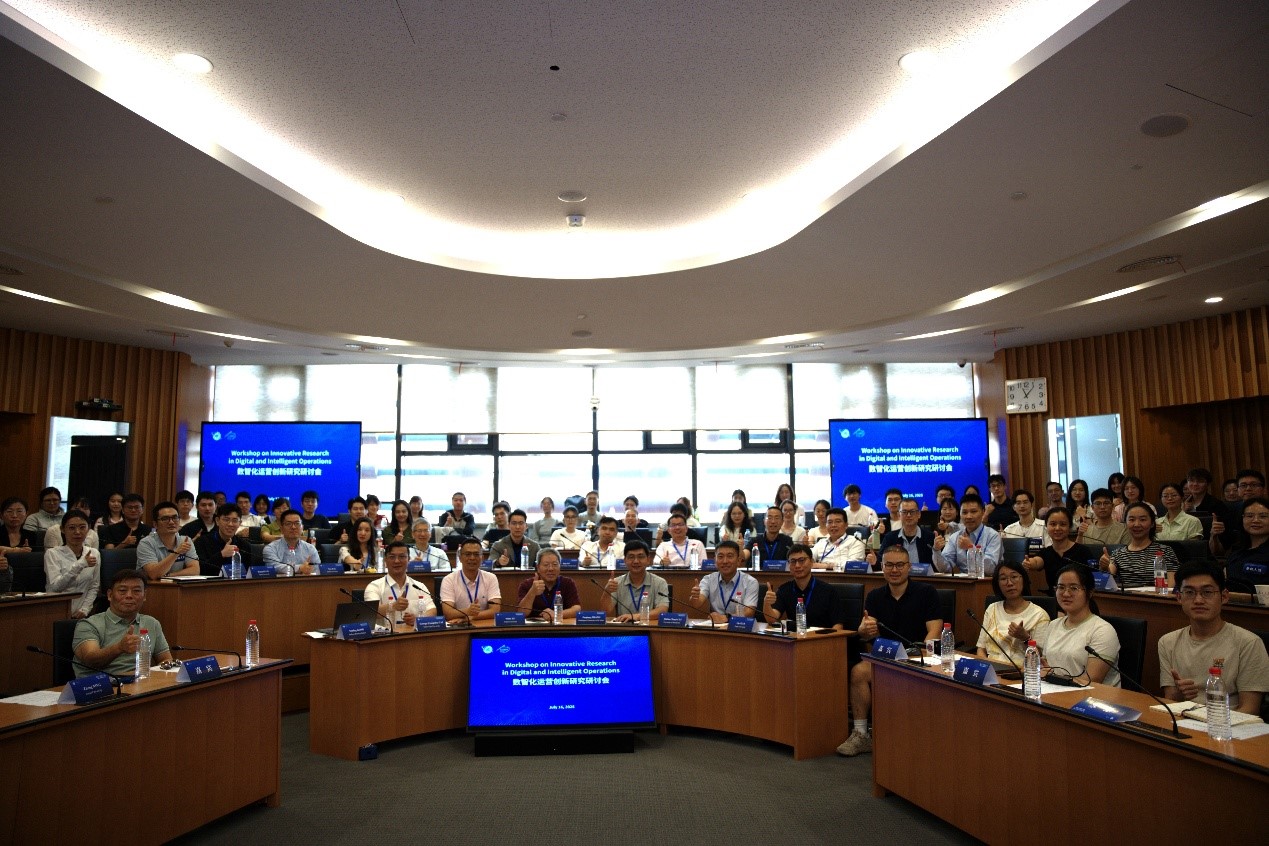
On July 16, the 2025 Digital Operations Innovation Symposium was held at Zhengli Campus of School of Management at Fudan University (Fudan SoM). The symposium brought together over 100 scholars and experts from China and abroad. Seven invited speakers delivered in-depth academic presentations on frontier topics in operations and innovation.
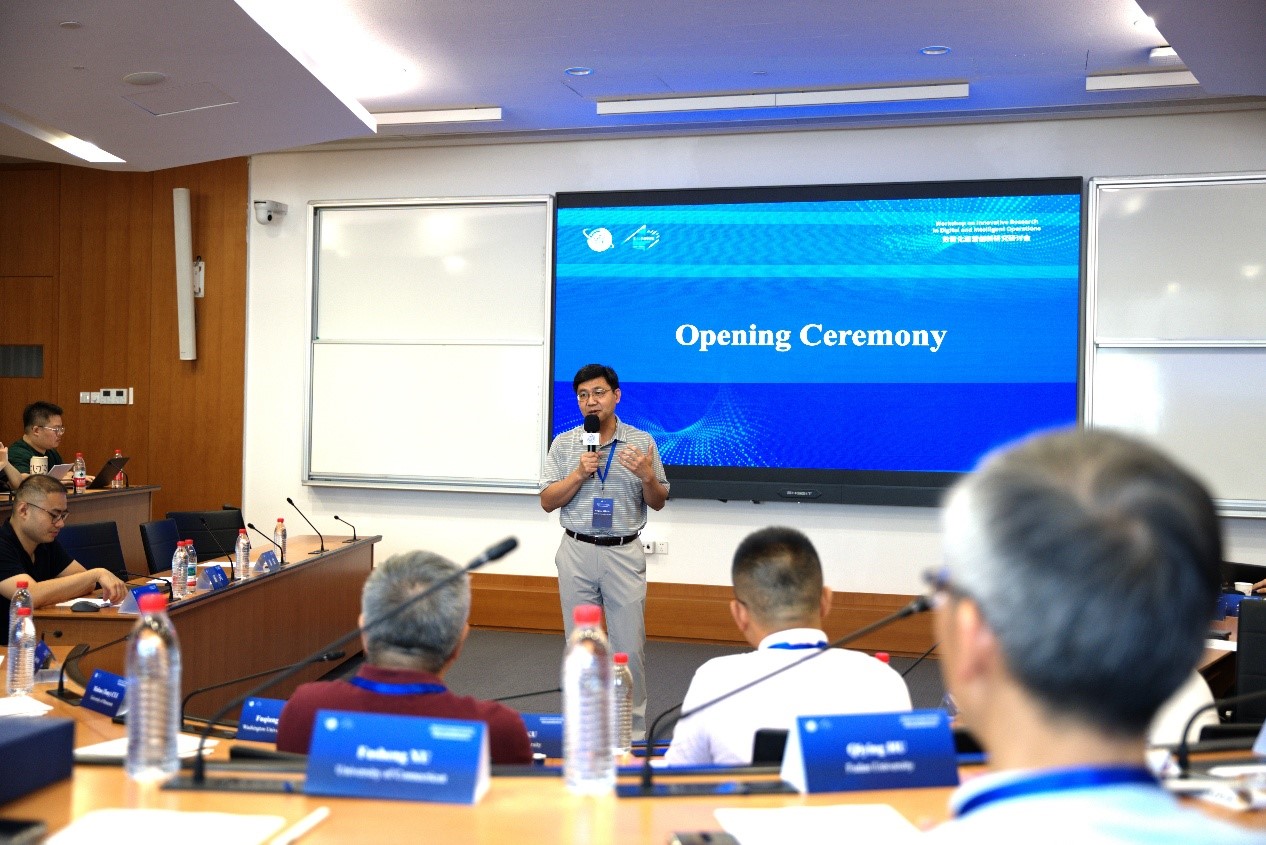
At approximately 9:00 a.m., the opening ceremony was hosted by Professor Fuqiang Zhang from Washington University in St. Louis, also the co-chair of the symposium. He delivered the opening remarks and extended a warm welcome to the participating speakers and scholars.
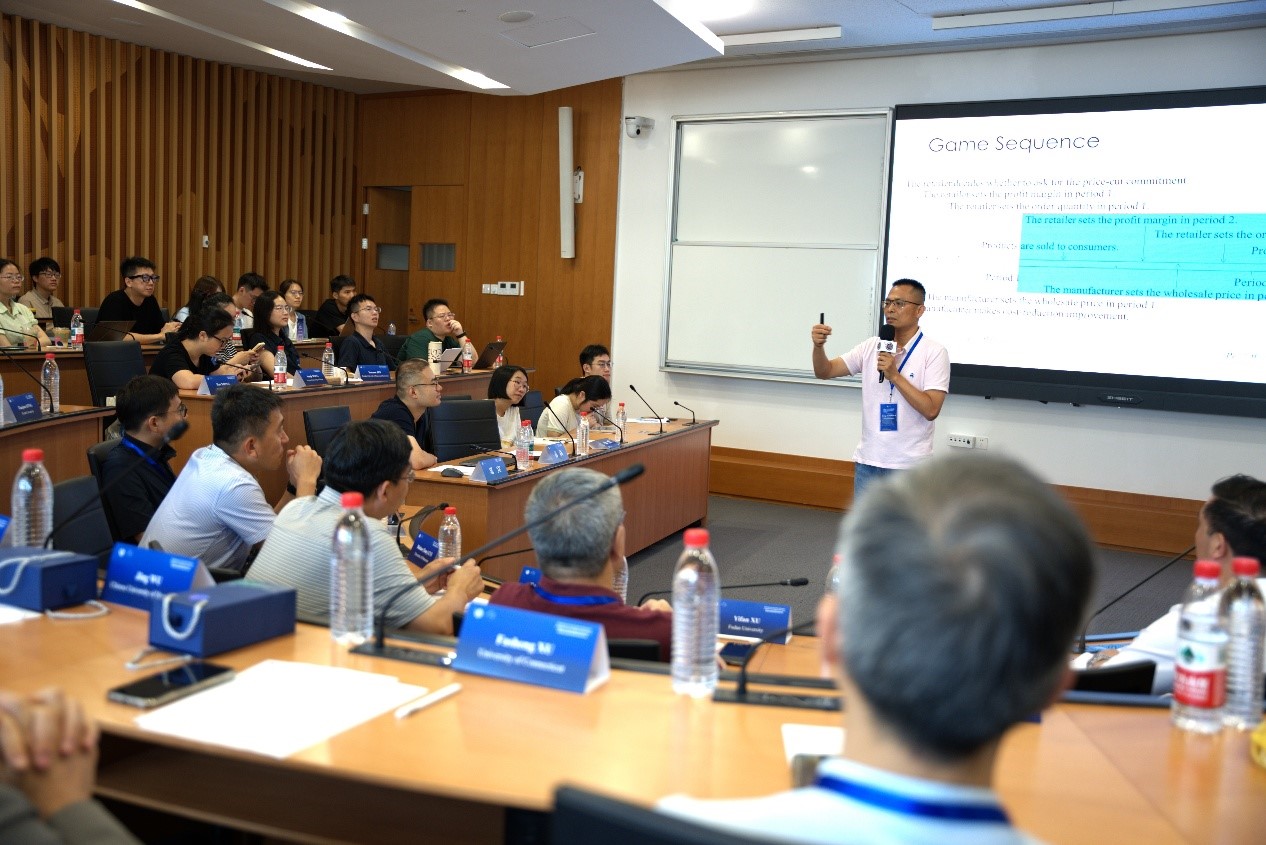
In the morning session, Professor Gangshu Cai from Santa Clara University delivered a keynote presentation titled "Price-Cut Commitment under Strategic Inventory and Retailer Dominance." In practice, dominant retailers often pressure upstream manufacturers to commit to future price cuts. To examine the implications of such commitments, Professor Cai developed a two-stage supply chain model capturing the dynamic interaction between manufacturers' cost-reduction investments and retailers' strategic use of inventory to depress future procurement prices.
The study shows that price-cut commitments can increase manufacturers' profits and incentivize cost optimization, but may reduce retailers' payoffs when market size is large. The analysis further identifies conditions under which Pareto improvements are possible, enhancing overall supply chain efficiency. However, competition among retailers holding strategic inventory may generate a prisoner's dilemma, leading to suboptimal equilibria. Notably, asymmetric strategy equilibria may arise under moderate market sizes. Finally, the study reveals a "dual-channel backlash" effect, whereby dual-channel competition may reduce manufacturers' profits. These findings provide new insights into supply chain pricing strategies.
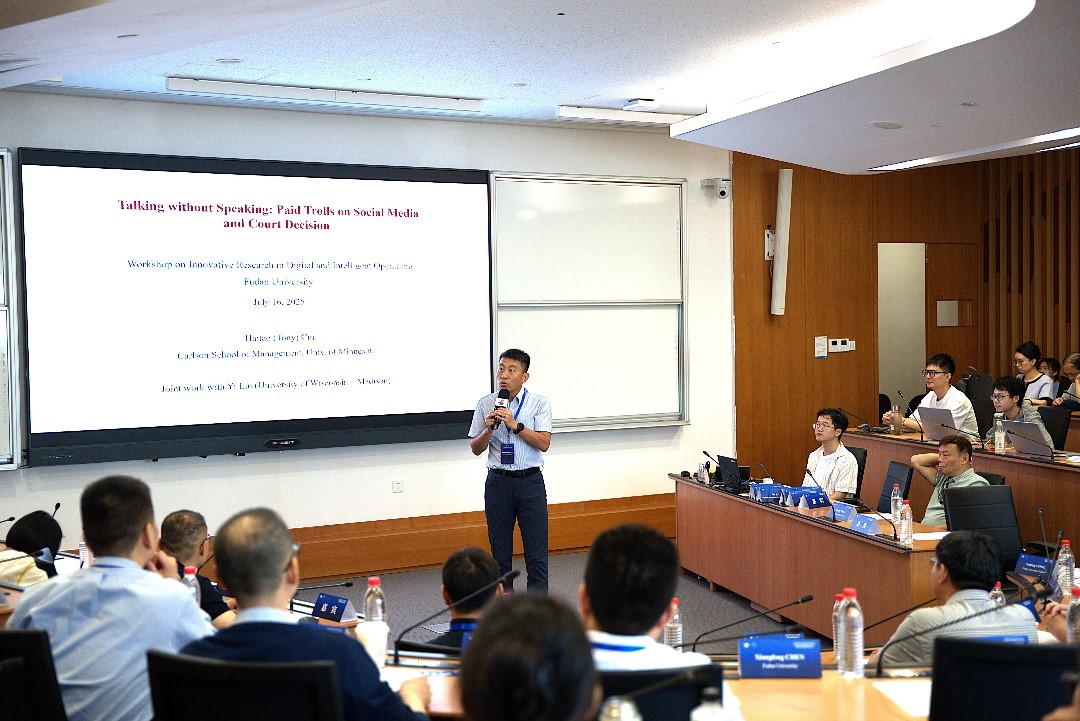
Professor Haitao Cui from the Carlson School of Management, University of Minnesota, presented a keynote talk titled "Talking without Speaking: Paid Trolls on Social Media and Court Decision." With the rapid expansion of social media and information platforms, public opinion can exert significant influence on perceptions of controversial issues. Professor Cui examined how public sentiment and paid online trolls affect judicial decisions in legal disputes between opposing parties.
The study finds that litigating firms may strategically purchase paid online commentary to shape public opinion, particularly when factual truth diverges from prevailing public beliefs. It further shows that the limited discernment of social media users may create informational traps for involved parties, including competitors and judges. Courts also exhibit a tendency to align with dominant public opinion, a feature that may either hinder or facilitate truth discovery depending on the importance of the case.
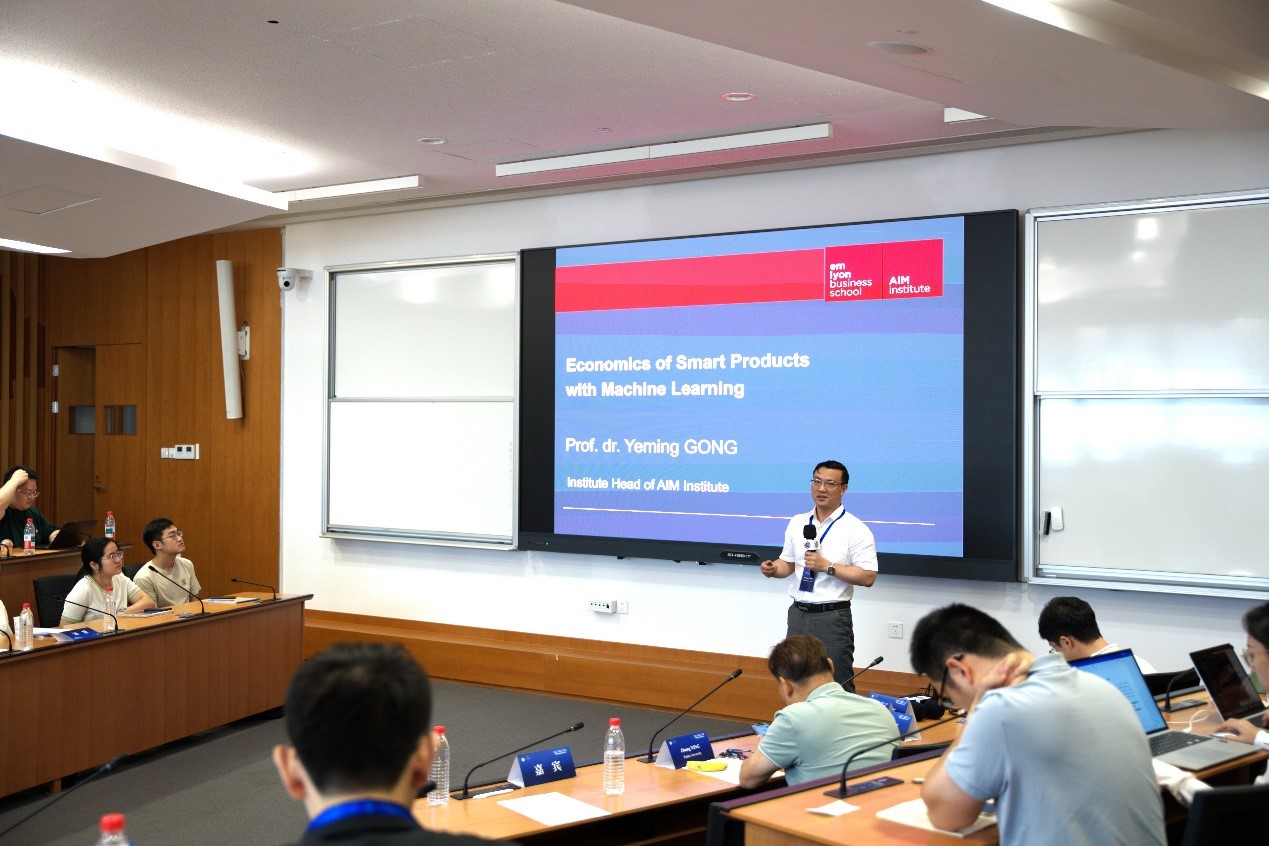
Professor Yeming Gong from EMLYON Business School delivered a keynote presentation titled "Economics of Smart Products with Machine Learning." He first explained the mechanism of the AI flywheel effect and then examined the economic implications of embedding machine learning into smart products. Using a two-stage game-theoretic model, the study compares reactive pricing and pre-announced pricing strategies with and without machine learning.
The results show that while pre-announced pricing dominates in equilibria without machine learning, the introduction of machine learning enables intertemporal optimization of product quality, leading equilibrium outcomes to shift toward reactive pricing under certain conditions. These findings elucidate the mechanisms through which machine learning reshapes pricing strategy choices and provide theoretical foundations for understanding the transformative role of AI in pricing decisions.
At noon, at the invitation of Professor Tianjun Feng, Assistant Dean of School of Management at Fudan University, co-chair of the Symposium, participants toured the Zhengli Campus of Fudan SoM. Faculty members introduced the campus layout and design philosophy and guided guests through key facilities of the new campus.
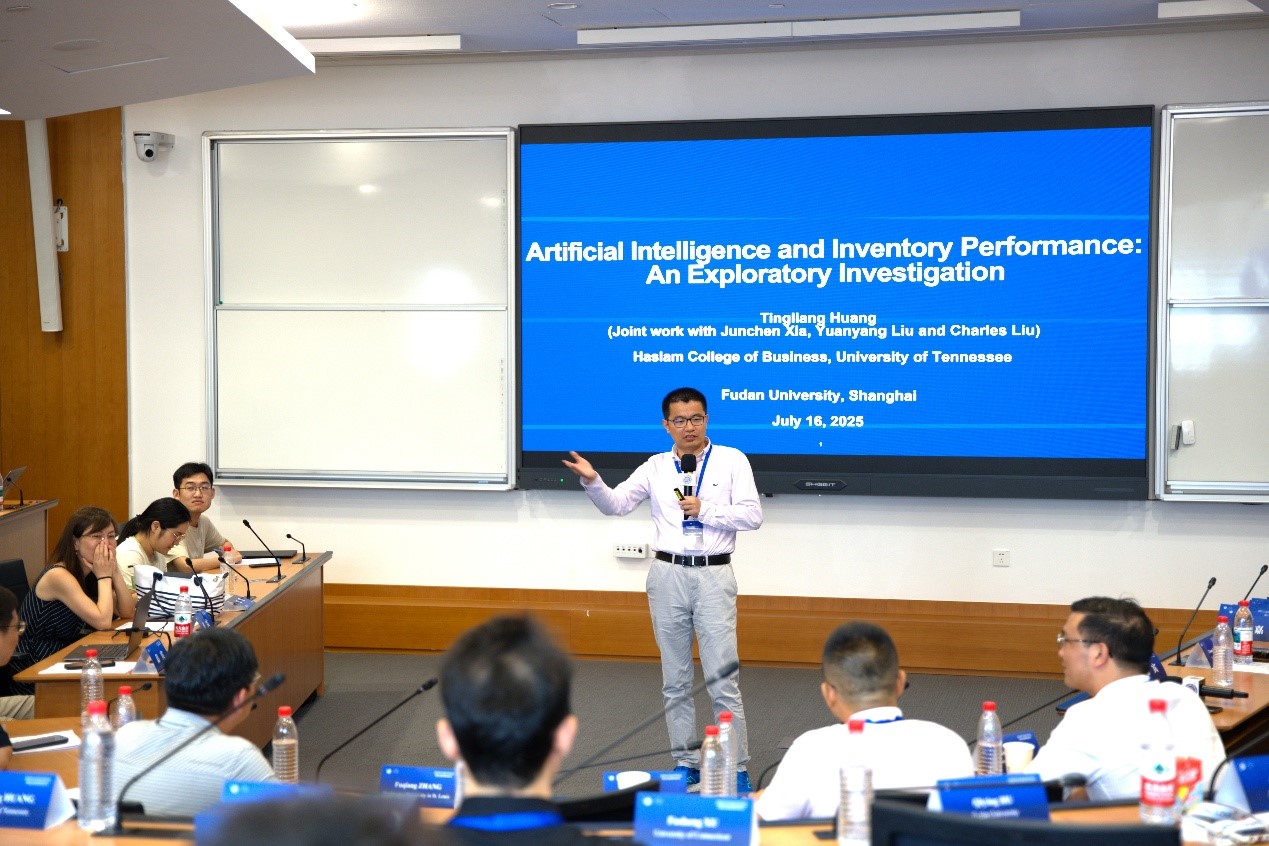
In the afternoon session, Professor Tingliang Huang from the Haslam College of Business, University of Tennessee, delivered a keynote presentation titled "Artificial Intelligence and Inventory Performance: An Exploratory Investigation." Employing a data-driven approach, Professor Huang combined firm-level AI hiring data with the Compustat database to construct a human-capital-based indicator measuring AI investment intensity in supply chains.
The empirical analysis shows a significant negative association between AI-skilled supply chain hiring and relative inventory levels, with the effect strengthening over time. Heterogeneity analyzes indicate that purely online firms benefit less from AI investment, while traditional and omnichannel retailers and wholesalers experience greater gains. Firms with higher operational complexity show stronger inventory performance improvements, whereas labor-intensive firms exhibit attenuated effects. The study provides empirical evidence that AI investment enhances inventory performance, particularly when combined with supply chain expertise.
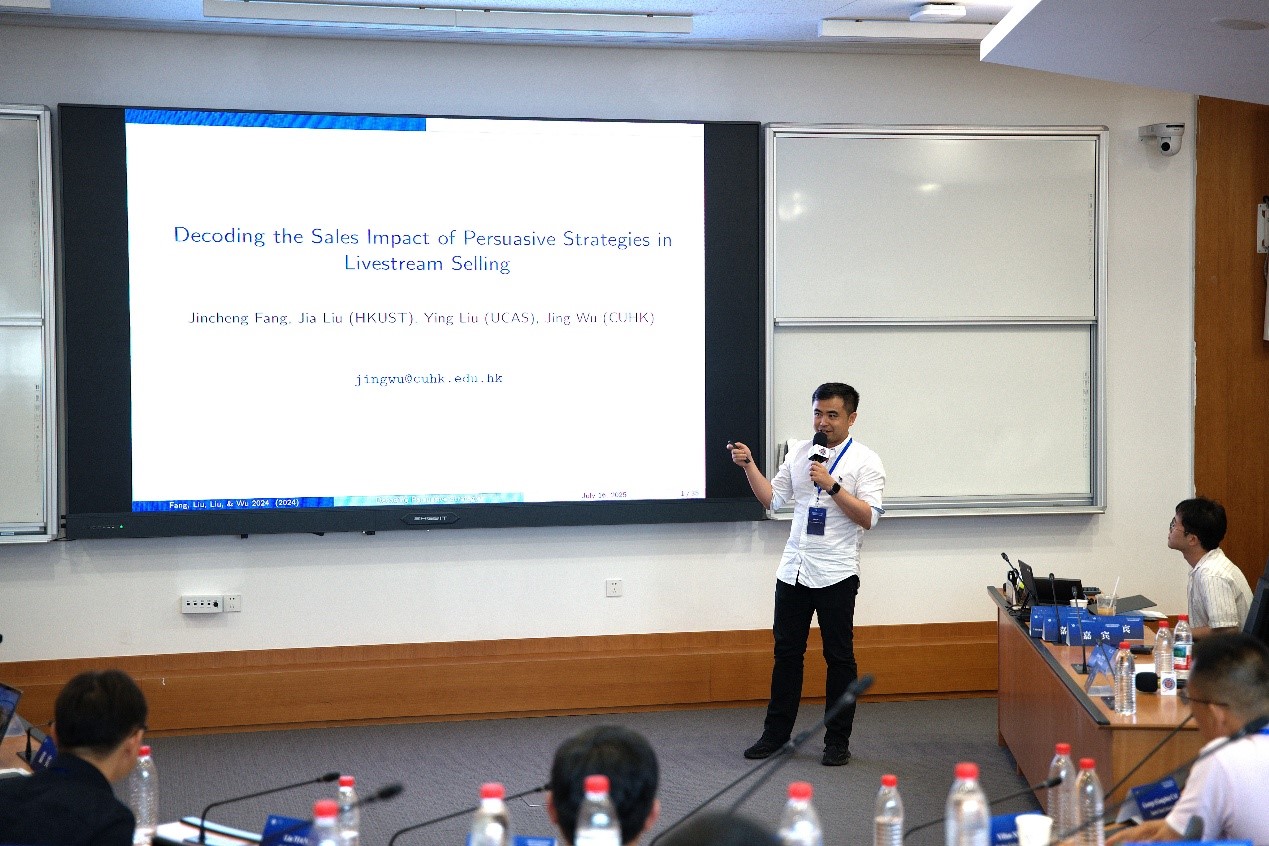
Professor Jing Wu from The Chinese University of Hong Kong Business School presented "Decoding the Sales Impact of Persuasive Strategies in Livestream Selling." The study focuses on persuasive language strategies employed by livestream hosts. Professor Wu developed an analytical framework encompassing seven persuasion strategies and introduced an iterative prompt-engineering method based on large language models (LLMs) to automatically identify these strategies.
Using a large-scale proprietary dataset from leading TikTok livestreamers, the study applies a two-step identification strategy leveraging within-stream variation and instrumental variable methods. The findings indicate that persuasive strategies significantly increase sales conversion, particularly in highly competitive markets. Notably, persuasion is most effective when hosts adopt language styles with low emotional intensity and high concreteness.
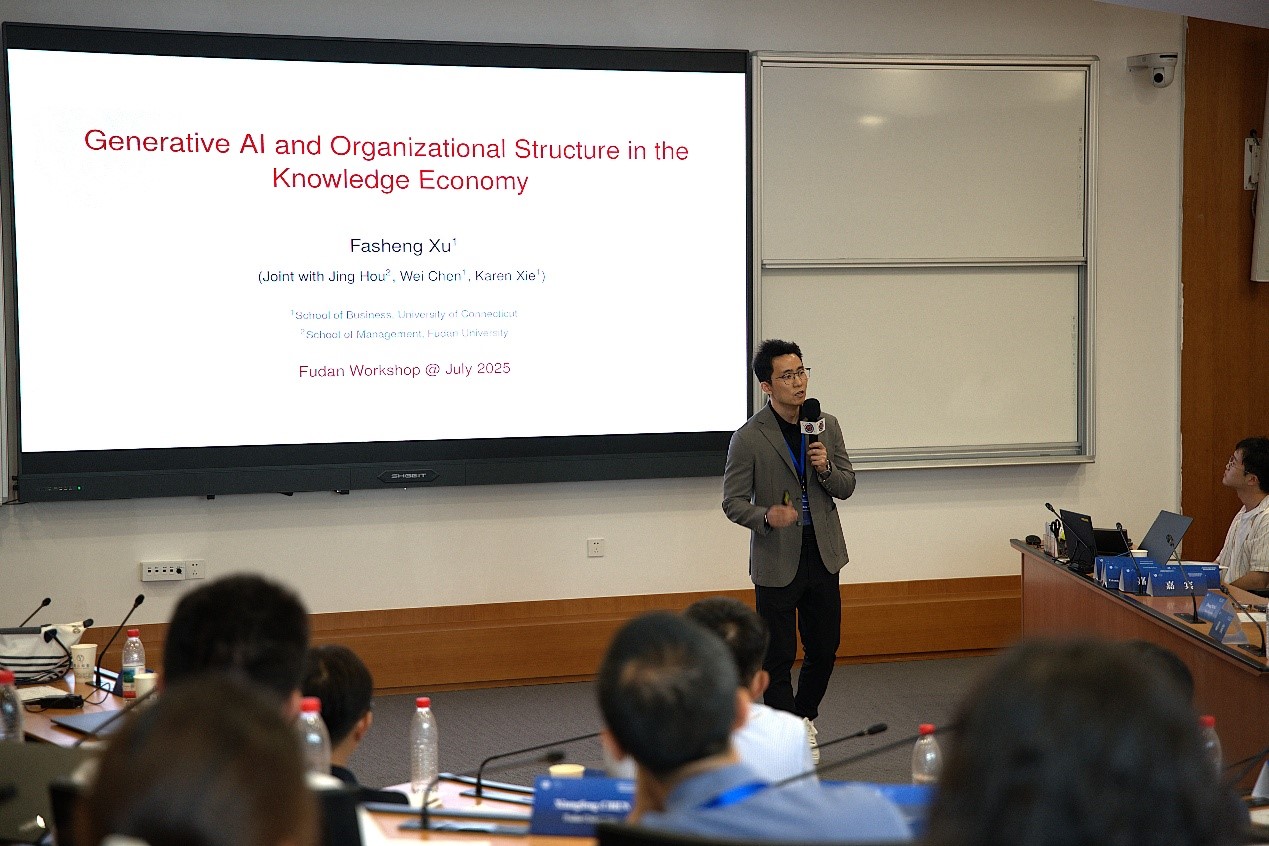
Professor Fasheng Xu from the University of Connecticut School of Business delivered a keynote presentation titled "Generative AI and Organizational Structure in the Knowledge Economy." The study develops a theoretical model to examine how generative AI (GenAI) reshapes organizational structures and the role of human oversight mechanisms.
The results reveal a dual impact of GenAI on organizations. Controlling hallucination rates is critical, while technological improvements may induce skill degradation. Counterintuitively, enhanced GenAI capabilities may narrow managerial spans and increase the number of managers. Firms widely adopt "human-in-the-loop" verification mechanisms, which raise managerial workload but expand spans of control. The effects of verification mechanisms are context-dependent, promoting adoption when error costs are low but discouraging it otherwise. Productivity gains ultimately drive organizations toward leaner yet more skilled workforces.
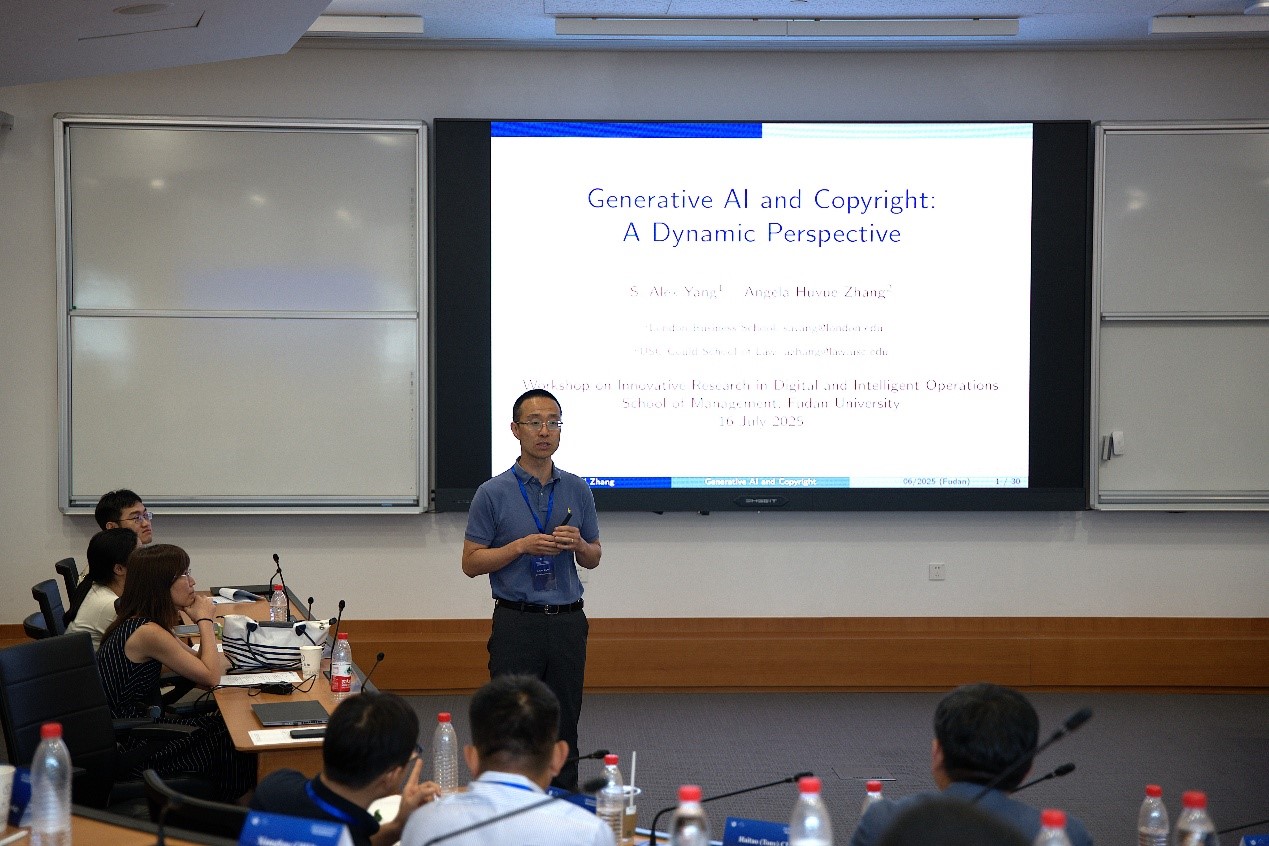
Professor Song Yang from London Business School presented "Generative AI and Copyright: A Dynamic Perspective." The study examines how training data compensation and AI copyright protection shape the future of creative industries. The findings suggest that the stringency of fair-use standards and the strength of AI copyrightability interact dynamically.
In data-abundant environments, looser policies can yield mutual benefits, whereas in data-scarce settings, excessive leniency may undermine creators' incentives. Strengthening AI copyright protection may paradoxically suppress innovation and social welfare. Importantly, only the combination of weak copyright protection and loose fair-use standards generates positive effects under data scarcity. These results underscore the need for dynamically adaptive copyright policies and offer strategic guidance for firms navigating heterogeneous global regulatory regimes.
Following the completion of all presentations, the symposium concluded amid sustained applause. Professor Fuqiang Zhang delivered the closing remarks, expressing sincere appreciation to all speakers and participants and extending an invitation to scholars to attend next year's symposium.