Fudan SoM Hosts a Practical Workshop on "AI-Empowered Teaching and Research"
On June 3, a practical workshop titled "AI-Empowered Teaching and Research" was held at the Guoshun Campus of School of Management at Fudan University. As a continuation of the School's AI Empowerment initiative series, the workshop focused on the practical application of artificial intelligence technologies in teaching and research. It attracted broad participation from faculty members and generated active engagement throughout the session.
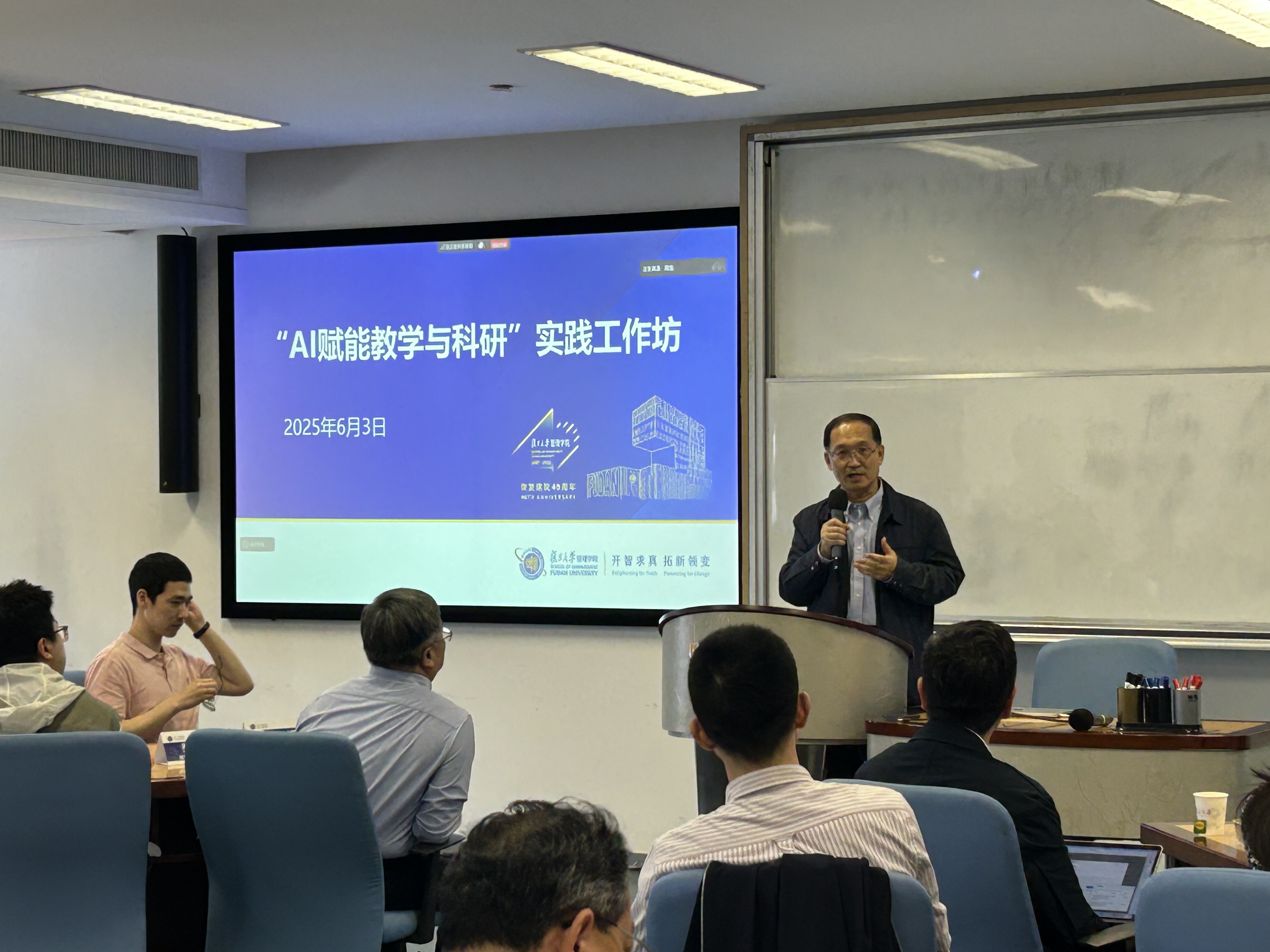
The workshop opened with remarks by Professor Changjiang Lyu, Associate Dean of School of Management at Fudan University. He noted that amid the ongoing wave of digital transformation, AI technologies are profoundly reshaping educational practices. He expressed the hope that participating faculty members would gain practical insights from the workshop and further promote innovation in teaching and research.
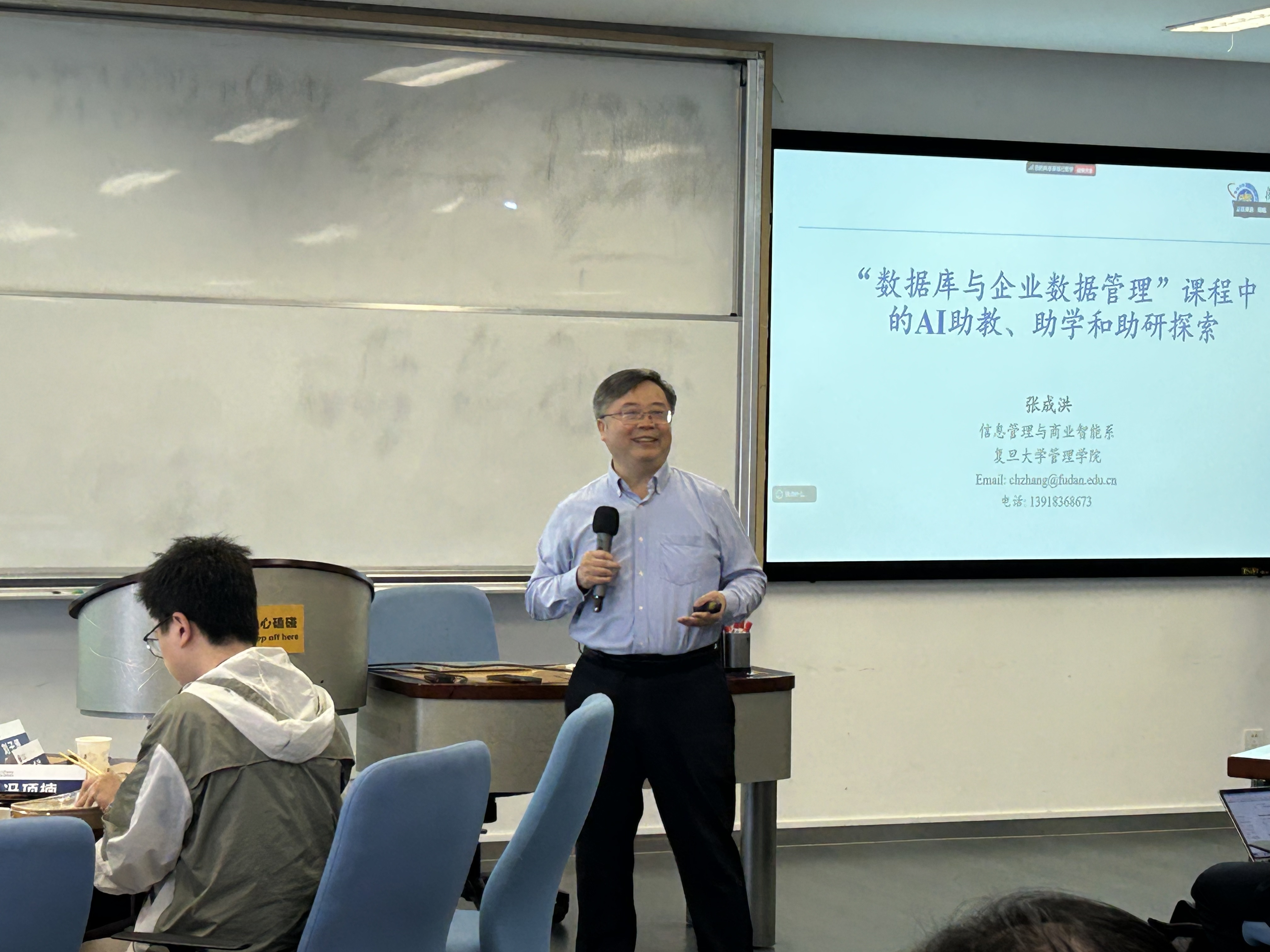
Professor Chenghong Zhang from the Department of Information Management and Business Intelligence delivered the first presentation, themed "Practical Applications of AI in Teaching Innovation." Drawing on the course Database and Enterprise Data Management as an example, he shared innovative teaching practices enabled by AI. Through concrete cases, Professor Zhang demonstrated the use of AI in addressing course-related questions, grading student assignments, and supporting course project work. He also highlighted how AI tools can help instructors improve efficiency and enhance students' learning experience.
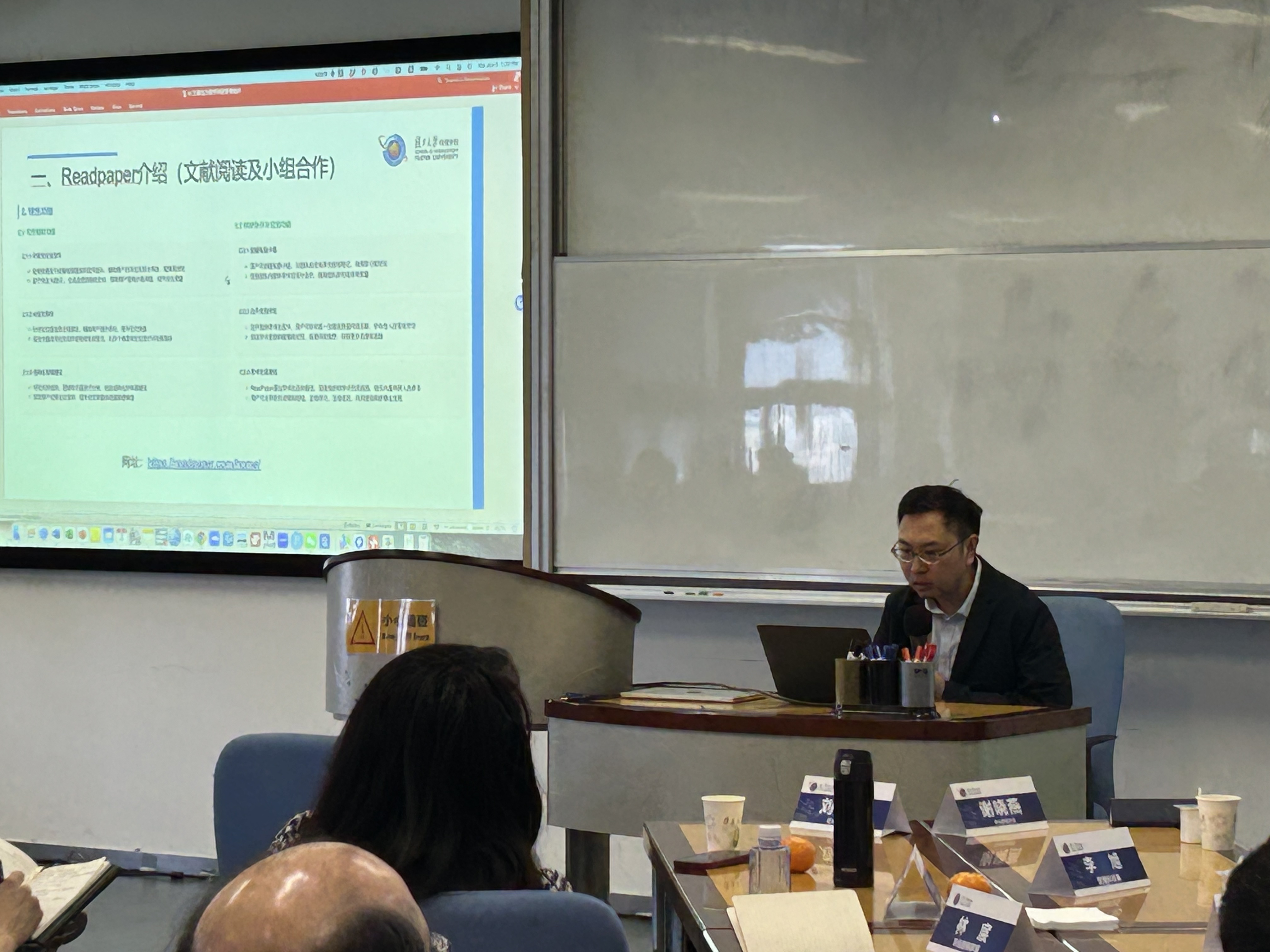
This was followed by a presentation by Associate Professor Shengming Liu from the Department of Business Administration, titled "Enhancing Teaching and Research Efficiency with AI Tools." He demonstrated the practical use of several AI tools, including ReadPaper, Gamma PPT, and Chaoxing AI, in teaching and research, and shared efficiency-enhancement techniques based on his own experience. Professor Liu noted that these tools not only streamline daily tasks but also offer new perspectives and methodologies for academic research.
In the final interactive discussion session, faculty members engaged in exchanges on topics such as the operational details of AI tools, practical challenges in teaching scenarios, and future trends in AI development. Many participants commented that the workshop helped them gain a clearer understanding of how AI technologies can be applied in practice and enabled them to identify tools and approaches suited to their own work.
Overall, the workshop provided faculty members with practical guidance on applying AI technologies and injected new momentum into the school's efforts to advance digital transformation in education. Looking ahead, the School will continue to organize similar activities to foster exchange and collaboration, and to jointly explore new possibilities in intelligent education.
