
Seminar on Competitive Strategies and Governance Innovation in Digital Intelligence Economy Held
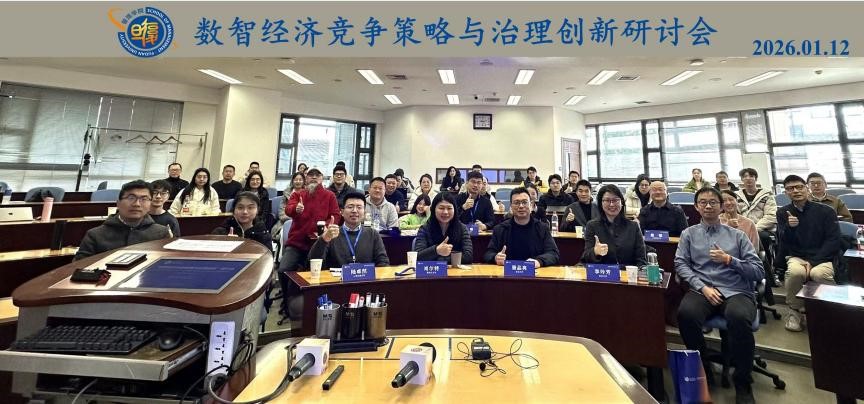
On January 12, 2026, the Seminar on Competitive Strategies and Governance Innovation in Digital Intelligence Economy, together with the Annual Academic Workshop of the National Natural Science Foundation of China (NSFC) Major Program Sub-progect "Scientific Innovation in Antitrust Regulation for the Digital Economy," was held at the Guoshun Campus of School of Management at Fudan University.
Centered on the theme "Competitive Strategies and Governance Innovation in the Digital Intelligence Economy," the international academic seminar brought together scholars from China and abroad to engage in in-depth discussions on a range of core issues, including content copyright policies, data restriction policies and algorithm design, self-control problems and intervention mechanisms, and fair competition governance in the field of artificial intelligence.
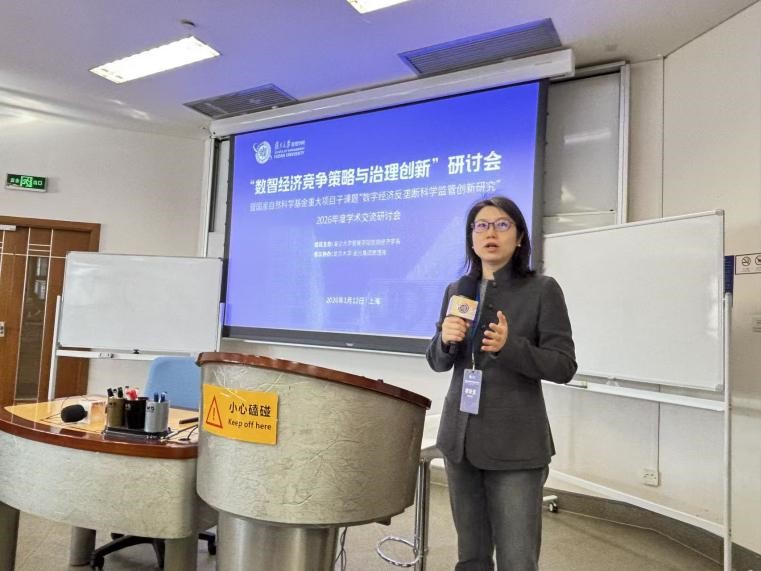
The opening session was chaired by Professor Lingfang Li, School of Management at Fudan University, who emphasized the importance of research on innovative governance in the digital intelligence economy.
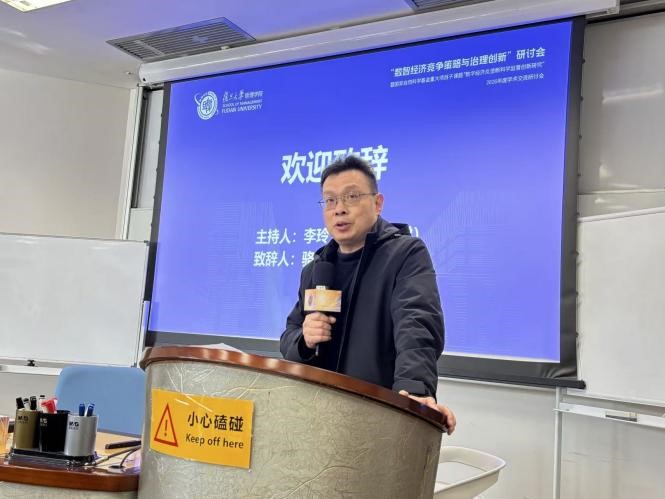
Professor Pinliang Luo, Chair of the Department of Applied Economics, School of Management at Fudan University, delivered the welcome remarks. He introduced the department's academic profile and extended best wishes for the success of the seminar.
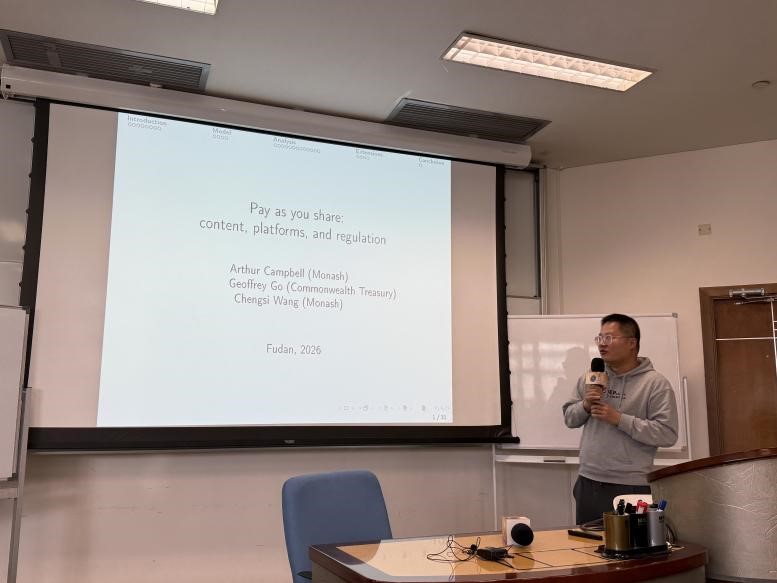
Associate Professor Chengsi Wang (Monash University) delivered a keynote presentation titled "Pay as You Share: Content, Platforms, and Regulation." The study examines regulatory controversies arising from digital platforms profiting from the uncompensated use of "secondary content" (e.g., news snippets). It investigates how strengthening creators' bargaining power affects content quality and subscription pricing incentives. By constructing a theoretical model involving creators, platforms, and audiences, the paper analyzes key mechanisms such as attention effects and cannibalization effects. The findings show that while increased bargaining power directly improves the quality of secondary content, its effect on original content quality is ambiguous. High-quality secondary content can both attract users through attention effects and substitute for original content through cannibalization; whether overall news quality improves depends on user sensitivity to quality differentials in conversion behavior.
Associate Research Fellow Limei Chen (South China Normal University) presented "Recommendation System Design for Online Content Platforms." Focusing on content creation platforms such as Douyin and YouTube, the study examines how traffic allocation mechanisms influence creators' behavior. From a mechanism design perspective, it analyzes how platforms optimally design incentives to maximize profits while balancing short-term commercial revenue and long-term user experience. The findings indicate that creators tend to underinvest in equilibrium, and therefore platform-optimal recommendation rules are not neutral. Instead, platforms strategically bias recommendations toward either commercial revenue or user experience based on user preference distributions to correct incentive distortions.
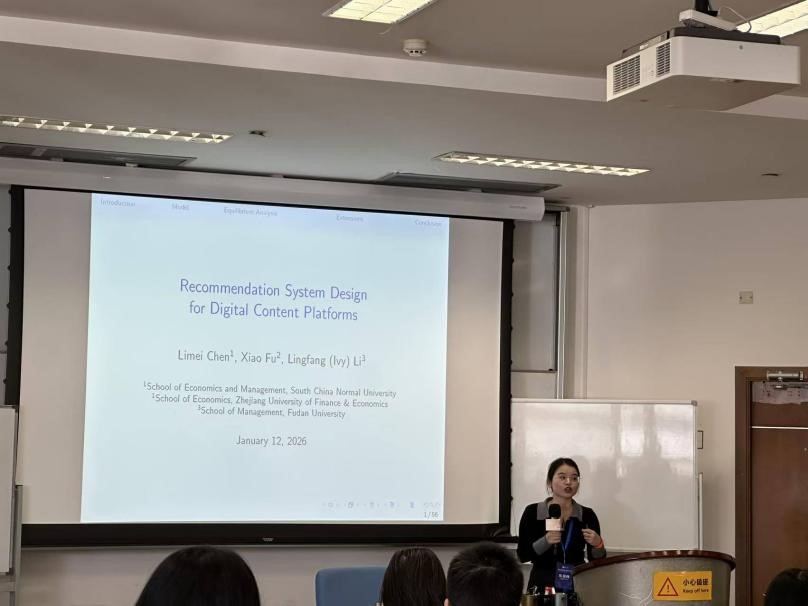
Associate Professor Dingwei Gu (Fudan University) presented "Personalized vs. Uniform Algorithm Design: The Unintended Consequence of Restrictions in Data Access." Motivated by antitrust controversies surrounding pricing algorithms such as RealPage, the study explores how data restriction policies—designed to curb collusion—affect algorithm design and social welfare. The paper models heterogeneous-cost firms and third-party algorithm providers, comparing personalized pricing under full data access with uniform pricing under data restrictions. The results show that restricting data access forces algorithm providers to adopt uniform pricing, which reduces pricing precision due to cost misallocation but also unintentionally weakens competition among firms. While some firms may benefit from reduced competitive pressure, overall consumer welfare and total social welfare decline.
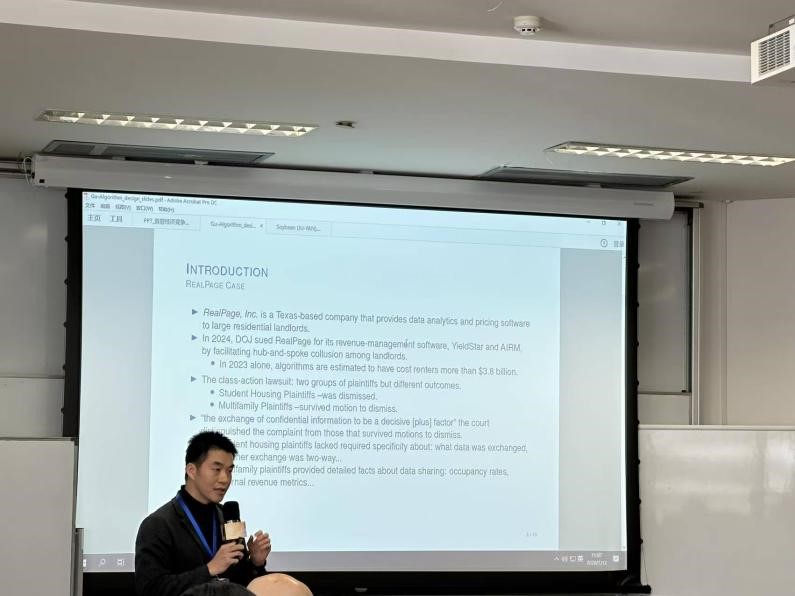
Associate Professor Heng Ju (Shanghai University of Finance and Economics) presented "A Successive Oligopoly Model for Soybean Trade and Processing." Grounded in China's role as the world’s largest soybean importer and the vertical linkage between international soybean trade and domestic processing, the study develops a successive Cournot oligopoly model and solves for the subgame-perfect equilibrium. By endogenizing downstream processors' derived demand for upstream soybeans and estimating the model using transaction data, the paper evaluates the ability of structural economic models to identify demand characteristics, supply parameters, and competitive intensity. Under reasonable model assumptions, it further analyzes the transmission mechanisms and magnitudes of international soybean price fluctuations to China’s downstream soybean oil and meal markets. The framework offers strong external validity for studying price transmission and market structure in other vertically linked commodity industries.
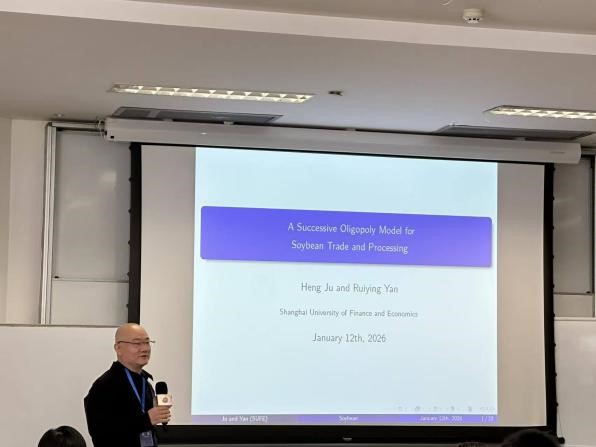
Professor Erte Xiao (Monash University) delivered a keynote titled "Managing Screen Time: Feedback and (Soft-)Commitment." Focusing on excessive screen time usage, the study investigates the role of self-control awareness, with particular emphasis on the effectiveness of feedback-based interventions. Based on the β–δ model and supported by two experimental studies, the findings show that commitment mechanisms (e.g., the Forest App) exhibit low adoption rates and no significant impact on screen time, whereas feedback mechanisms significantly reduce the gap between predicted and actual screen usage, lowering daily screen time—especially among individuals who underestimate their self-control problems. The study enriches the literature on self-control cognition and behavioral intervention, offering empirical insights for screen-time management and platform intervention design.
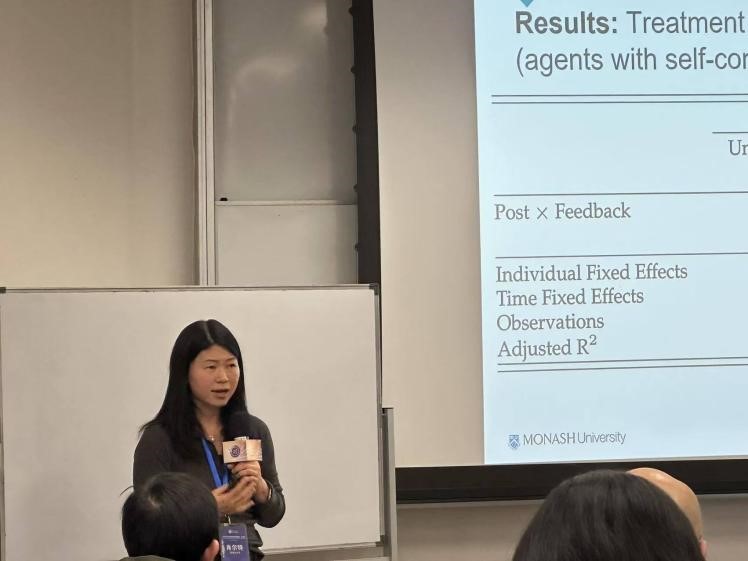
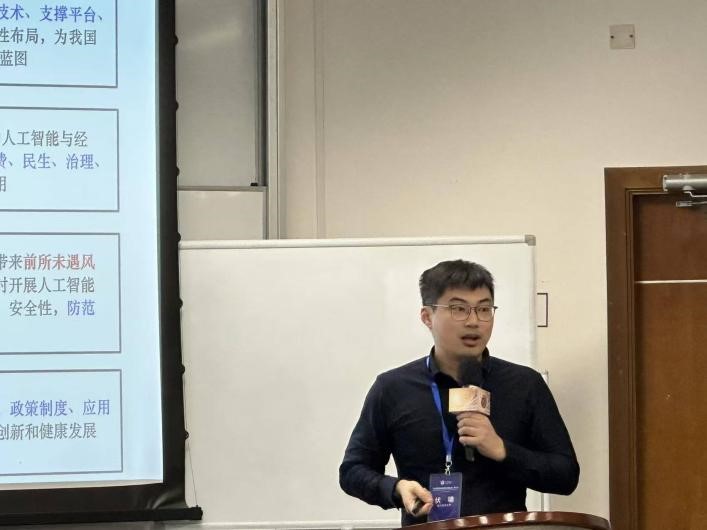
Research Fellow Xiao Fu (Zhejiang University of Finance and Economics) presented "Fair Competition Governance in Artificial Intelligence: Key Issues and Practical Progress." Grounded in AI industry development and global governance demands, the study focuses on competitive order and monopoly risks in the AI sector. By analyzing the AI industry chain using cases, data, and industry evidence, it finds that, except for the application layer, most segments are dominated by a small number of international giants, exhibiting high horizontal concentration and accelerating vertical full-stack integration. These structural features generate endogenous monopoly risks and novel anti-competitive behaviors, including ecosystem entanglement and algorithmic collusion, pointing to urgent areas for further research and regulatory attention.
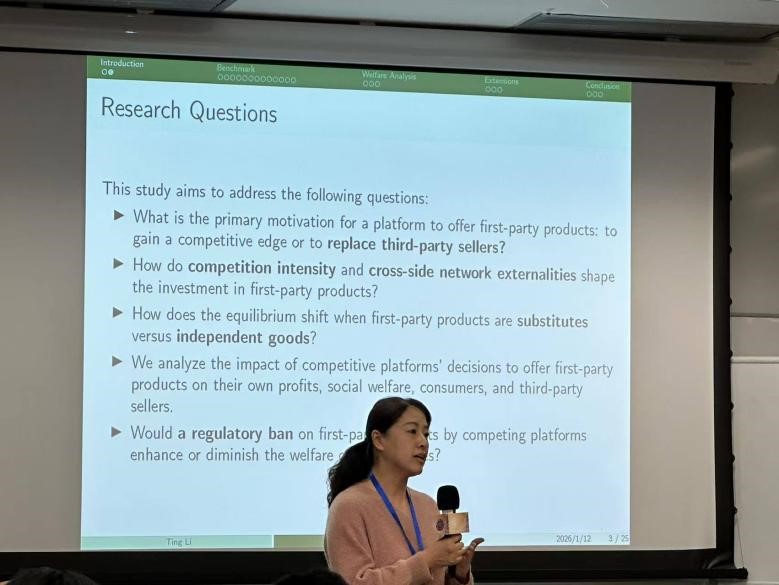
Lecturer Ting Li (Fudan University) presented "Hybrid Platform Competition." The study examines competitive platforms with dual attributes—two-sided transactions plus self-operated products—and investigates platforms' self-production incentives, their effects on competition and welfare, and regulatory implications. Using a three-stage game model of a two-sided market, the paper shows that under intense competition and high commission rates, platforms may exhibit counterintuitive behavior where increased self-production leads to lower membership pricing. Platforms may also fall into a prisoner's dilemma of self-production competition, increasing costs without changing competitive outcomes. Product substitutability plays a key role: independent products are more conducive to bilateral welfare.
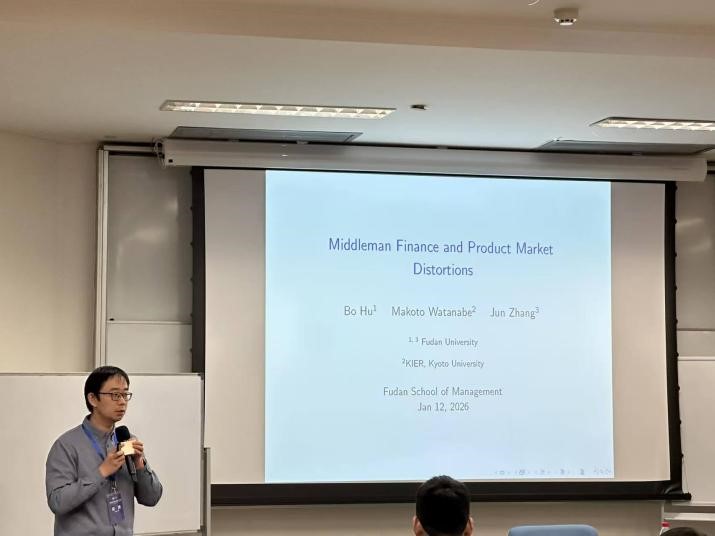
Associate Professor Bo Hu (Fudan University) presented "Middlemen and Liquidity Provision." The study examines intermediaries' provision of liquidity support to suppliers, analyzing motivations, screening mechanisms, bidirectional liquidity features, and pricing effects. Drawing on cases such as JD.com's "Jinbaobei" and Walmart supply chain finance, the paper constructs a model of supplier decision-making. It finds that liquidity provision is optimal when financial technology costs are low and circulation speed is moderate. Intermediaries screen suppliers based on profit and liquidity occupation, and when pricing is endogenized, they raise downstream prices to alleviate liquidity pressure. The study bridges industrial organization and corporate finance, revealing pricing transmission mechanisms of liquidity support and offering practical guidance for optimizing supply chain finance strategies.
The academic exchange provided rich theoretical foundations and practical insights for competitive strategies and governance innovation in the digital intelligence economy. The outcomes of the seminar will serve as important support for the NSFC program "Scientific Innovation in Antitrust Regulation for the Digital Economy," with related research continuing to contribute to the development and refinement of China's digital economy governance and regulatory systems.
