Fudan EMBA Alumni Association Annual Conference Held
Weaving a Symbiotic Management Ecosystem for the Sci-Tech Innovation Era through Intellectual Resonance
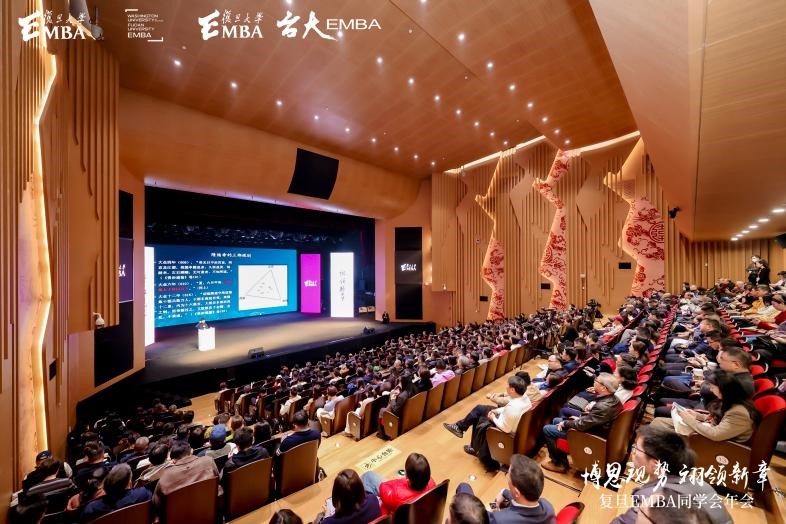
As the technological revolution reshapes industrial landscapes and "innovation-driven breakthroughs" become an unavoidable challenge for corporate decision-makers, the Annual Conference of the Fudan EMBA Alumni Association, themed "Envisioning Trends through Thought, Advancing New Chapters through Leadership," was held on January 16, 2026, at the Zhengli Campus of School of Management at Fudan University.
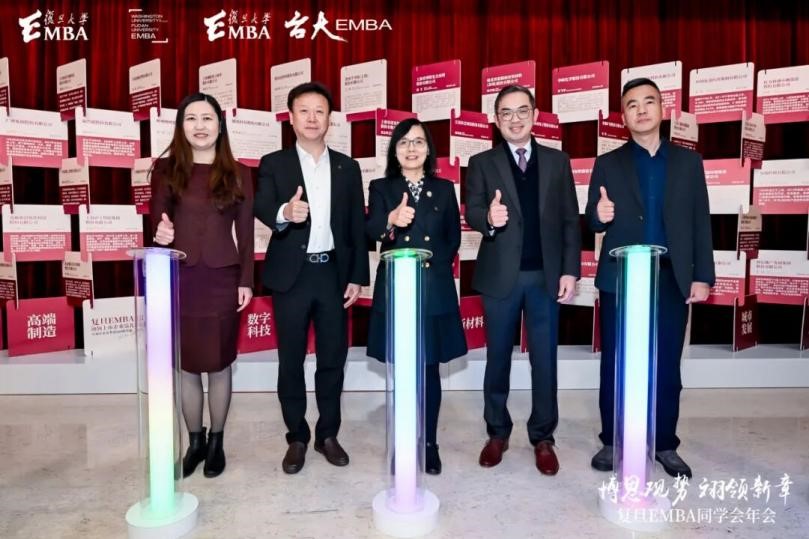
The conference opened with the launch of the "Fudan EMBA Yiling Showcase of Listed Alumni Enterprises." Professor Ming Zheng, Associate Dean of School of Management at Fudan University and Director of the EMBA Program; Professor Gengyu He, Associate Dean of College of Management at Taiwan University; Professor Rong Huang, Assistant Dean of School of Management at Fudan University; Shaobin Duan, Director of the Alumni Center of School of Management at Fudan University; together with EMBA alumni representative Yong Wang, Managing Director of CASI (Beijing) Technology Development Co., Ltd., jointly inaugurated the event. The showcase not only highlighted the achievements of outstanding alumni enterprises, but also aimed to build a long-term ecosystem for resource sharing and industrial collaboration.
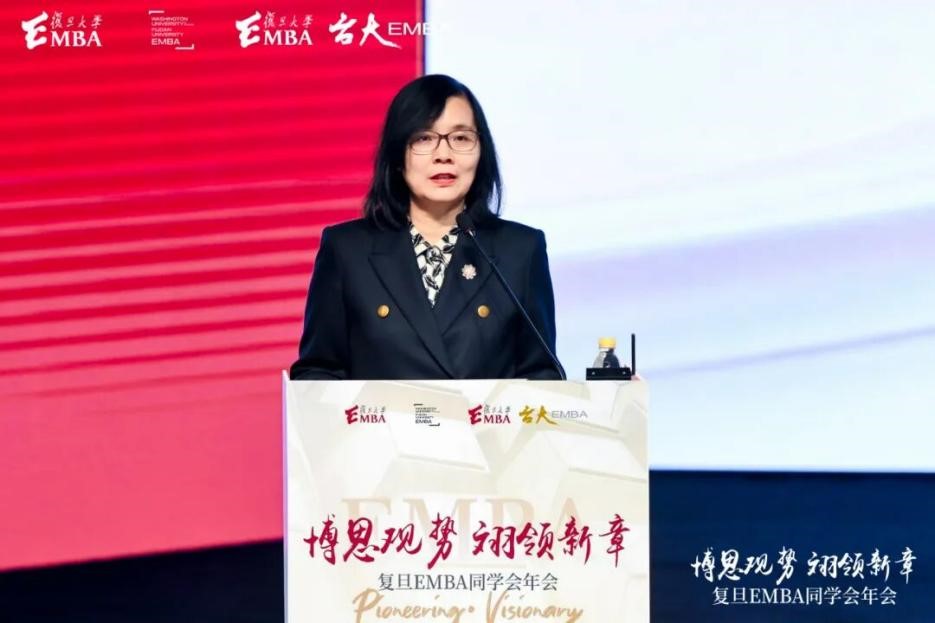
In her opening remarks, Professor Ming Zheng, Associate Dean of School of Management at Fudan University and Director of the EMBA Program, noted that the enduring mission of Fudan EMBA education is to cultivate leaders who remain composed amid change, seize opportunities in the face of challenges, and shoulder responsibility in the course of development—"thinkers in action" and "actors in thought." This, she explained, is the deeper meaning behind naming the forum "Envisioning Trends through Thought."
Thought: Anchoring Business Decision-Making in Humanistic Foundations
The morning "Thought Forum" addressed the foundations of business decision-making. Two scholars from the humanities offered intellectual insights that transcend instrumental rationality.
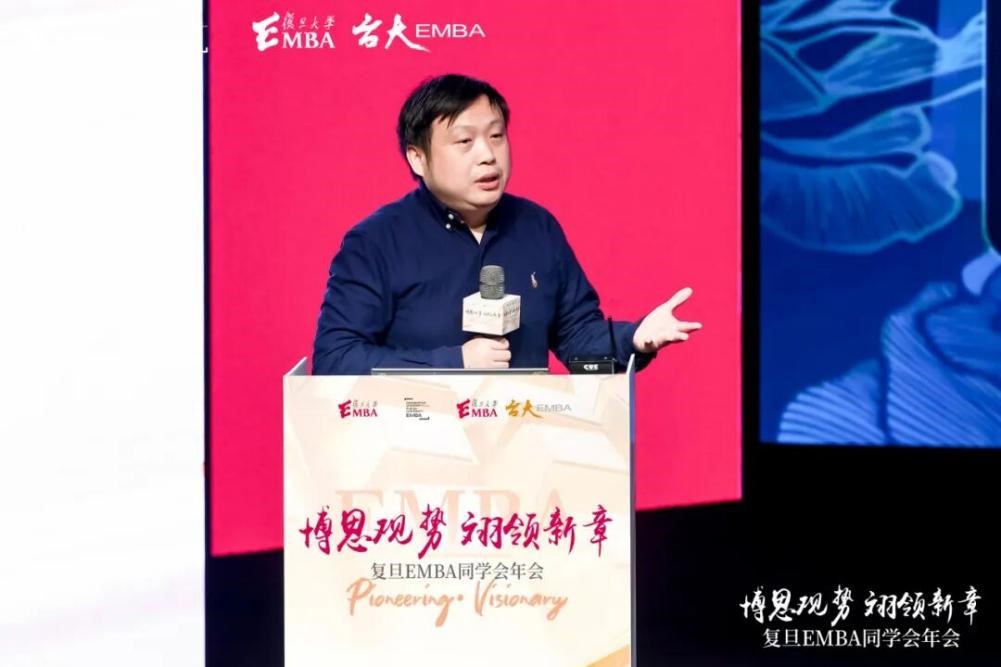
Associate Professor Peng Jiang from the Department of History at Fudan University, also a featured lecturer on Lecture Room, delivered a talk titled "The Underlying Logic of History." He distinguished between historical facts and value judgments and began by critiquing Hegel's assertion that "China has no true history." He argued that in Chinese civilization, history serves a unique function: it replaces religion as the ultimate source of moral norms and doctrinal authority, conveying value legitimacy. Historical narratives, he noted, often embed value judgments shaped by their times; without clearly distinguishing perspectives from facts, one risks falling into the traps of narrative construction.
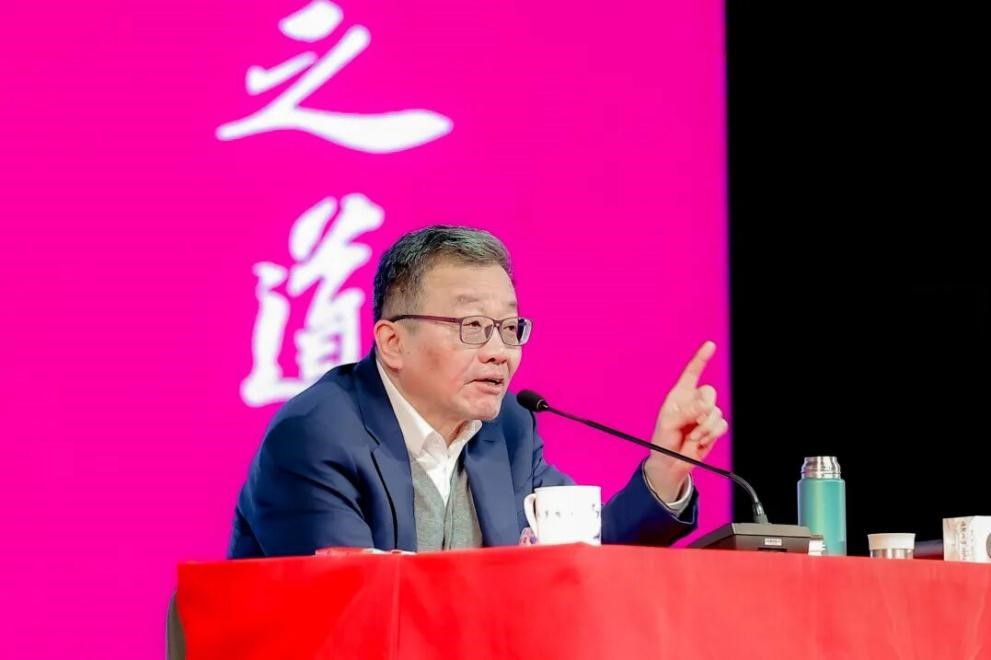
Professor Defeng Wang from the School of Philosophy at Fudan University delivered a talk titled "Thought and the Way of Heaven." He argued that the "Way of Heaven" exists within people's everyday lives, representing the unity of society's internal laws of development and the common conditions and aspirations of the people. Understanding the Way of Heaven, he emphasized, is not achieved through Western-style logical reasoning, but through the Chinese philosophical approach of experiential realization—using one's inner moral sense to perceive and verify truth through practice. This requires sincerity of attitude and embodied engagement. Whether scholars or entrepreneurs, he noted, true value lies in remaining attuned to the real needs of people's lives and fulfilling one's responsibilities with dedication, thereby advancing social moral progress and the realization of justice. In his view, this captures the essence of the idea that "the Way of Heaven is the Way of Humanity, and the Way of Humanity is also the Way of Business."
Trend Insight: Decoding Breakthrough Pathways Driven by Sci-Tech Innovation
The afternoon "Trend Insight Forum" focused on real-world challenges and concrete pathways toward future breakthroughs.
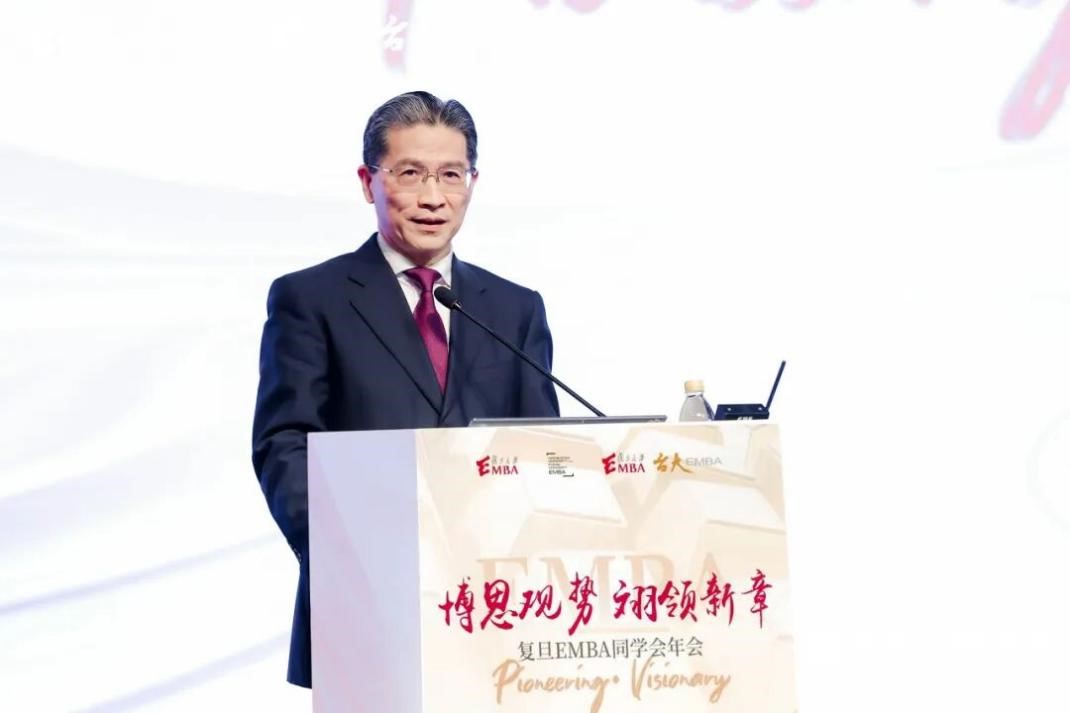
Hanmin Zhou, Standing Member of the National Committee of the Chinese People's Political Consultative Conference (CPPCC), former Vice Chair of the Central Committee of the China National Democratic Construction Association, former Vice Chair of the Shanghai CPPCC, and President of the Shanghai Public Diplomacy Association, delivered a keynote titled "Pursuing Stability while Advancing Progress: Reforming Bottlenecks and Elevating Openness." Looking ahead to the 15th Five-Year Plan period, he outlined macroeconomic and sci-tech innovation pathways, offering alumni enterprises a top-level perspective for achieving stable growth and innovation-driven transformation. He emphasized that high-standard opening-up requires strengthening five key capacities: institutional openness, supply chain governance, openness in sci-tech innovation, digital trade development, and participation in global governance. China's corporate globalization, he noted, is transitioning from "going global" to "integrating globally." Today, Chinese enterprises are no longer engaged in one-way outward expansion, but are instead seeking symbiotic modes of coexistence across different civilizations and institutional environments—an embodiment of China's institutional opening-up. He called on Chinese enterprises to play a more active role in shaping rules, co-building ecosystems, and sharing value, thereby reshaping the commercial logic of global governance and providing entrepreneurs with critical strategic direction.
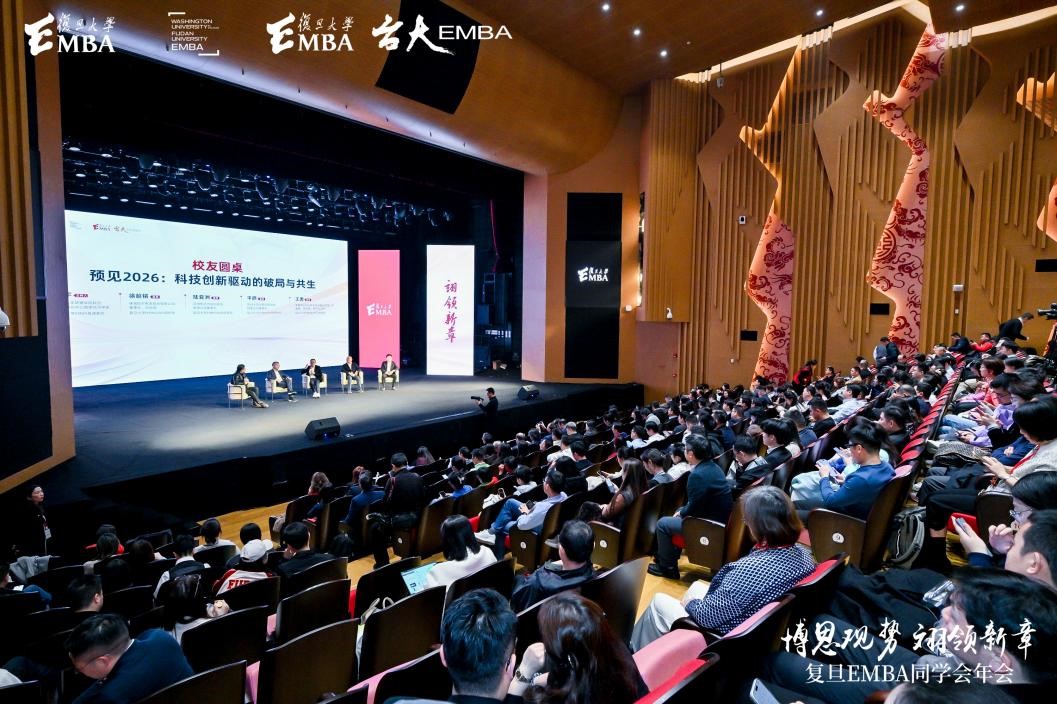
During the alumni roundtable "Looking Ahead to 2026: Breakthroughs and Symbiosis Driven by Sci-Tech Innovation," Professor Yu Shao, EMBA faculty member and Chief Economist of the Sci-Tech Innovation Management Research Center at School of Management at Fudan University, joined EMBA alumni in translating ideas into frontline practice. Yanming Xu, Chairman of Zhuhai CosMX Battery Co., Ltd.; Yazhou Lu, Chairman of Suzhou Huazhijie Telecommunications Co., Ltd.; Yuan Ping, Chairman of Suzhou Fengbei Biotechnology Co., Ltd.; and Yong Wang, Managing Director of BZS (Beijing) Technology Development Co., Ltd., shared case-based insights from their respective sci-tech strategies. Drawing on their corporate practices, they unpacked applied methodologies for technology commercialization, ecosystem collaboration, and risk hedging. The exchange of alumni experience extended pathways to success from the classroom to the industrial frontier.
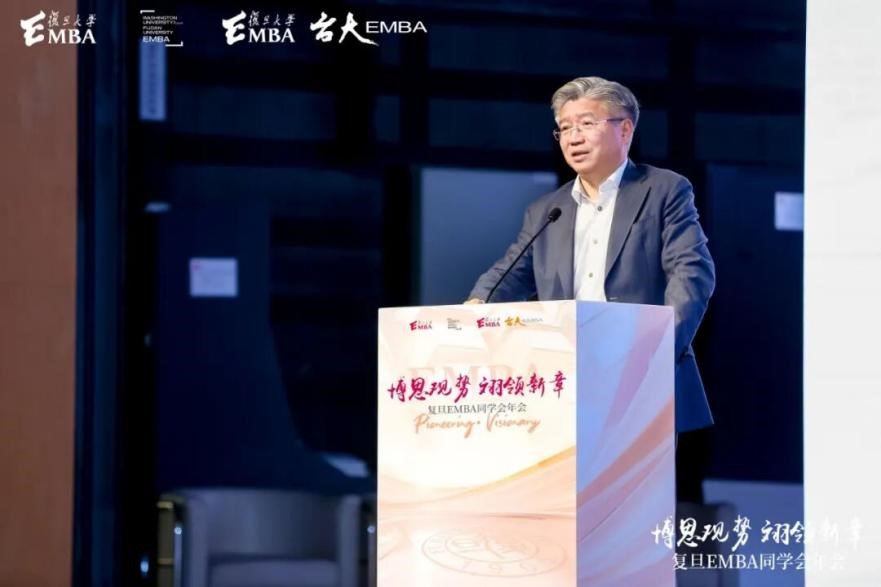
In his concluding remarks, Professor Xiongwen Lu, Dean of School of Management at Fudan University, shared a dialectical perspective on "change and continuity" in the AI era and highlighted the central role of management in the age of sci-tech innovation. He stated: "Management and sci-tech innovation are twin engines. Without sci-tech innovation, China has no future; yet without the empowerment of management, sci-tech innovation cannot succeed." He called for deep managerial empowerment of sci-tech innovation, integrating historical wisdom with philosophical reflection, upholding the human essence of exploration and development, and injecting strong momentum into China's industrial upgrading, so as to jointly usher in the era of "China's Sci-tech Innovation Management."
From humanistic reflection to trend insight and from strategic vision to practical discussion, the conference represented a concrete practice of the Fudan EMBA Program's educational philosophy of "Business with Humanistic Depth, Integrated and Holistic." "Envisioning Trends through Thought" underscores discerning essence amid complexity, while "Advancing New Chapters through Leadership" points toward opening new horizons for enterprises. Together, they articulate China's evolving path to business success and serve a broader symbiotic landscape of the times.
The Fudan EMBA Program is committed to cultivating top-tier executive leaders, guided by the philosophy of "Business with Humanistic Depth, Integrated and Holistic." It delivers globally leading management knowledge, builds a high-end platform for business exchange, supports industrial upgrading, and interprets China's distinctive path to business success.
In 2010, Fudan University partnered with Taiwan University, a widely recognized leading academic institution in Taiwan, to launch a world-class Chinese-language EMBA program: Fudan-NTU EMBA Program. As the first EMBA jointly established by institutions from the Chinese mainland and Taiwan, the program has directly advanced cross-strait exchange in education, talent development, and business, earning the reputation of "the First EMBA Class across the Taiwan Strait" and serving as a model of successful cross-strait educational cooperation.
The Fudan–WashU EMBA Program is the first international cooperative EMBA program approved by China's Ministry of Education, dedicated to cultivating global business leaders. Through a jointly taught curriculum integrating global and local business perspectives, the program helps participants navigate diverse business environments. In the 2025 Financial Times Global EMBA Rankings, the Fudan–WashU EMBA Program ranked No. 1 worldwide, while the Fudan EMBA Program placed among the global top eight and maintained its position as No. 1 worldwide among Chinese-language EMBA programs for four consecutive years.
