Decoding Zhejiang Entrepreneurs' AI Breakthrough
Fudan Management Insights Visits Hangzhou
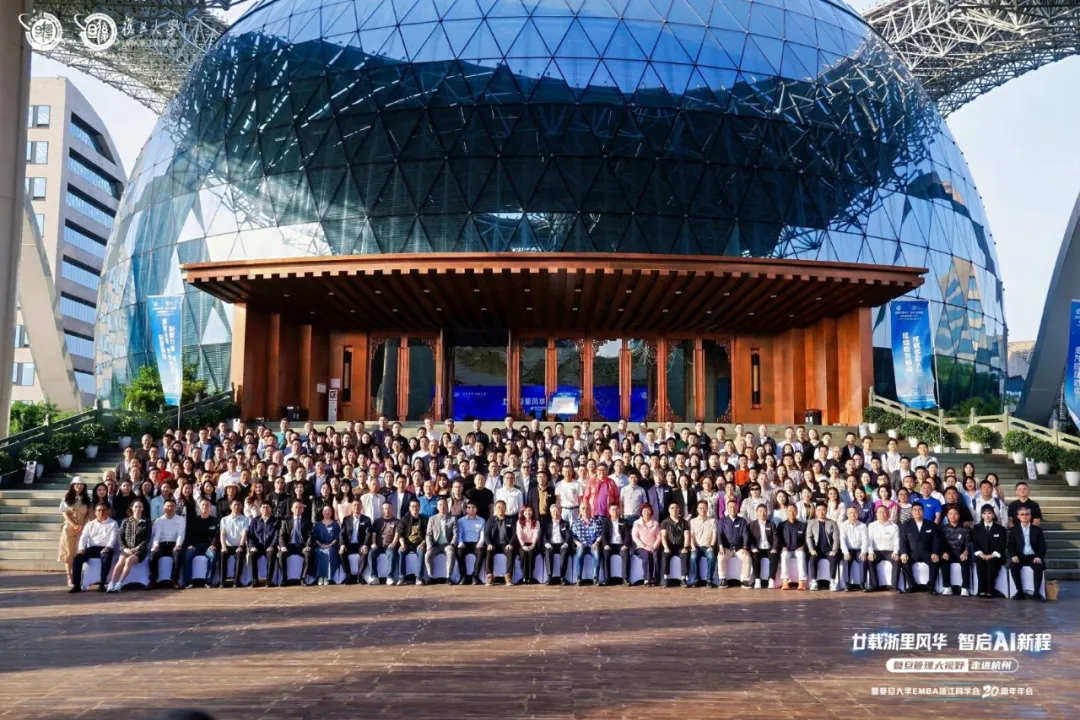
On May 10, on the occasion of the 20th Anniversary of the Fudan EMBA Zhejiang Alumni Association, Fudan Management Insights came to Hangzhou. Scholars and entrepreneurs held in-depth discussions on the theme "How Zhejiang Entrepreneurs Transition from 'Large' to 'Strong' in the AI Era".
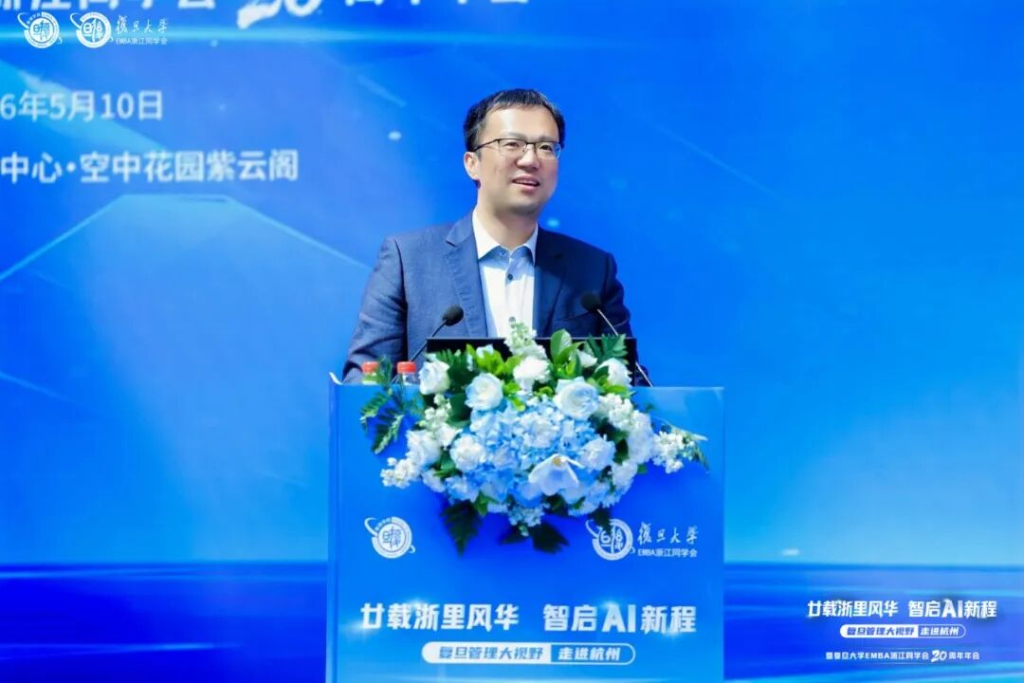
Professor Yifan Dou: A Four-Step Implementation Roadmap for Corporate AI Breakthroughs
Professor Yifan Dou from the Department of Information Management and Business Intelligence, School of Management at Fudan University delivered a keynote speech entitled The AI Breakthrough Path for Small and Medium-Sized Private Enterprises. He noted: "Our research on AI is not only about publishing academic papers. More importantly, it is about enabling vibrant enterprises of all sizes to truly leverage AI and transform production and daily life." Drawing parallels to the Industrial Revolution, he explained that the arrival of new technologies requires organizational and process restructuring, rather than merely adding tools as an overlay.
Based on surveys of hundreds of private enterprises in Zhejiang, Professor Dou pointed out that the inherent characteristics of Zhejiang's SMEs present both strengths and challenges. Strengths include high supply chain density, fast decision-making by business owners, complete supporting systems, and strong supplementary capabilities. Weaknesses involve severe homogenization, thin profit margins, insufficient brand control, and uneven systemic and governance capabilities.
He further outlined five major hurdles for SMEs in AI adoption: 1) A shortage of talents who understand both algorithms and workshop operations; 2) Overly rapid homogenization and diffusion; 3) Mismatch between the long cycle of IT projects and the short-term operational rhythm of enterprises; 4) Lack of a digital foundation, with core business data scattered across WeChat groups, ledgers, and the tacit experience of senior staff; 5) Overly "lightweight" systems paired with "heavy" factories, where tools only handle administrative tasks such as check-in and approval, failing to address core operational needs such as quotation traceability, inventory accuracy, and rework analysis.
To address these challenges, Professor Dou proposed an indispensable four-step AI implementation roadmap: 1) Digitalize core assets: Capture detailed data such as product samples, defective product photos, and customer feedback; 2) Target high-priority pain points: Start with scenarios that directly improve production scheduling or delivery; 3) Embed AI into end-to-end business processes to build an irreplicable value chain; 4) Restructure personnel, roles, authority and governance, enabling business owners to shift from daily operations to management by exception and standardizing knowledge and processes. He also emphasized that enterprises must build competitive moats through "strategic positioning" and differentiation to avoid involution driven by price and speed.
Shao Yu: From a "Major Economic Province" to a "Strong Economic Province"
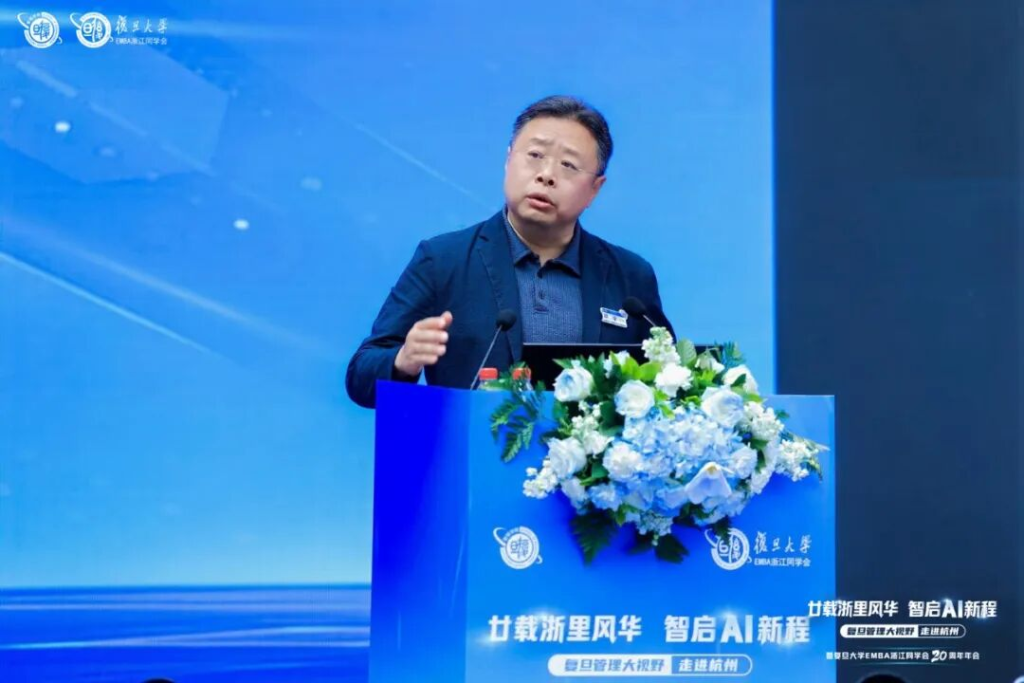
Shao Yu, Chief Economist at the Sci-Tech Innovation Management Research Center, School of Management at Fudan University, delivered a keynote speech entitled Securing Success in the 15th Five-Year Plan: The Rise of New-Quality Zhejiang Entrepreneurs. He stated that the 15th Five-Year Plan marks a critical leap for Zhejiang from a major economic province to a strong economic province. Industrial leapfrogging sets the direction and tracks, the new role of private enterprises defines the key players and drivers, and the policy ecosystem determines the speed and quality of this transformation.
Shao Yu highlighted four key trends to watch: 1) AI, as a foundational technology, will fully penetrate the upgrading of traditional industries and the cultivation of emerging industries. The ability to pioneer an AI-enabled new-type industrialization paradigm will cap Zhejiang's industrial competitiveness; 2) The depth of layout in new materials and future industries will determine Zhejiang's position in the global value chain; 3) Pathway innovation in the globalization of private enterprises, transitioning from product exports to technology exports and standard exports, and fostering truly global Zhejiang-founded enterprises; 4) The improvement of the innovation ecosystem -the speed of addressing key gaps such as patient capital, interdisciplinary talents, and industry-university-research collaboration will directly determine the effectiveness of industrial leapfrogging.
On strategic choices for private enterprises, Shao Yu noted: Leading enterprises should take on "chain leader" responsibilities, lead the development of innovation consortia, and secure a voice in the global industrial chain; Specialized, refined, differential and innovativeenterprises should deepen niche segments and build irreplaceability through technological barriers; Emerging sci-tech enterprises should seize policy windows to rapidly transition from technological breakthroughs to market validation. He stressed that integrating into the industry-university-research-applicationcollaboration network, accessing policy resources, and pioneering new globalization pathways are shared priorities for Zhejiang entrepreneurs to achieve high-quality leapfrogging in the 15th Five-Year Plan.
In closing, Shao Yu summarized that since reform and opening-up, Zhejiang entrepreneurs have evolved from Version 1.0 to 3.0 and are now advancing into the 4.0 era. "Each generation has its mission, dreams and responsibilities. Times change, but the core spirit of Zhejiang entrepreneurs remains unchanged and passes from generation to generation."
Panel Discussion: Leveraging AI to Reshape the Global Competitive Landscape
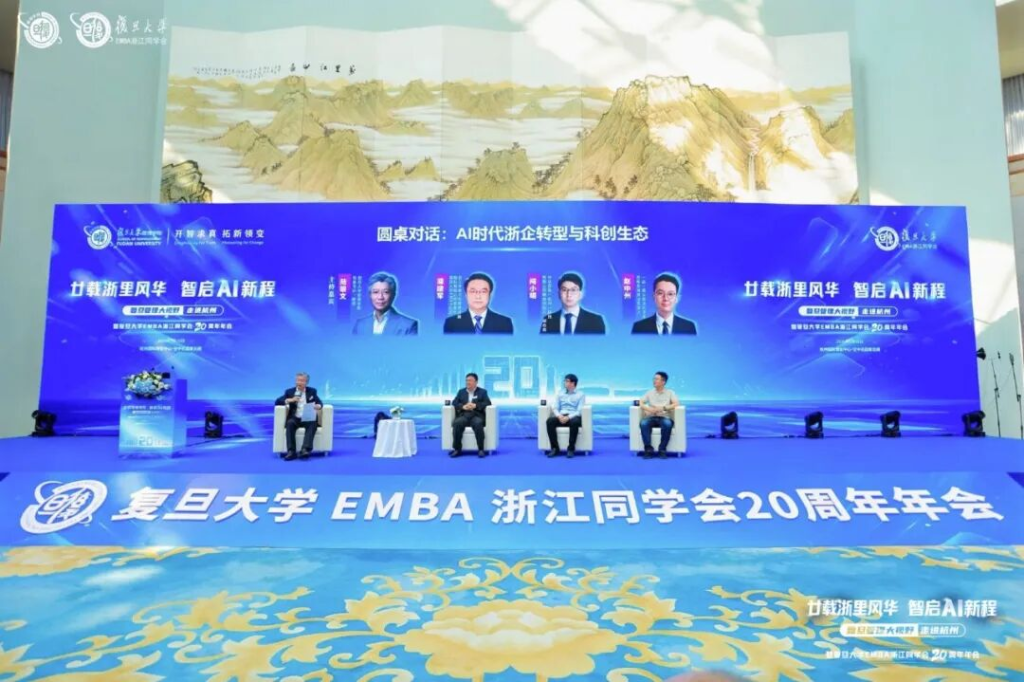
The panel discussion was moderated by Dean Xiongwen Lu of the School of Management at Fudan University. He was joined by: Jianjun Pan, Fudan EMBA alumnus and Chairman of Zhejiang Meorient International Exhibition Co., Ltd.; Xiaoming Chuang, Co-Founder and Vice President of Zhonghao Singen (Hangzhou) Technology Co., Ltd.; Zhongzhou Zhao, Former Tongyi Algorithm Scientist and Head of Bailian Applied Algorithms. The panel explored "Zhejiang Enterprise Transformation and Sci-Tech Innovation Ecosystem in the AI Era".
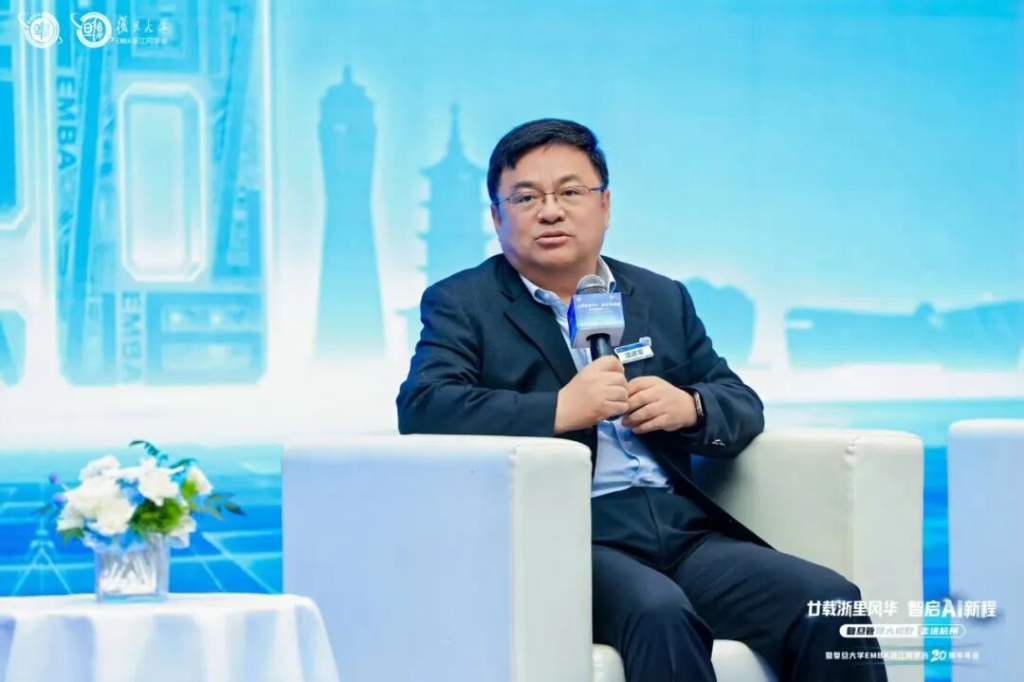
Jianjun Pan shared his enterprise's transformation experience: "Last year, we launched the industry's first AI-powered exhibition product. From a traditional enterprise to an AI-driven enterprise, we position ourselves not as technology leaders or inventors, but as creators of optimal application scenarios -integrating cutting-edge technologies into concrete business scenarios to drive iteration, optimization, and the advancement of the exhibition industry. For instance, access control at exhibitions not only counts attendees but also instantly notifies relevant exhibitors of potential buyers entering the venue. We also capture data such as on-site behavioral trajectories and negotiation dynamics of exhibitors and buyers to support future exhibition optimization. While the international environment has significantly impacted our business, the 'going global' trend remains robust. Beyond exhibitions, we are actively seeking new growth areas in overseas services. We believe that the more volatile the global environment, the greater the demand for high-quality service providers."
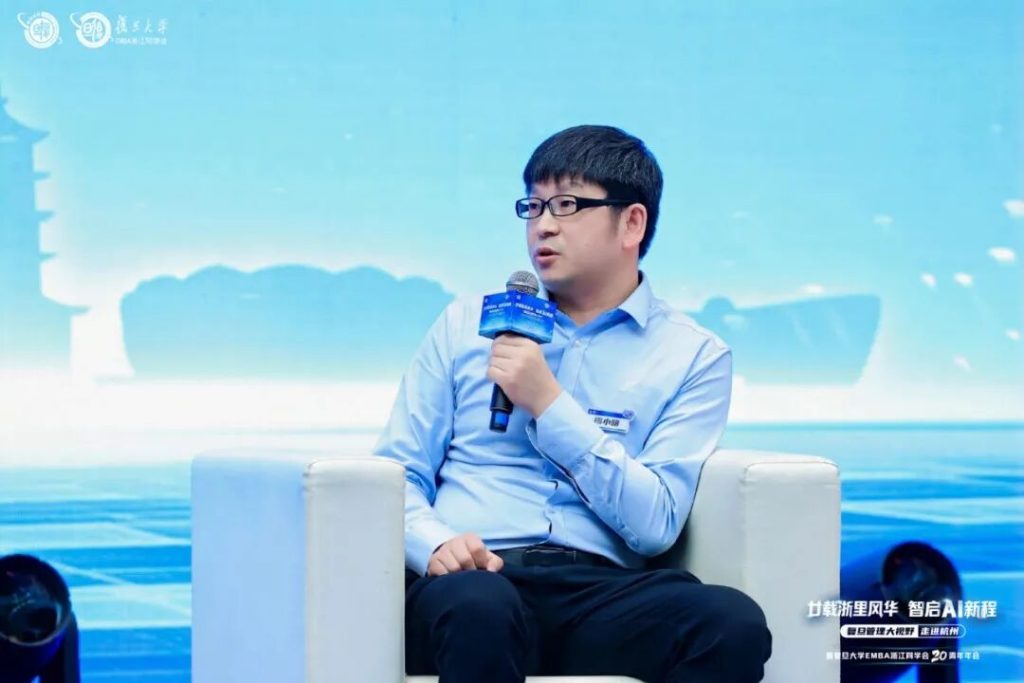
Xiaoming Chuang outlined the state of China's computing power: "Zhonghao Corewin focuses on AI-specific computing power chips based on Tensor Processing Units (TPUs) and thousand-GPU cluster systems. We achieved our first successful tape-out and industrialization in 2023. China still lags in global computing power competition: first, gaps in advanced manufacturing directly affect product performance and computing speed; second, semiconductor design started later, although the gap has narrowed markedly in recent years. Meanwhile, we excel in expanding algorithm application scenarios and responding to user needs, which actively offsets these gaps. Regardless of technological progress, the ultimate goal is to serve humanity, improve quality of life, and enhance competitiveness. On how AI and future technology will reshape the world, I remain committed to a people-centric approach, tightly integrating technology with human well-being -this is the belief of our enterprise and of myself."
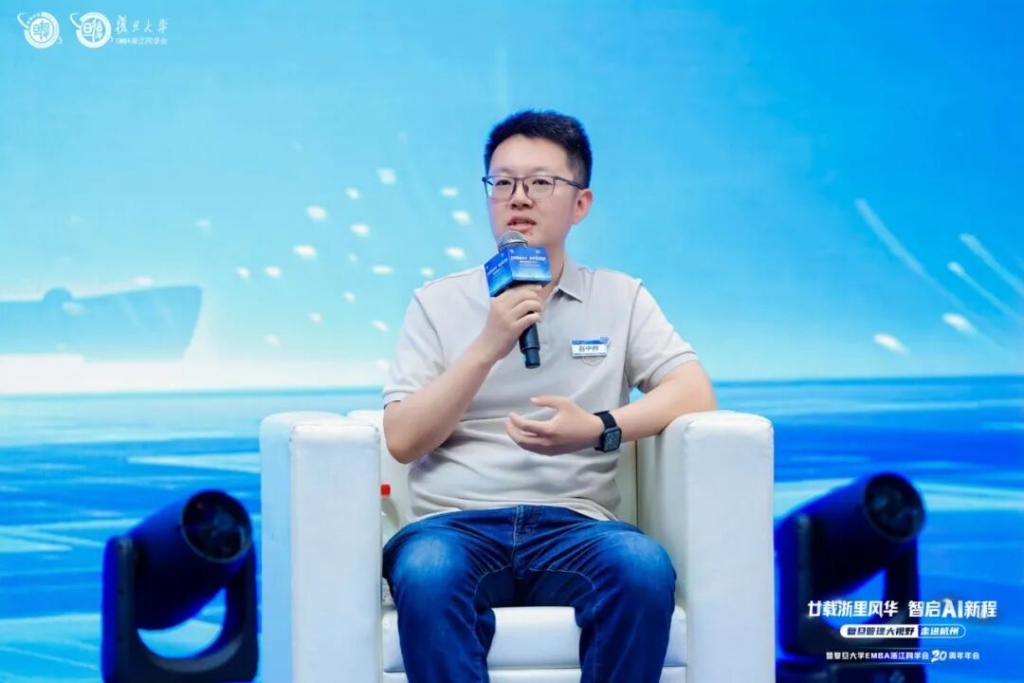
Zhongzhou Zhao analyzed AI implementation from a technical perspective: "To perfect the end-to-end model, three inevitable challenges arise: knowledge, processes, and organization. First, knowledge includes not only explicit data but also the preservation and transfer of tacit experience. Second, processes must be effectively managed and connected to ensure a complete business chain. Third, in advancing human-machine collaboration, we find that business experts score AI performance at 70-80 points in offline testing, yet online adoption rates fall below 50%. This reflects issues in frontline employee-AI collaboration and the need to clarify human-machine role boundaries. Today, AI can act as a "third role" in organizations, functioning as digital employees. Beyond focusing on the most painful business scenarios, enterprises must establish a high-frequency feedback mechanism. Only continuous, high-frequency feedback can drive iterative improvement of AI in application and potentially become a new growth engine for enterprises."
In his concluding remarks, Dean Xiongwen Lu noted: "Alumnus Jianjun Pan's journey -from pioneering online exhibitions to using AI for precise matching of exhibitors and audiences -is a tangible example of traditional industries enhancing value through AI. The limited progress of traditional industry upgrading over the past 20 years stems from technological constraints, making the independent R&D efforts of entrepreneurs like Xiaoming Chuang and Zhongzhou Zhao all the more significant." He emphasized: "We firmly believe that in this era, merely embracing AI is insufficient; those without core AI capabilities will inevitably be left behind. As AI advances, it remains difficult to predict whether it will gradually displace humans or cause small-scale disruptions. What is certain is that those who master AI will hold greater power."

Dean Lu also outlined the School's strategic priorities: "AI is a focal point across sectors and a key strategic direction Fudan SoM launched two years ago. We are comprehensively upgrading teaching, research, and student services with AI technologies. While teaching strategic entrepreneurship and innovative leadership, we are practicing what we preach. The newly launched Global MBA Program is a major innovation in education: first, we aim to attract global talent and take education 'going global', drawing more international students to China to understand the country. Studying alongside Chinese students builds mutual trust and understanding, which evolves into shared commitment to the shared future of humanity. Meanwhile, the Global MBA classroom integrates cutting-edge technologies including AI to create engaging, interactive, efficient, and convenient learning experiences."
In his closing message, Dean Lu said: "I hope all students and alumni stand at the forefront of the AI era, ride the tide, master AI, and harness AI. Only by setting boundaries for AI can humanity avoid being bounded by AI."
20th Anniversary Annual Meeting of the Fudan EMBA Zhejiang Alumni Association
The 20th Anniversary Annual Meeting of the Fudan EMBA Zhejiang Alumni Association was also held on the same day. Mingqiu Zhu, President of the Fudan EMBA Zhejiang Alumni Association, delivered a speech. Dean Xiongwen Lu of the School of Management at Fudan University presented a school update and presented appreciation plaques to forum guests. The forum was moderated by Qijing Xiao, Vice President and Secretary-General of the Fudan EMBA Zhejiang Alumni Association.
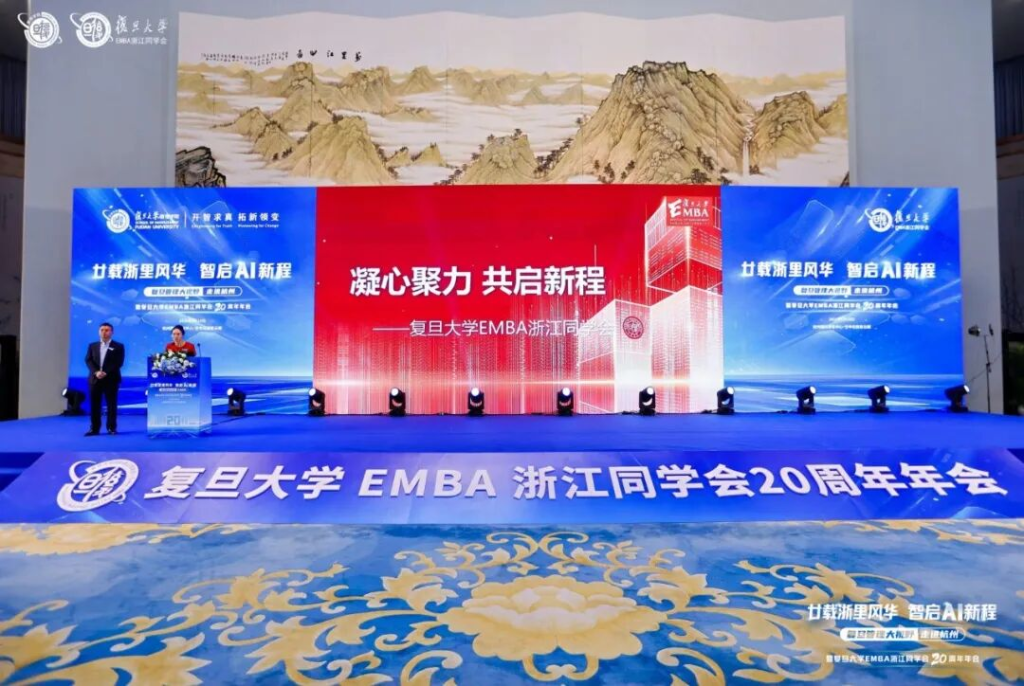
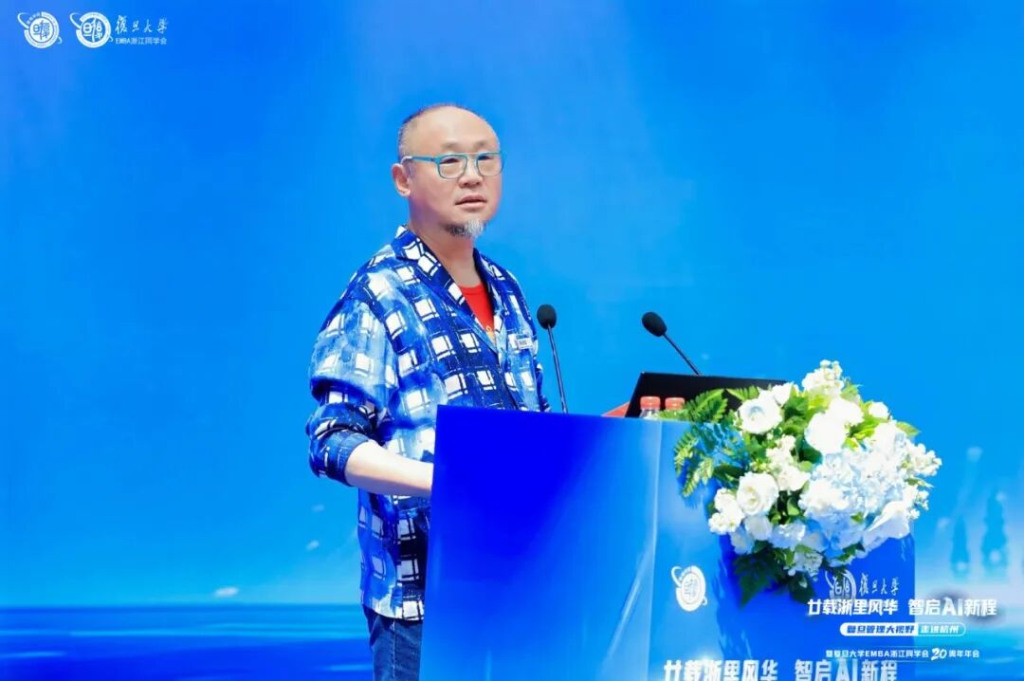
Speech by Mingqiu Zhu, President of the Fudan EMBA Zhejiang Alumni Association
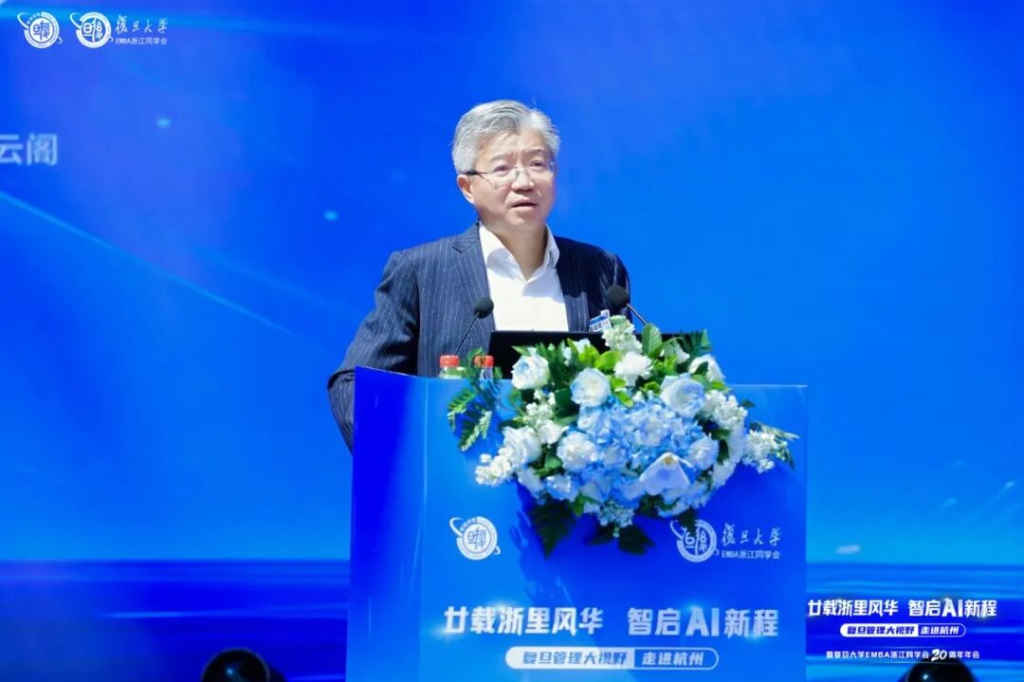
Dean Xiongwen Lu of the School of Management at Fudan University delivered a report on the development of the School
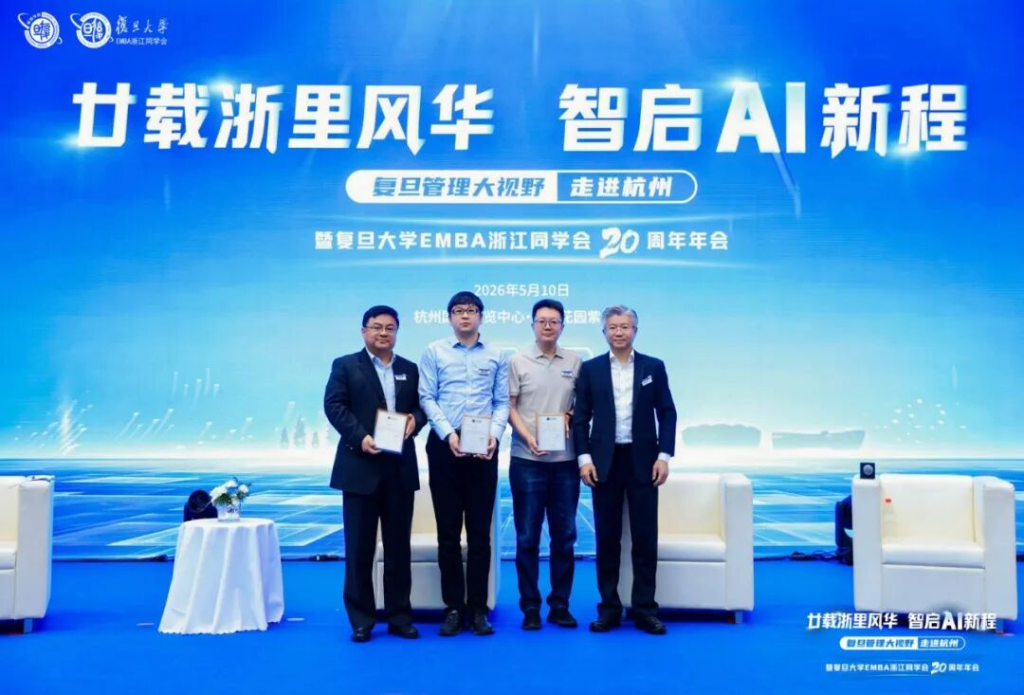
Dean Xiongwen Lu of the School of Management at Fudan University presented appreciation plaques to forum guests
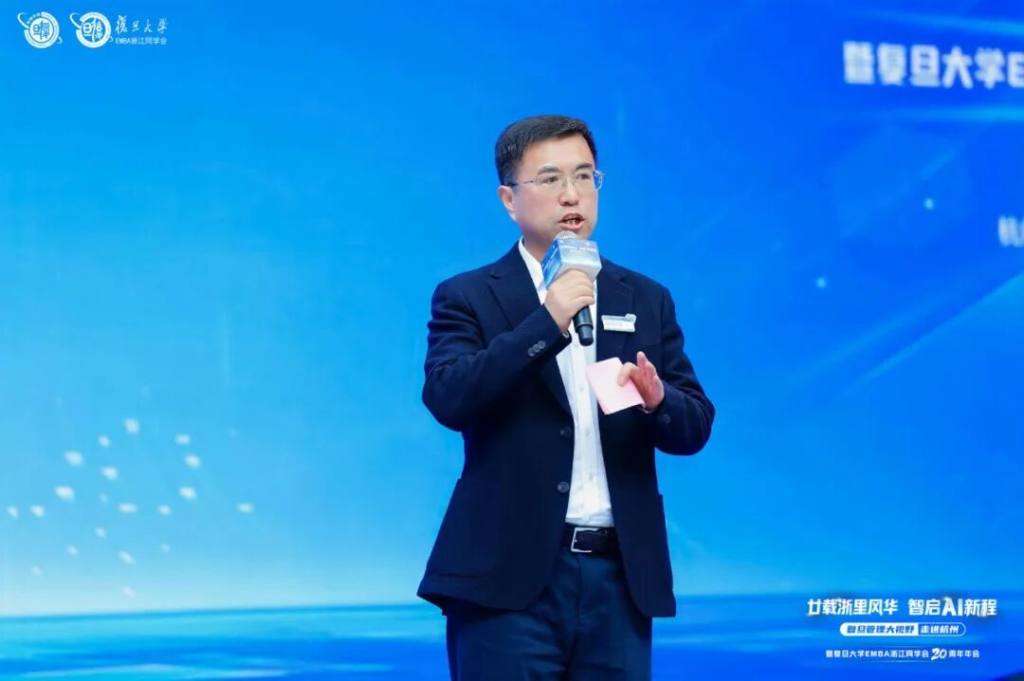
The forum was moderated by Qijing Xiao, Vice President and Secretary-General of the Fudan EMBA Zhejiang Alumni Association
