Shanghai Marketing Association Brand Forum and Brand Committee Inauguration Held at Fudan SoM Zhengli Campus
Recently, the Shanghai Marketing Association Brand Forum and the inauguration ceremony of its Brand Committee were grandly held at the Zhengli Campus of the School of Management at Fudan University. Centered on the theme of "Building Benchmark Brands amid Consumption Transformation and the AI Era," the event brought together more than 500 industry leaders from brand enterprises, universities, investment institutions, and business associations to witness the establishment of the Brand Committee of the Shanghai Marketing Association and to engage in in-depth discussions on breakthrough strategies and growth pathways for Chinese brands amid a new consumption cycle and the wave of AI technologies.
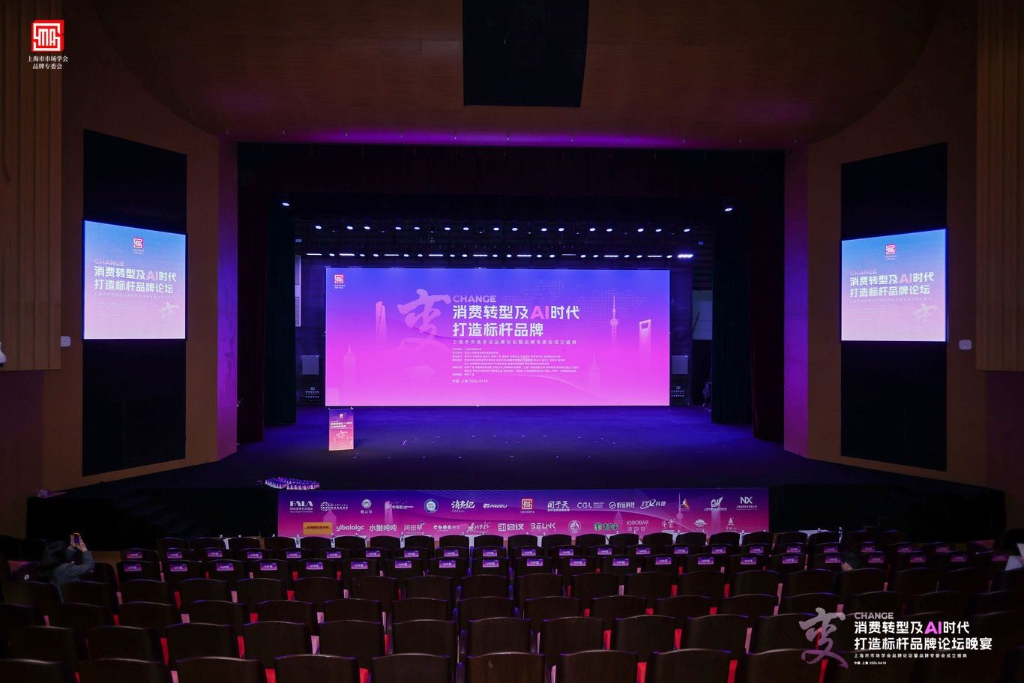
The event was hosted by the Shanghai Marketing Association, with academic support provided by the Department of Marketing of the School of Management at Fudan University, and jointly organized by multiple institutions, including the Fudan University EMBA Fashion, Aesthetics and Lifestyle Association and the Fudan EMBA Smart Retail Association.
Launch of an Authoritative Platform: Defining a New Height for Brand Development in Shanghai
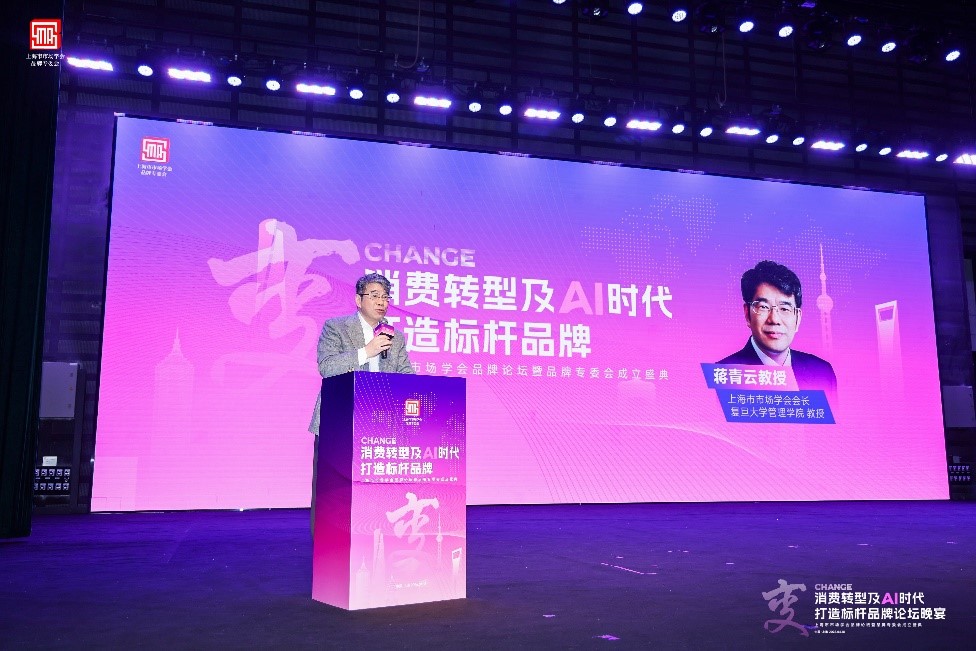
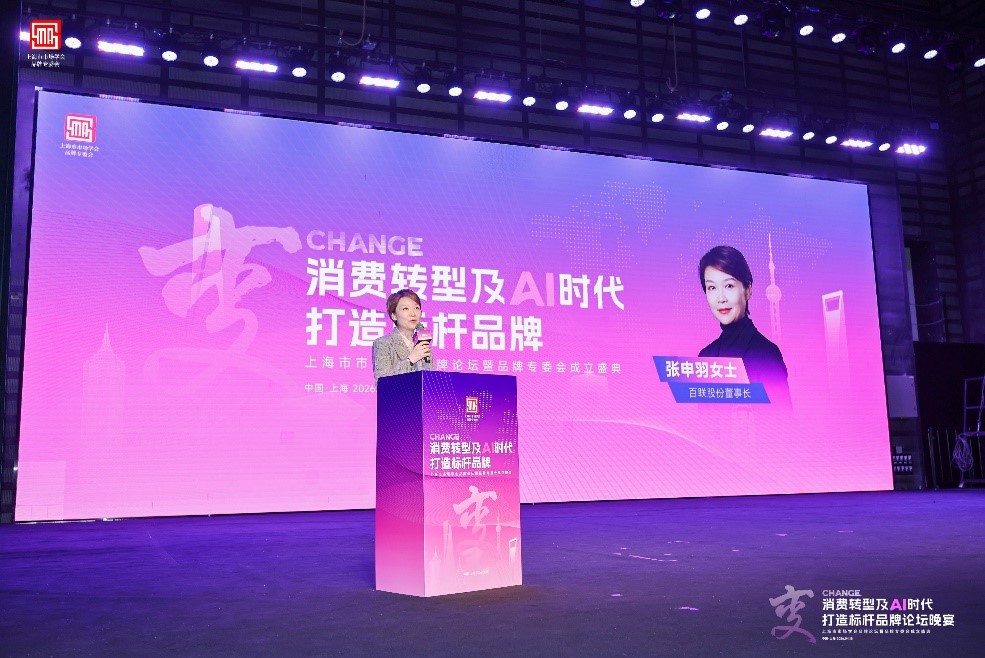
Qingyun Jiang, President of the Shanghai Marketing Association and Professor at the School of Management at Fudan University, and Shenyu Zhang, Vice President of the Shanghai Marketing Association and Chairwoman of Shanghai Bailian Group Co., Ltd.., delivered opening remarks in succession.
President Qingyun Jiang noted that, against the dual backdrop of consumption transformation and AI-driven change, brand building has become a core competitive capability of enterprises. The establishment of the Brand Committee, he said, will create a collaborative resource platform linking academia, business, and capital for the brand sector in Shanghai and across China, and will support enterprises in upgrading from product-oriented operations to brand-oriented operations.
Vice President Shenyu Zhang first congratulated the Brand Committee on its establishment and proposed that brand strength = product strength × emotional connection × time. Drawing on the context of consumption transformation in the AI era, she shared Bailian's practices in revitalizing time-honored brands, building community-based commercial models, expanding services for older consumers, and restructuring commercial space formats. She emphasized that AI is a tool that serves business, while the essence of branding lies in emotional resonance with consumers. She also expressed her hope of joining hands with all parties to advance the upgrading of Chinese brands.
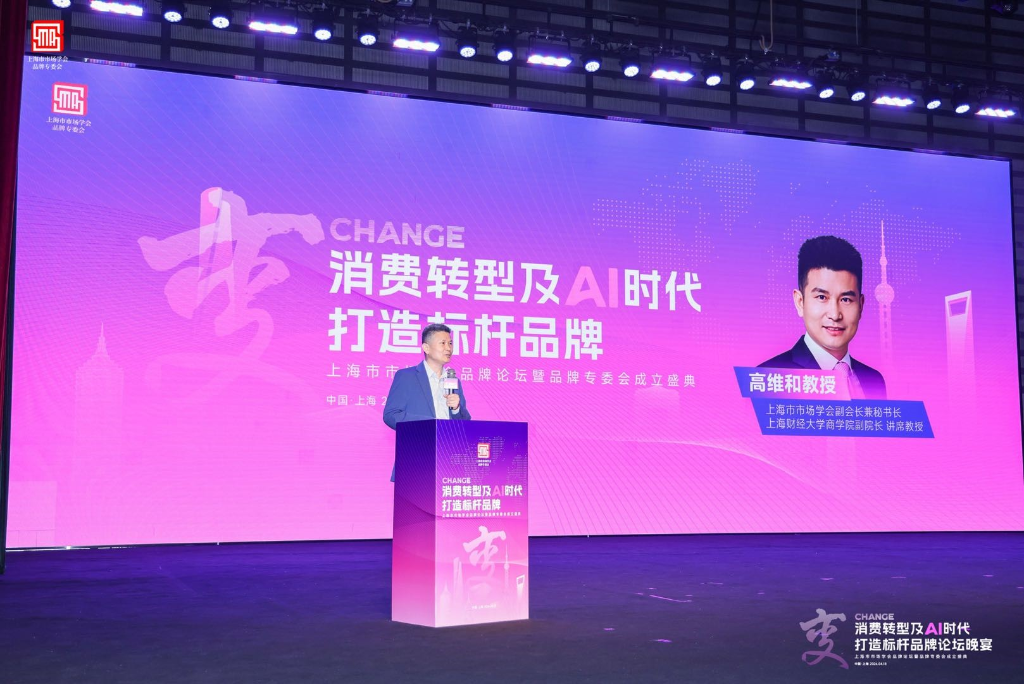
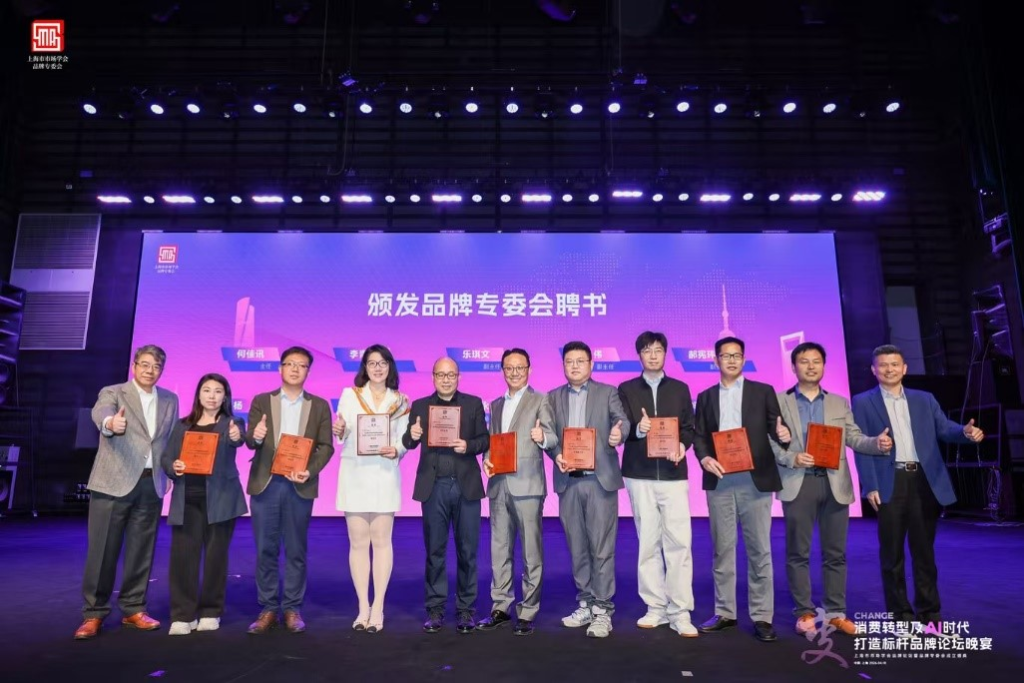
Weihe Gao, Vice President and Secretary-General of the Shanghai Marketing Association and Associate Dean and Chair Professor of the School of Business at Shanghai University of Finance and Economics, introduced the background, purpose, and positioning of the Brand Committee, officially announced its establishment, and, together with President Qingyun Jiang, presented certificates of appointment to the committee members.
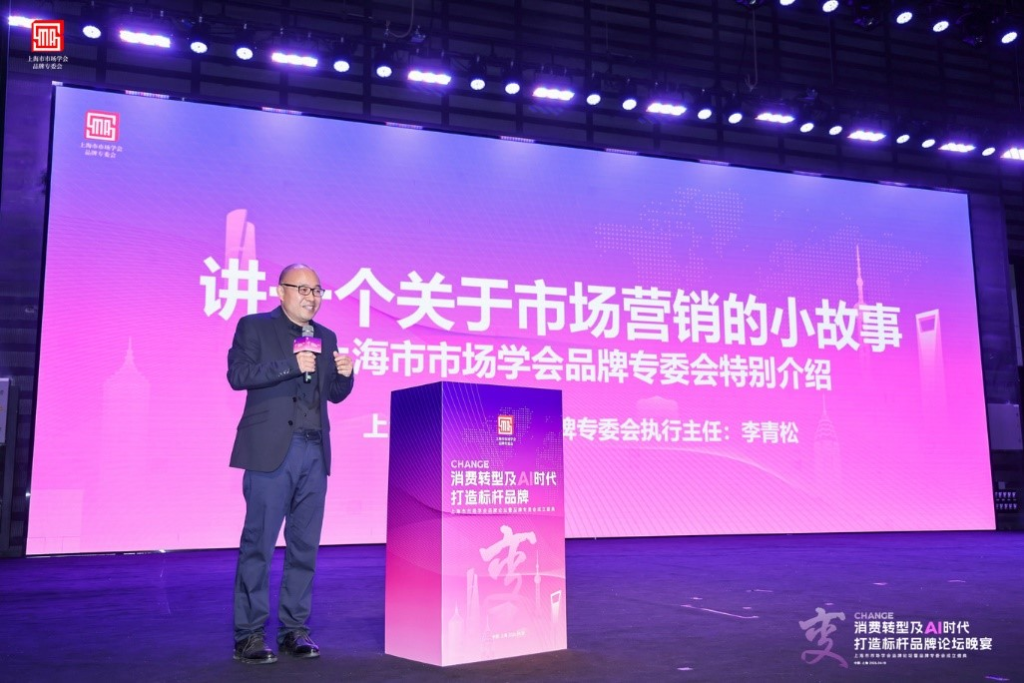
Qingsong Li, Executive Director of the Brand Committee, introduced the committee's future plans. He explained that the committee will focus on three major areas - brand strategy research, industry exchange, and resource matching - and, with a pragmatic and professional approach, provide enterprises with full-chain services spanning brand cultivation, upgrading, and international development. Relying on both academic resources from universities and practical resources from enterprises, the committee aims to become Shanghai's most influential benchmark platform for industry-university-research collaboration in branding, helping member enterprises build benchmark brands that combine local roots with international influence, while sharing frontier research, industry networks, and capital connections to inject lasting momentum into high-quality development.
A Strong Lineup of Guest Speakers Decoding the Growth Logic of Benchmark Brands
The forum invited four influential speakers from different sectors to share practical experience and theoretical reflections on branding in the context of consumption transformation and the AI era. Each speaker represented a benchmark force within his or her respective field.
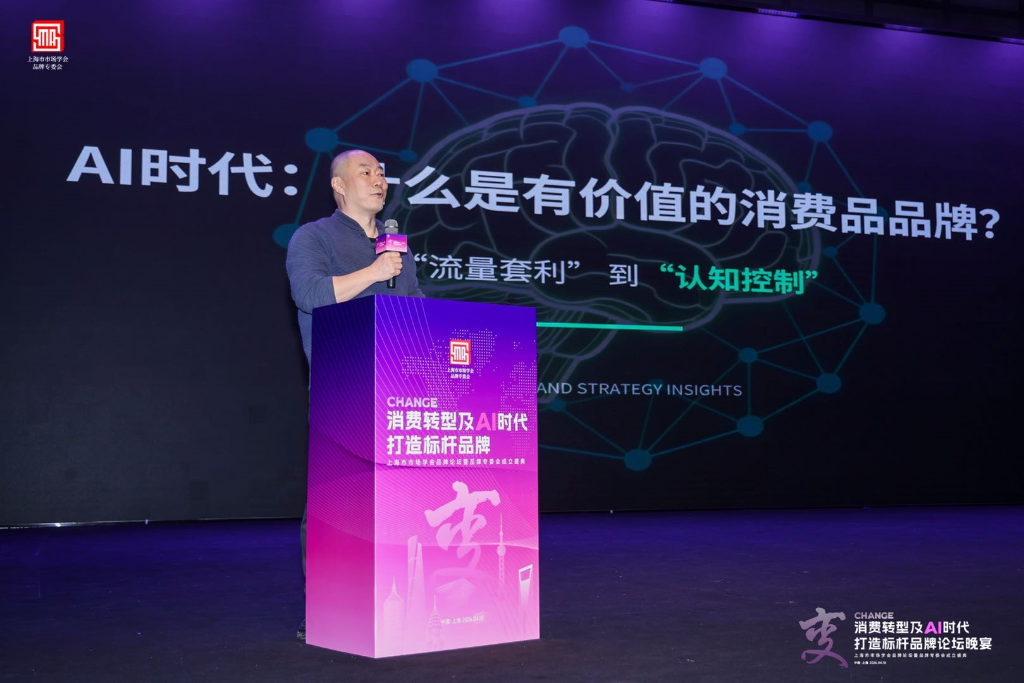
Tao Huang, CEO of Lily & Beauty: What Makes a Brand Valuable in a Period of Consumption Transformation
As the leader of one of China's leading beauty e-commerce companies, Tao Huang observed that as the era of traffic dividends fades, the core value of branding has shifted from transaction to trust. In the AI era, enterprises need to build irreplaceability in users' minds through three capabilities: user insight, product innovation, and digital operations. Only in this way can they create brands capable of enduring across cycles. He further argued that AI is reshaping the logic of brand decision-making. Traditional models of buzz generation and traffic acquisition are gradually losing effectiveness. Brands should shift from competing for traffic to addressing users' core problems, becoming the default choice for users through structured solutions and verifiable outcomes, thereby building durable barriers in the AI era.
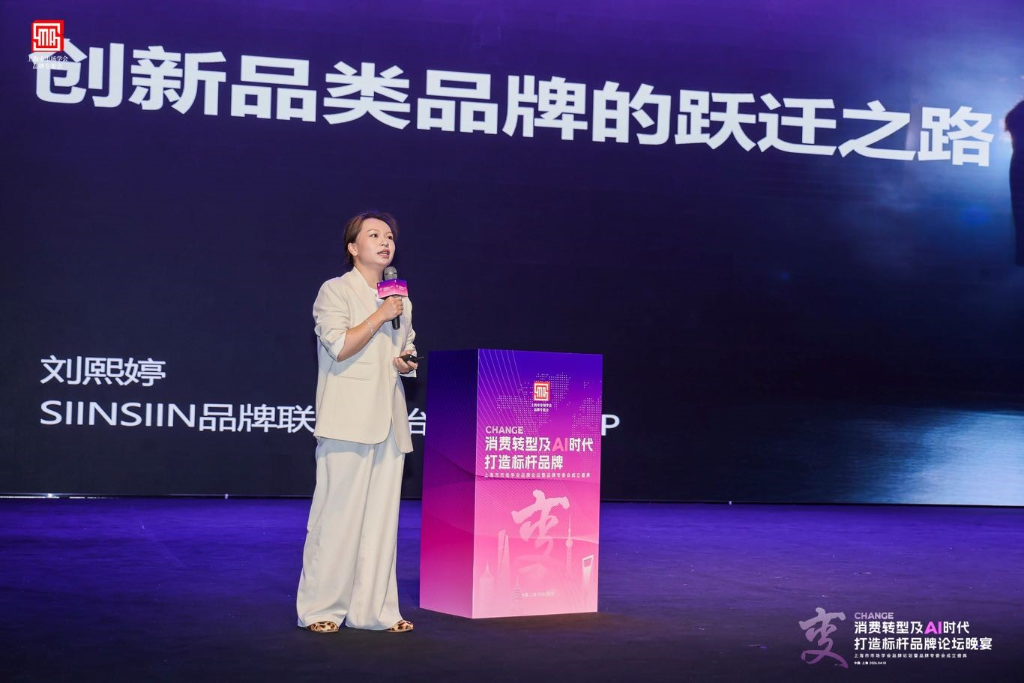
Xiting Liu, Co-founder of SIINSIIN: The Leap of the SIINSIIN Brand
The case of SIINSIIN, a functional apparel brand that has broken through in a niche market, offers a model for emerging brands. Xiting Liu shared how the brand entered the market with a "light shaping" positioning and achieved a transition from hit products to a full-fledged brand through innovation in product standards and omni-channel marketing operations, illustrating a path for breakthrough in a period of consumption transformation. She emphasized that the brand is built around the core positioning of fashionable essentials, with deep attention to women's real needs. It advocates equality in fashion, aesthetics, and technology, and insists on long-termism rather than short-term traffic harvesting. Through advanced fabrics, industry standards, and a full-scenario product matrix, the brand has driven category upgrading and achieved a transition from individual hit products to a sustainable brand.
Jiang Bao, General Manager of Power Dekor (Shanghai) New Materials: Brand Fission and Fusion in a Period of Consumption Transformation
As a representative of a leading home furnishing brand, Jiang Bao shared the path of diversified upgrading for traditional brands. He proposed that, under consumption transformation, brands need to place user needs at the center and achieve both fission in business development and fusion in resource integration, while continuing to consolidate their industry position through green living concepts, full-scenario solutions, and digital marketing. Through a sub-brand matrix, Power Dekor has covered diverse market segments; through co-branding with the NBA, it has advanced brand rejuvenation; and through AI- and data-driven precision marketing, it has addressed conflicts in brand positioning caused by traffic fragmentation and business diversification, thereby enabling innovative growth and long-term development for a traditional home furnishing brand.
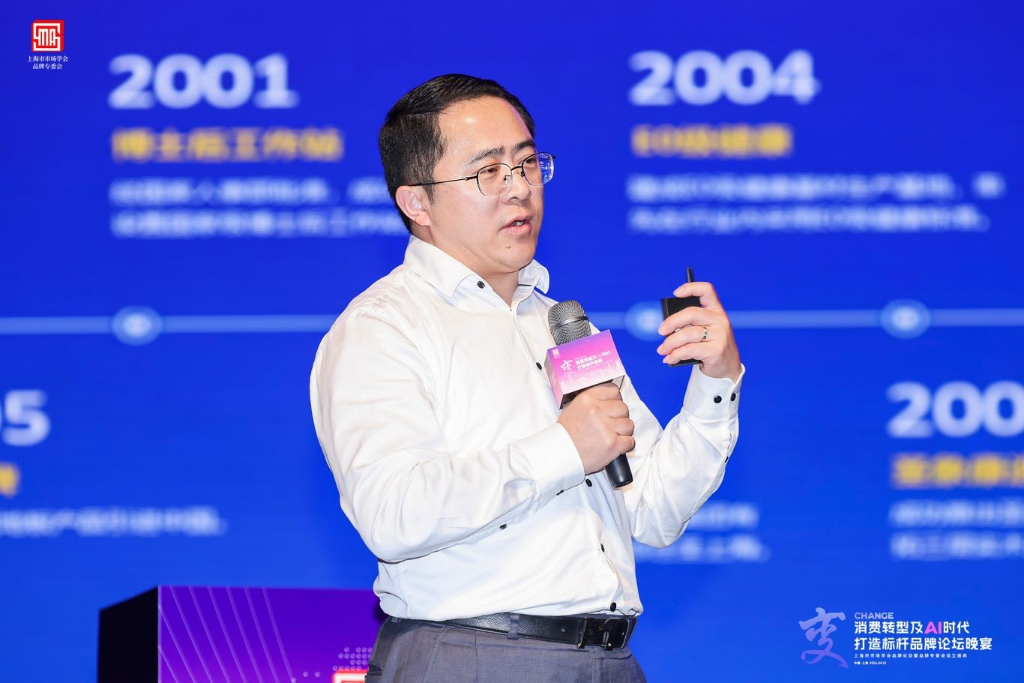
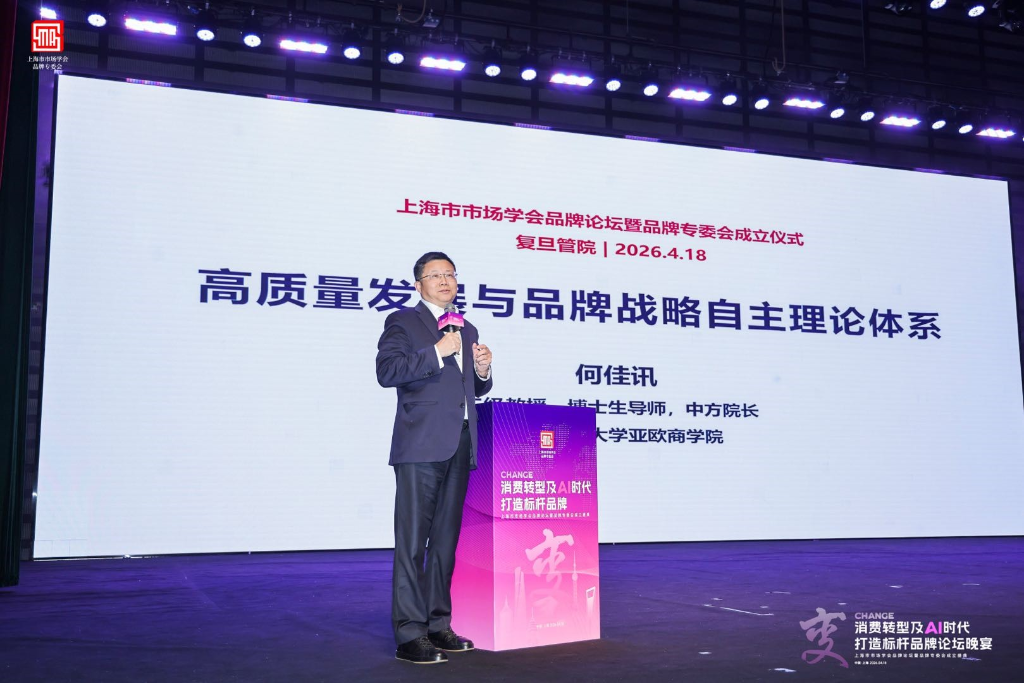
Jiaxun He, Vice President of the Shanghai Marketing Association, Professor at East China Normal University, and Director of the National Brand Strategy Research Center: High-quality Development and an Indigenous Theoretical System of Brand Strategy
From an academic perspective, Professor Jiaxun He interpreted the underlying logic of the high-quality development of Chinese brands. He argued that under the dual challenges of international competition and technological transformation, Chinese brands urgently need to build an indigenous theoretical system of brand strategy, rooted in local culture and markets, in order to create Chinese brands with global influence.
Two Roundtable Dialogues Sparking New Thinking on Brand Breakthroughs
Two roundtable forums in the afternoon focused on practical issues and pushed the event to a climax, as industry leaders engaged in face-to-face exchanges and directly addressed key pain points in the sector.
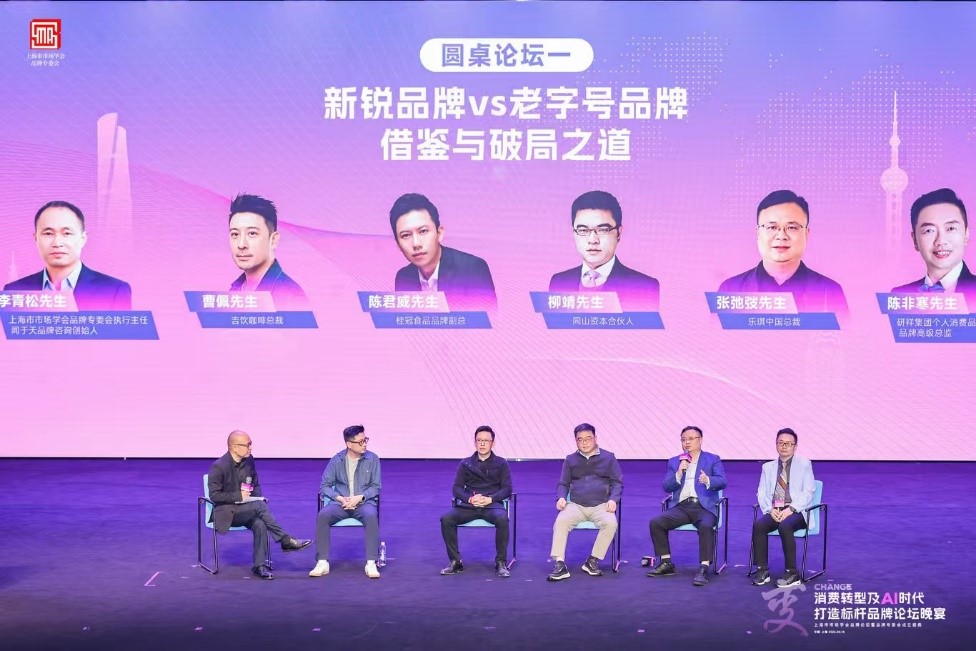
Roundtable Forum I: Emerging Brands vs. Time-honored Brands - Lessons and Paths to Breakthrough
Moderated by Qingsong Li, Founder of Wenyutian Brand Consulting, this roundtable featured guests from Ji Yin Coffee, Laurel Foods, Tongshan Capital, Leqi China, and EVOC Group. The discussion centered on the core bottlenecks and breakthrough attempts of time-honored and emerging brands under conditions of consumption transformation, traffic restructuring, and technological iteration. The guests explored how time-honored brands can learn from the flexible user insight, digital operations, and younger branding strategies of emerging brands, while emerging brands can draw on the long-termist business philosophy and solid industrial foundations of time-honored brands in order to strengthen their internal capabilities and achieve steady development during rapid growth. They also shared practical applications of AI in user insight, content marketing, and product development, and jointly discussed how the two types of brands can leverage their respective strengths, complement each other's weaknesses, and find a balance between long-termism and innovative vitality in order to advance together toward high-quality development.
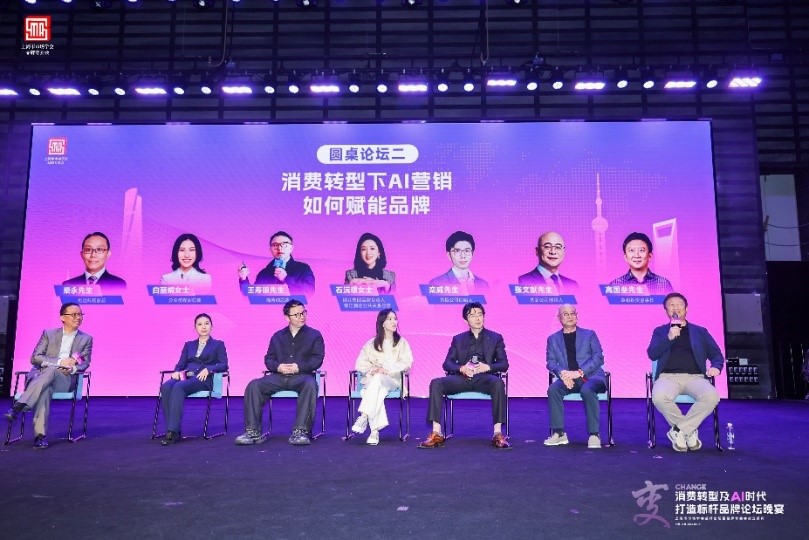
Roundtable Forum II: How AI Marketing Empowers Brands under Consumption Transformation
Moderated by Yong Chai, Vice President of Xianyuan Technology, this roundtable brought together guests from Focus Media, Frees Fund, Jin Jiang Group, Yibai, Yifei, and Zhanghe Investment to share practical experience in AI marketing. Starting from real pain points, common pitfalls, and benchmark cases, the guests analyzed the practical value of AI in user insight, content production, precision marketing, and experience upgrading. They pointed out that AI has become a core engine for brands to improve quality and efficiency and to reconstruct competitiveness in the context of consumption transformation. The participants generally agreed that brands should remain grounded in long-term value, drive efficiency transformation through technological innovation, and empower decision-making upgrades through data intelligence. At the same time, while embracing AI, brands should remain committed to their original mission and chart a new path of high-quality development that combines technological empowerment with strong brand conviction. The on-site discussion was lively and full of memorable insights, producing a large number of practical methodologies and leaving the audience with the feeling that the session was rich in substantive takeaways.