Advancing the Frontiers of Bayesian Statistics, Exploring New Pathways for Integration with AI | Academic Spotlight
From August 4 to 5, 2026, the Frontiers Forum on Bayesian Statistics and Artificial Intelligence, organized by the Bayesian Statistics Branch of the Chinese Association for Applied Statistics, was held at the Zhengli Campus of Fudan University School of Management. The forum title, organizer name and venue follow the official English terminology previously used by Fudan SoM.
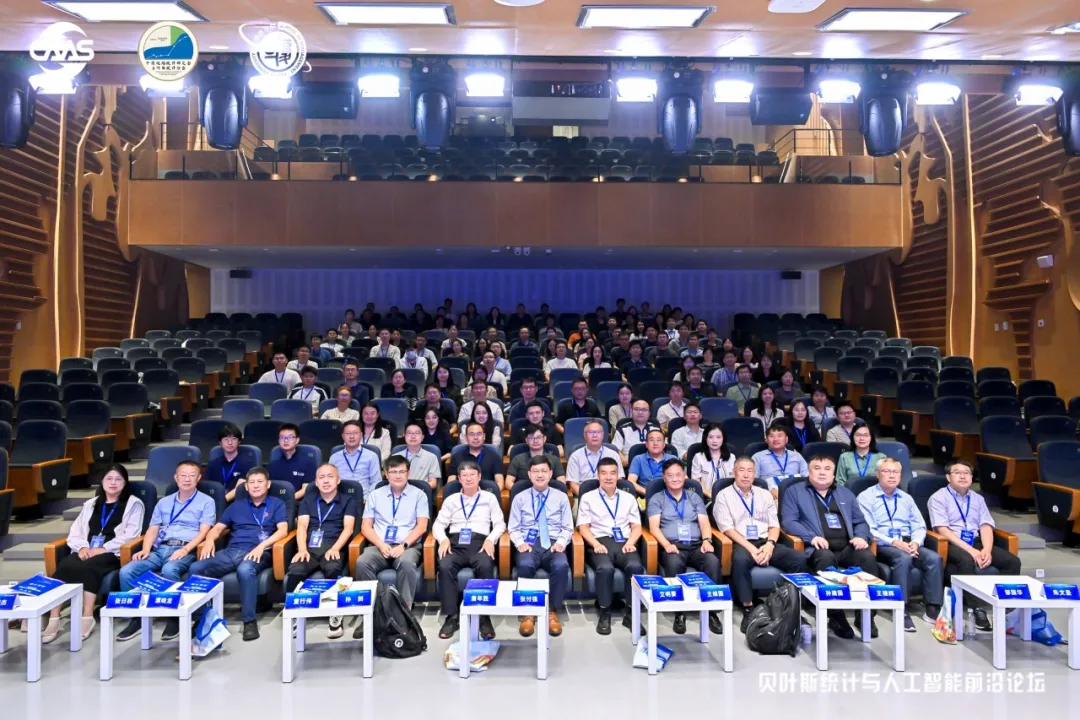
Organized by the Bayesian Statistics Branch of the Chinese Association for Applied Statistics and hosted by Fudan University School of Management, the forum brought together experts, scholars, researchers and young students from universities and research institutions in China and abroad. Participants engaged in in-depth discussions on cutting-edge developments in Bayesian statistical theory and methods, as well as their interdisciplinary integration with artificial intelligence.
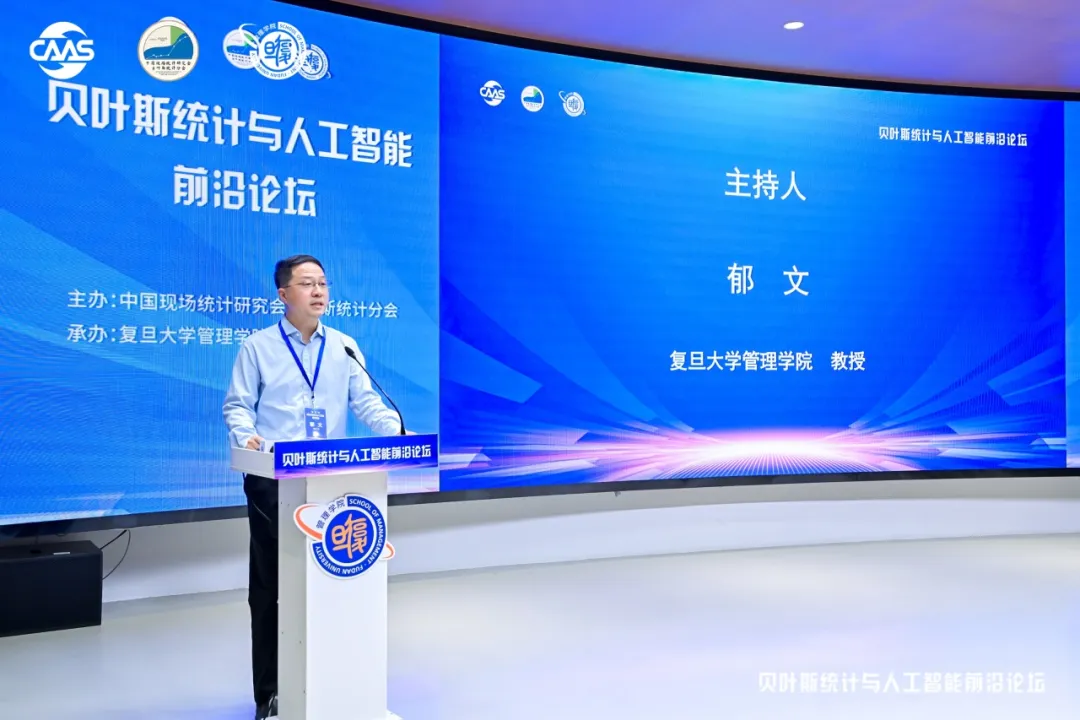
Professor Wen Yu of the Department of Statistics and Data Science, Fudan University School of Management, presided over the opening ceremony.
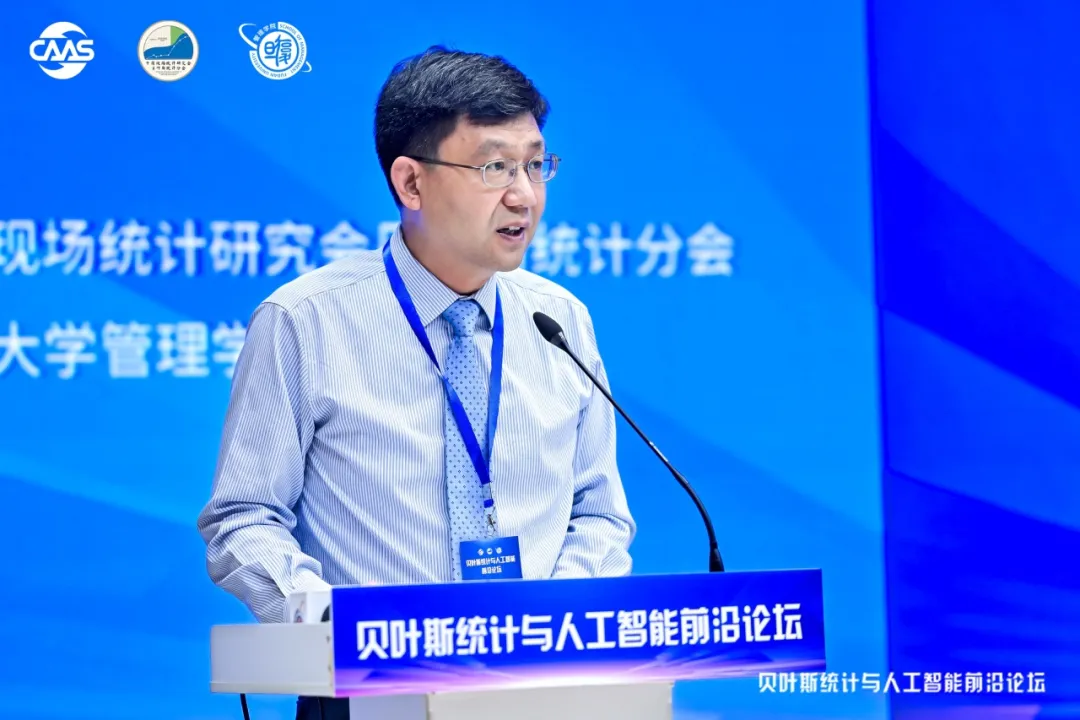
Professor Zhang Fuqiang, Dean and Li Dak Sum Chair Professor of Fudan University School of Management, delivered welcome remarks at the opening ceremony.
Dean Zhang noted that, in addition to its century-long tradition in business education, Fudan University also has a long history in statistics. With the rapid development of big data and AI, and in alignment with the School's Sci-Tech Innovation Strategy, the Department of Statistics was renamed the Department of Statistics and Data Science in November 2021 to keep pace with disciplinary developments. In recent years, the Department has made substantial progress in statistical research, teaching and practice, becoming an integral part of Fudan SoM's future-oriented business research and education.
Dean Zhang emphasized that a new wave of technological advancement is gathering momentum and becoming a core driver of national and social development. In response to this new round of technological revolution, the School continues to advance its Sci-Tech Innovation Strategy, proactively promote interdisciplinary integration between science and AI, and build an "AI+" innovative talent development system, exploring new pathways and establishing new paradigms for management education in China and beyond.
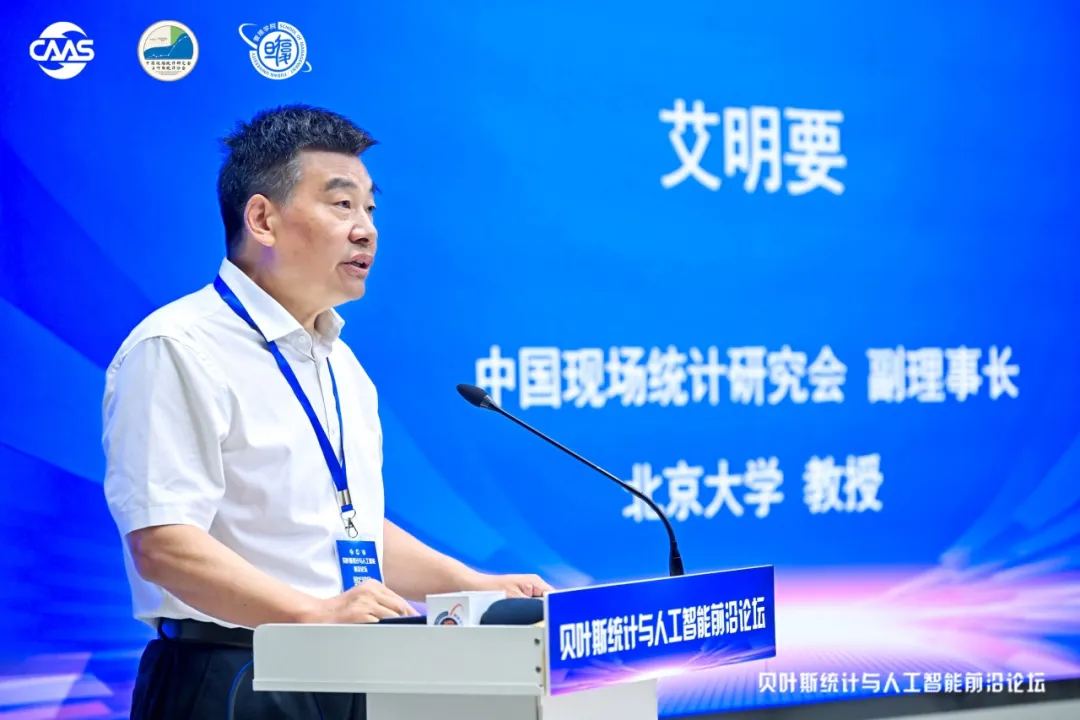
Professor Mingyao Ai, Vice President of the Chinese Association for Applied Statistics, noted in his remarks that, amid industrial transformation driven by big data and artificial intelligence, Bayesian statistics has distinctive strengths in integrating prior knowledge, sample data and real-time observations, particularly in probabilistic reasoning and uncertainty quantification. It therefore serves as an important bridge between traditional statistical theory and modern artificial intelligence.
He expressed the hope that statisticians would respond to major national strategies and the needs of the real economy, deepen interdisciplinary collaboration, facilitate the translation of research outcomes into practice, and create platforms that support the development of young talent.
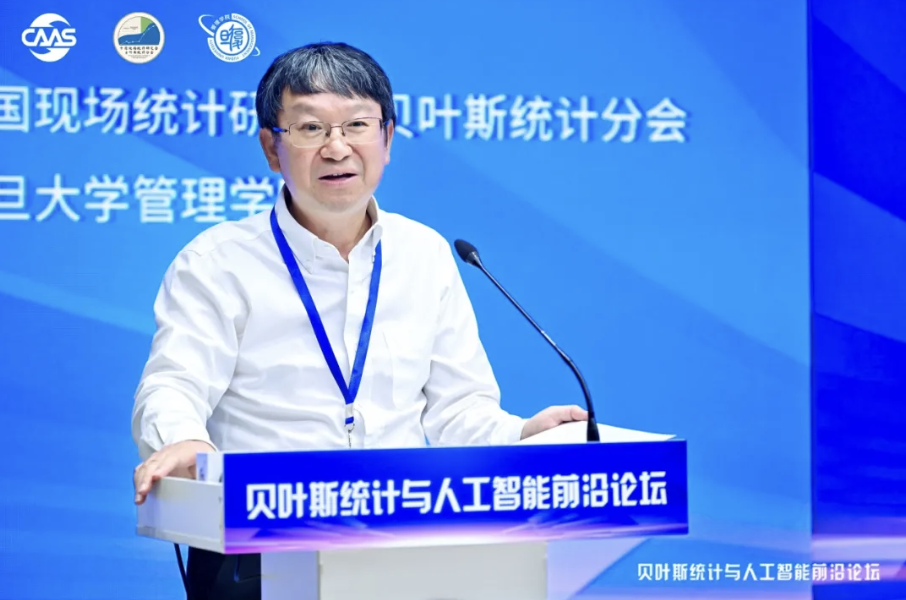
Professor Niansheng Tang, Vice President of Yunnan University, noted in his remarks that advancing the integration of Bayesian statistics and artificial intelligence not only responds to the national emphasis on interdisciplinary research and AI development, but also helps leverage the strengths of Bayesian methods in integrating sample information, prior knowledge and patterns embedded in data.
He expressed the hope that the academic community would further deepen interdisciplinary research, remain oriented toward practical needs, promote the application and translation of research outcomes, and continue to strengthen the pipeline of young talent in Bayesian statistics.
Keynote Speeches: From Statistical Inference to Generative Artificial Intelligence
The forum invited Professor Jianguo Sun of Southern University of Science and Technology and Professor Jian Sun of Xi'an Jiaotong University to deliver keynote speeches. Approaching the topic respectively from statistical inference for complex data and the mathematical foundations of generative artificial intelligence, the two talks showcased the diverse pathways through which statistics and AI can intersect.
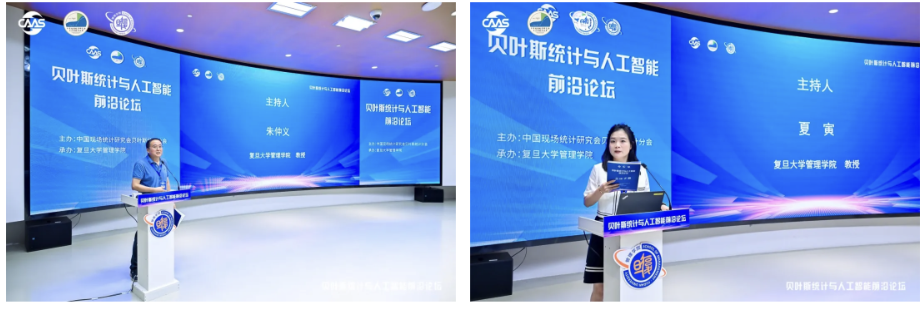
Professor Zhongyi Zhu and Professor Yin Xia of the Department of Statistics and Data Science, Fudan University School of Management, respectively moderated the two keynote sessions.
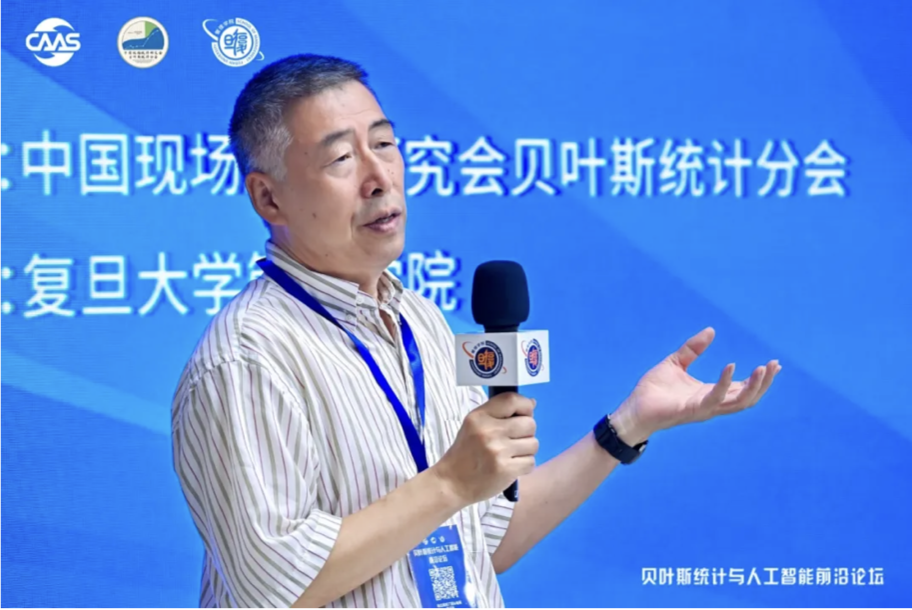
Professor Jianguo Sun of Southern University of Science and Technology delivered a presentation titled Transfer Learning Estimation for Regression Analysis of Failure Time Data, systematically introducing transfer learning methods for regression analysis of failure time data.
Addressing the challenges of limited information in target datasets and differences across data sources, he focused on transfer learning frameworks for right-censored and interval-censored data, as well as strategies including source detection, model averaging and adaptive weighting. Through simulation studies and real-world data analyses, the presentation demonstrated how these methods can improve estimation efficiency, identify useful information and mitigate negative transfer.
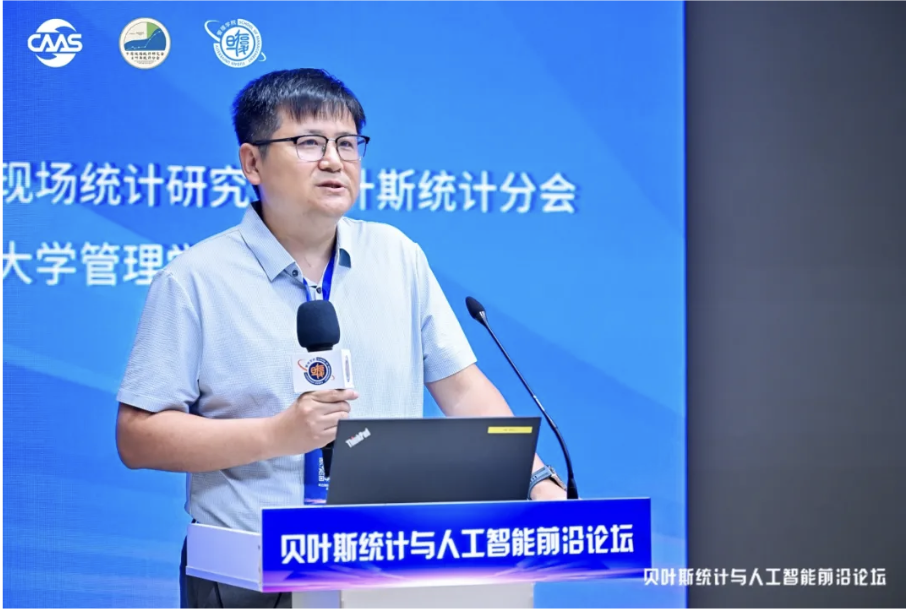
Professor Jian Sun of Xi'an Jiaotong University delivered a presentation titled Generative Artificial Intelligence: Mathematical Foundations and Interdisciplinary Applications, providing a systematic overview of the mathematical foundations and interdisciplinary applications of generative AI.
Starting from data distribution modeling and transformation, he introduced research on optimal transport-guided generative methods, multi-domain and multimodal generation, and dynamic system modeling and generation. Drawing on cases including image generation and restoration, medical multimodal analysis, disease modeling and single-cell dynamic modeling, he demonstrated the potential of mathematically driven generative AI to support scientific research and interdisciplinary applications.
Parallel Sessions: Exploring the Frontiers of Interdisciplinary Research
On the afternoon of August 4 and the morning of August 5, the forum featured 12 parallel sessions. A total of 93 speakers from universities and research institutions in China and abroad presented their work on cutting-edge developments in Bayesian statistical theory and methods and their integration with artificial intelligence, showcasing the latest research achievements in related fields and highlighting the vitality and potential of interdisciplinary research at the intersection of Bayesian statistics and AI.
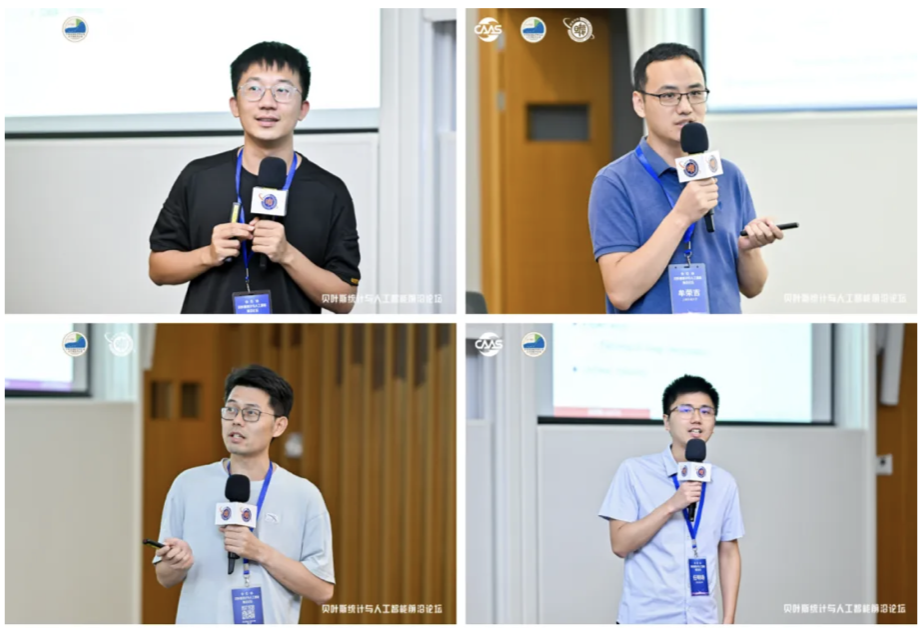
Through keynote speeches, parallel sessions and in-person exchanges, the forum presented the latest developments in Bayesian statistics and its integration with artificial intelligence. It further strengthened exchanges and connections across different research areas and created new opportunities for experts, scholars and young researchers to pursue collaboration and advance research innovation.
