A First for Fudan SoM: Inaugural 2026 DPAcc Cohort Begins Studies
Exploring the Digital-Intelligence Era, Rooted in Chinese Practice
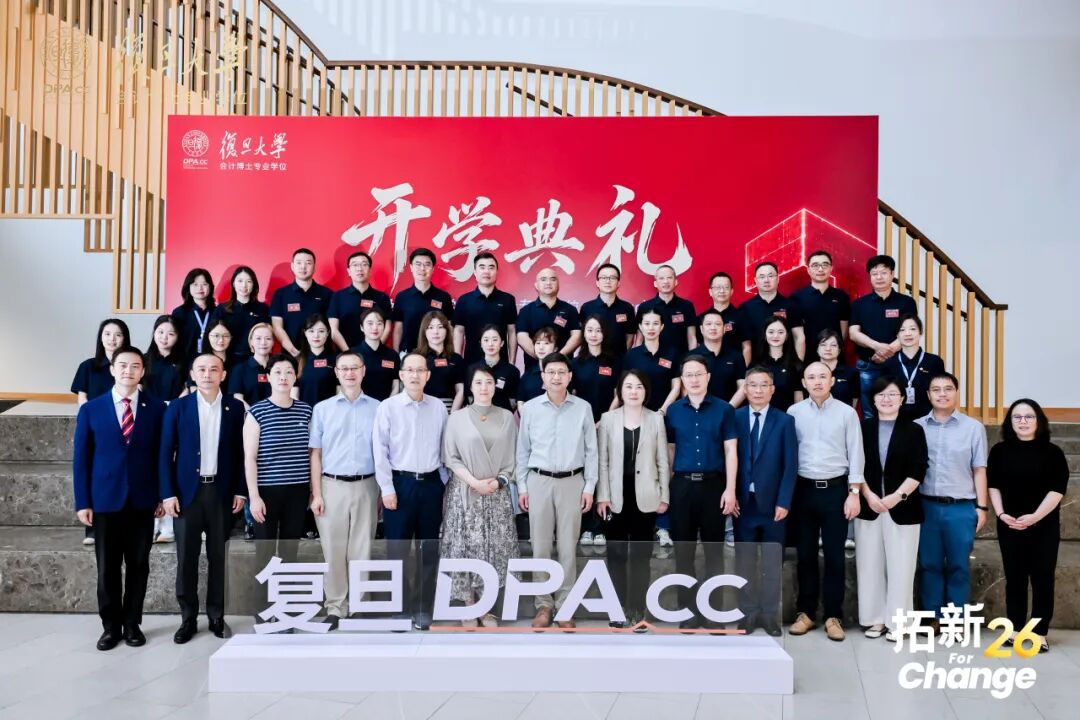
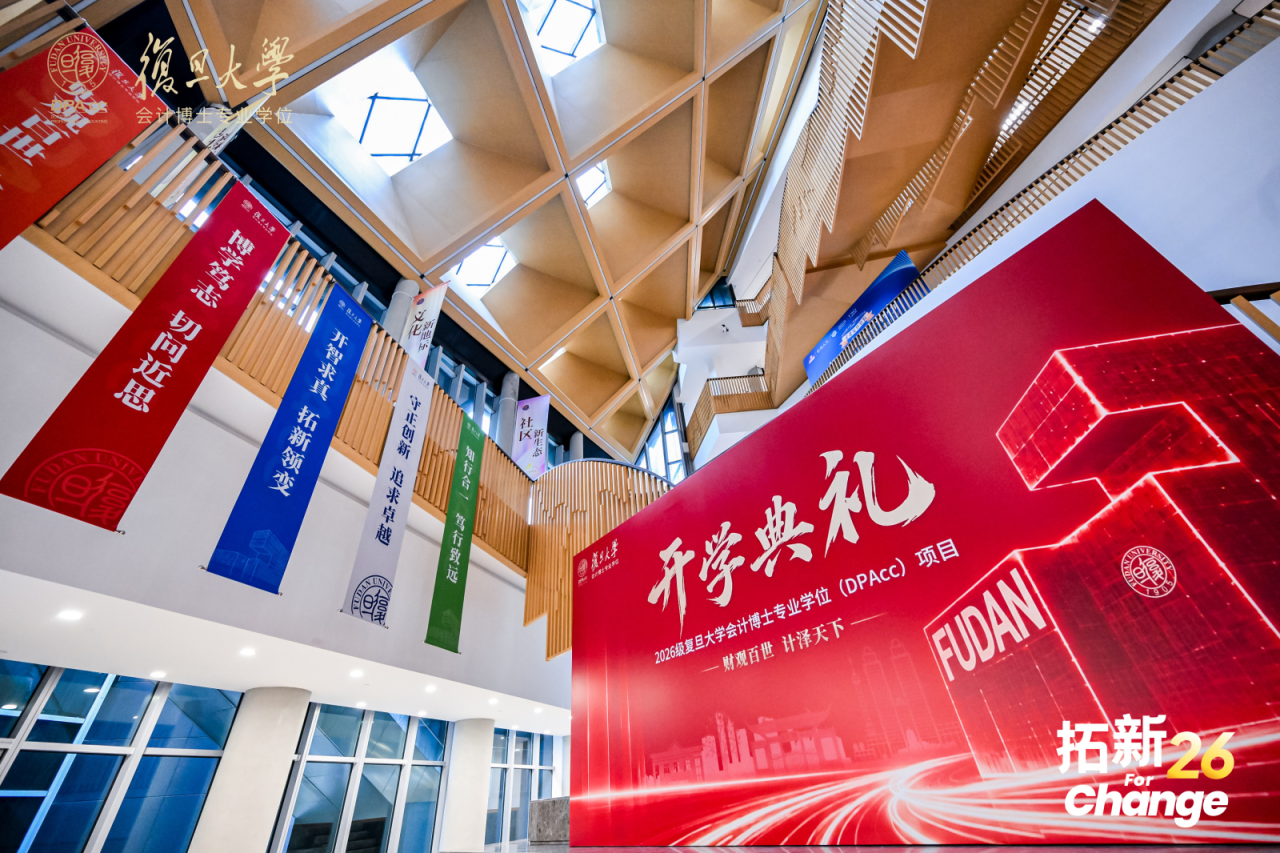
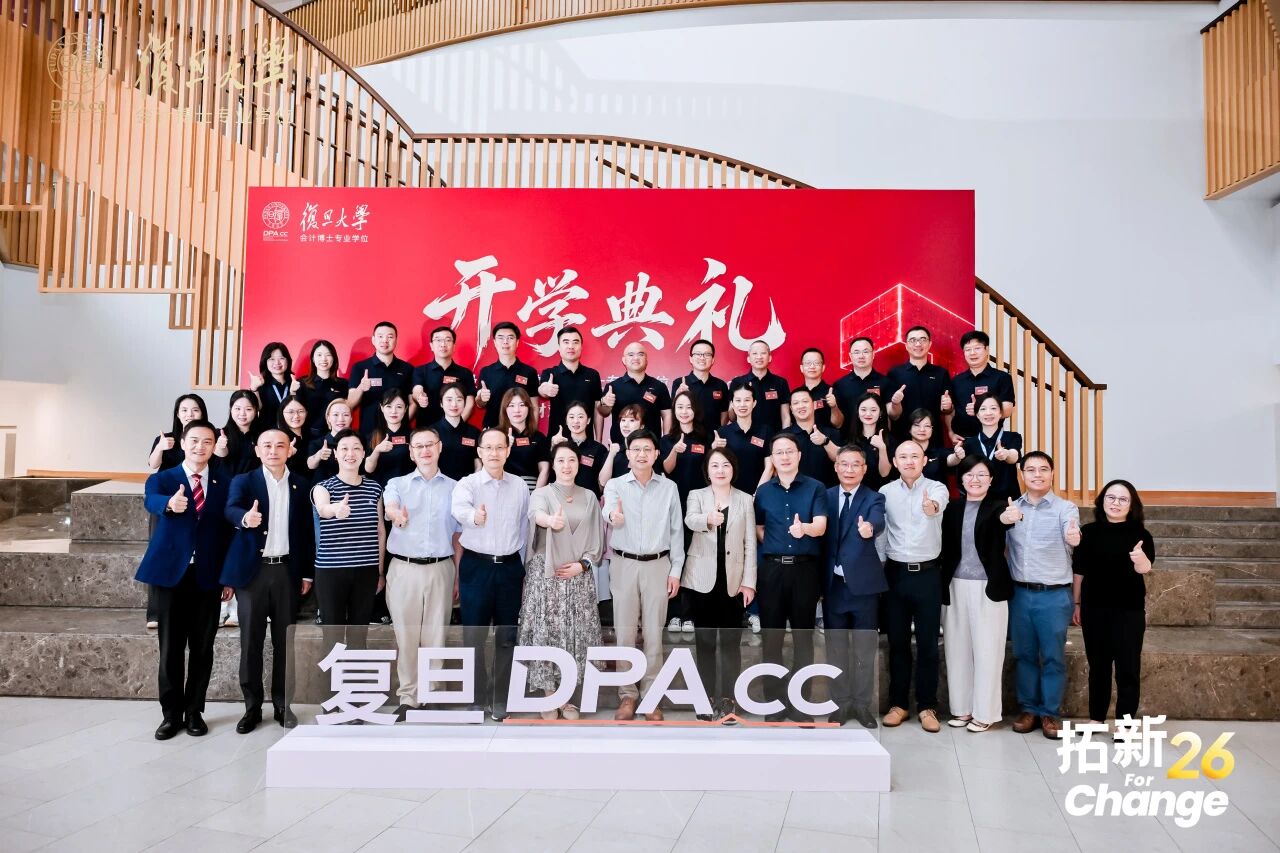
On September 11, the opening ceremony for the inaugural 2026 cohort of the Fudan University Doctor of Professional Accounting (DPAcc) Program was held at the Zhengli Campus of School of Management at Fudan University. As Fudan SoM's first professional doctoral degree program, DPAcc welcomed its inaugural students as they embarked on a new academic journey.
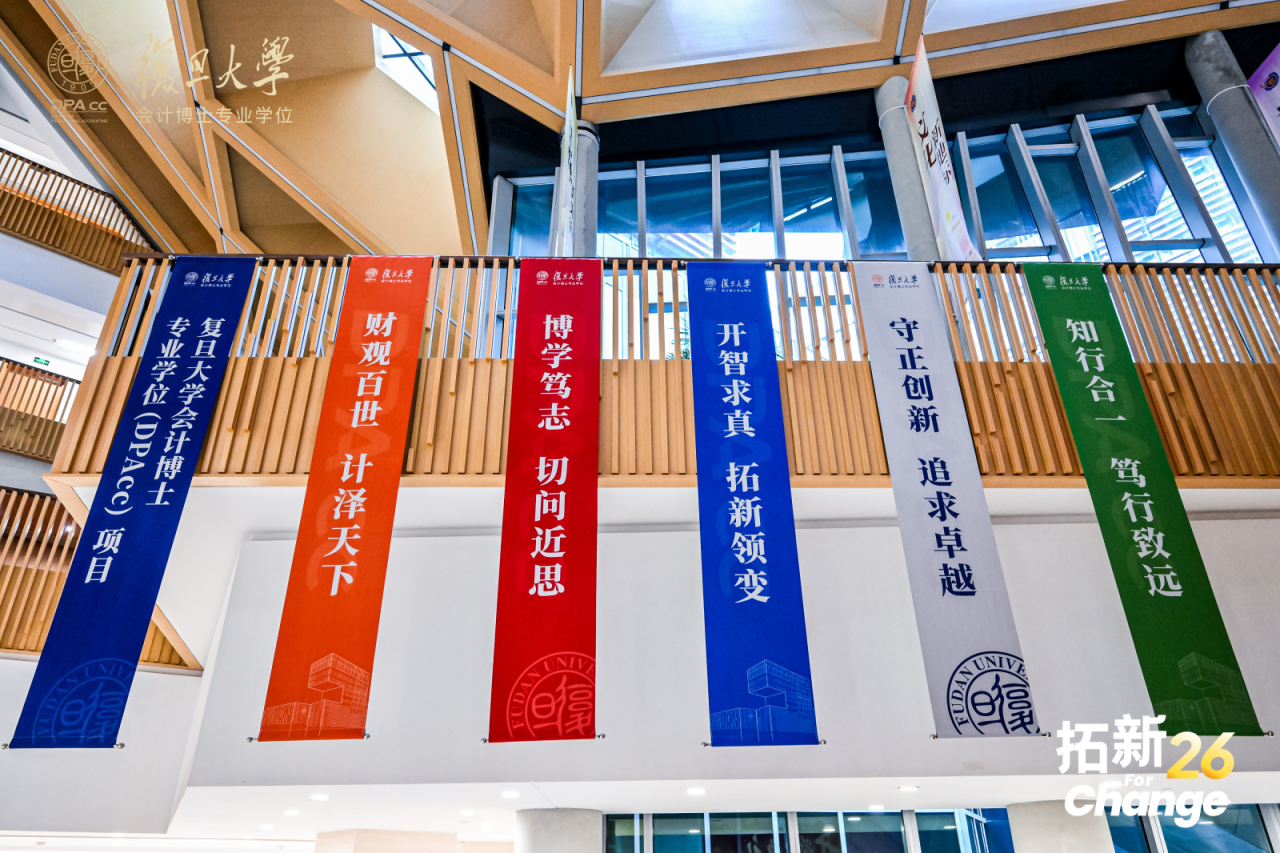
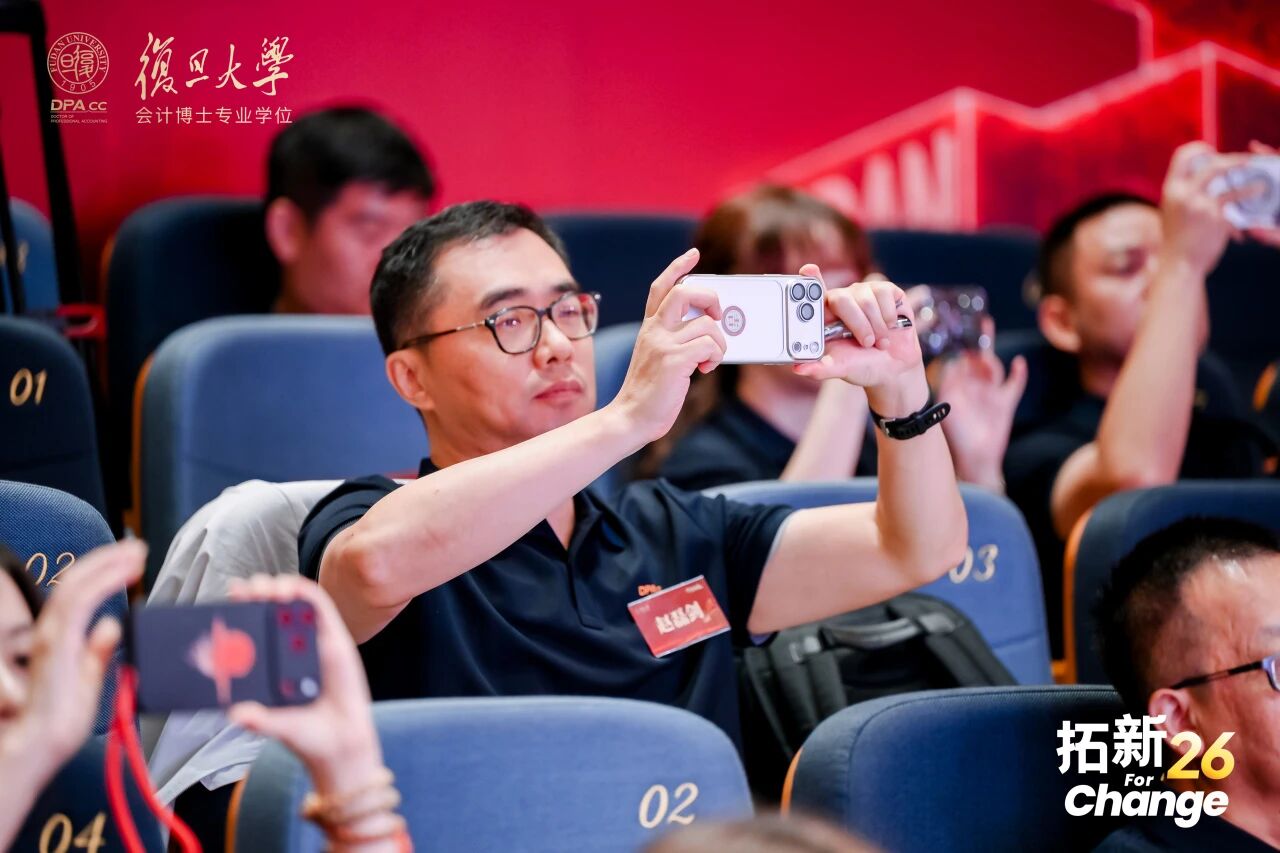
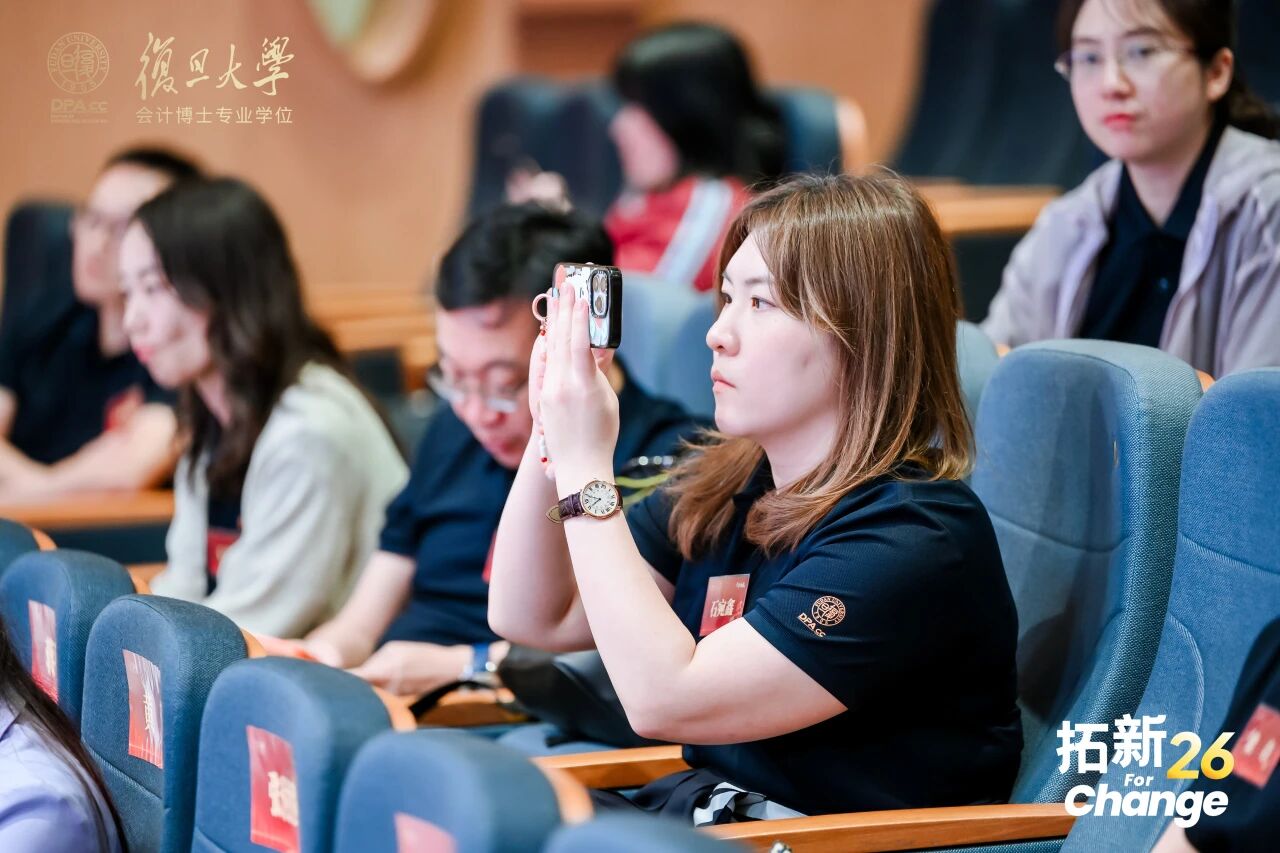
Messages from Faculty and University Leaders: Responding to a Changing World with New Knowledge
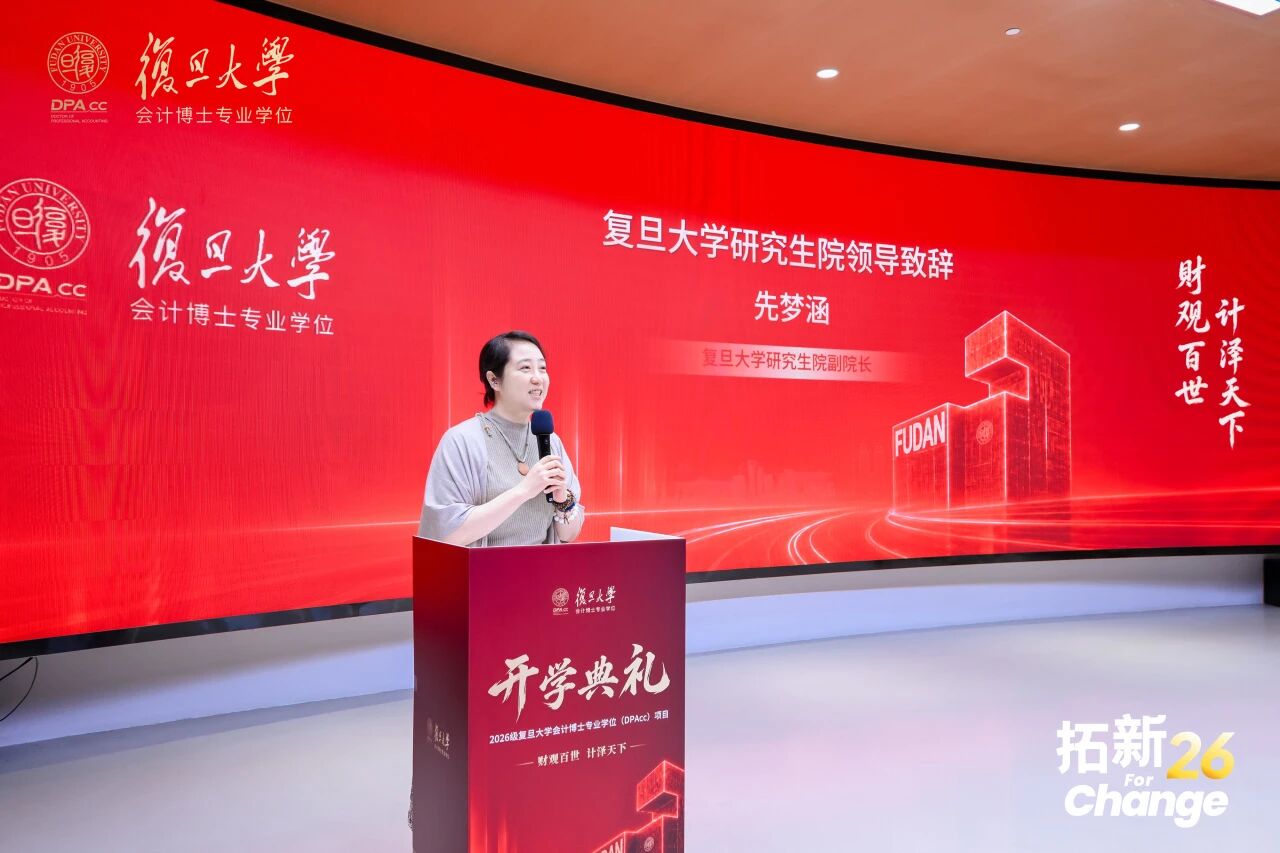
Menghan Xian, Associate Dean of the Graduate School at Fudan University, delivered remarks.
Associate Dean Xian noted that China's economy and society are developing rapidly as digitalization and artificial intelligence transform industries in depth. As a cornerstone of economic development, the accounting profession urgently needs high-level leaders with long-term strategic vision, a global outlook, and interdisciplinary capabilities.
The Ministry of Education formally approved Fudan University's Doctor of Professional Accounting degree authorization in September 2025. The enrollment of the first cohort marks the program's transition from planning and development to talent cultivation. It is both an important achievement in the development of Fudan University's graduate education system and a concrete effort to respond to national strategies and economic and social needs while exploring new models for cultivating high-level professionals.
She encouraged students to make full use of Fudan's outstanding teaching platform, high-quality faculty resources, and rich academic environment; to devote themselves to study and deepen their professional expertise; and to adapt proactively to industry transformation by strengthening their foundations, broadening their international perspectives, and developing well-rounded capabilities.
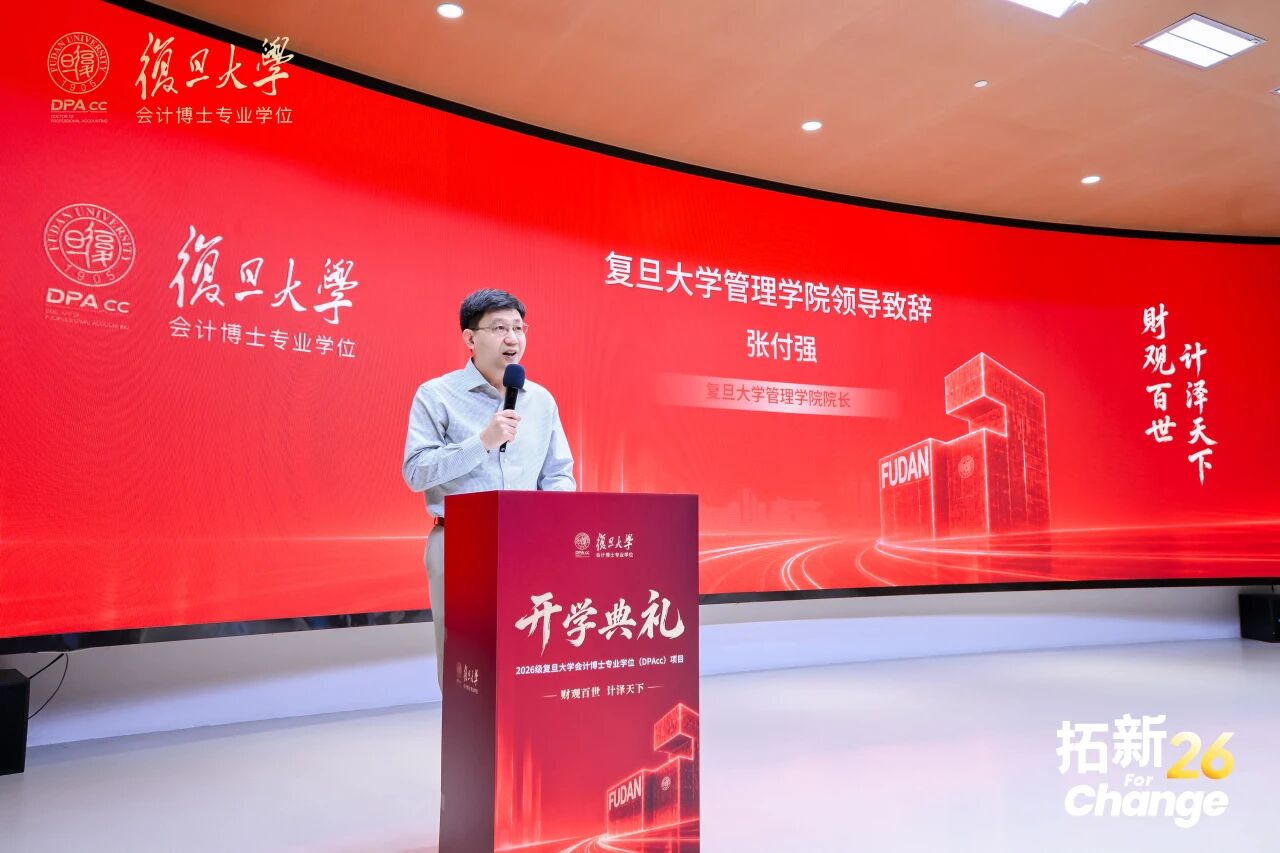
Professor Fuqiang Zhang, Dean and Li Dasan Chair Professor of Fudan University School of Management, delivered remarks.
Dean Zhang said that, as the School's first professional doctoral degree program, DPAcc carries the important mission of advancing high-level professional degree education, cultivating leaders in accounting, and serving the high-quality development of Chinese enterprises. In the AI era, Fudan SoM is advancing its AI, Sci-Tech Innovation, and internationalization strategies to lead the development of new business education. DPAcc represents an important application of these three strategies to the cultivation of high-level accounting professionals.
Dean Zhang emphasized that accounting has never been merely about numbers and financial statements. It concerns how trust is established, responsibilities are fulfilled, and resources are allocated, as well as how enterprises balance current performance with long-term development. DPAcc education must not only strengthen the capacity to solve complex problems, but also foster a strong awareness of business ethics, social responsibility, and public value. The goal is to develop accounting leaders who combine professional judgment, strategic foresight, leadership, and humanistic concern.
He added that, as the inaugural cohort, the students were not simply joining a program; they would help shape it together with the School. How society comes to understand Fudan DPAcc will depend largely on the questions they raise, the research they complete, and the value they create for enterprises and industries. He encouraged them to remain curious about new knowledge, sensitive to real problems, and committed to long-term value, drawing insight from peer exchange and developing new understanding through the constant interplay between theory and practice.
Four years from now, he said, students should leave Fudan with more than a doctoral degree: they should also carry with them scientific methods for understanding complex problems, the capacity for continuous learning and self-renewal, and a sense of responsibility for advancing enterprises and transforming industries. Guided by the philosophy of "Enlightening for Truth, Pioneering for Change," they should remain rooted in China while looking to the world, respond to change with new knowledge, address difficult problems through research, create value through professional expertise, and jointly write a new chapter in professional doctoral education at Fudan SoM.
Student Remarks: Real-World Practice Poses the Questions; Scholarship Provides the Answers
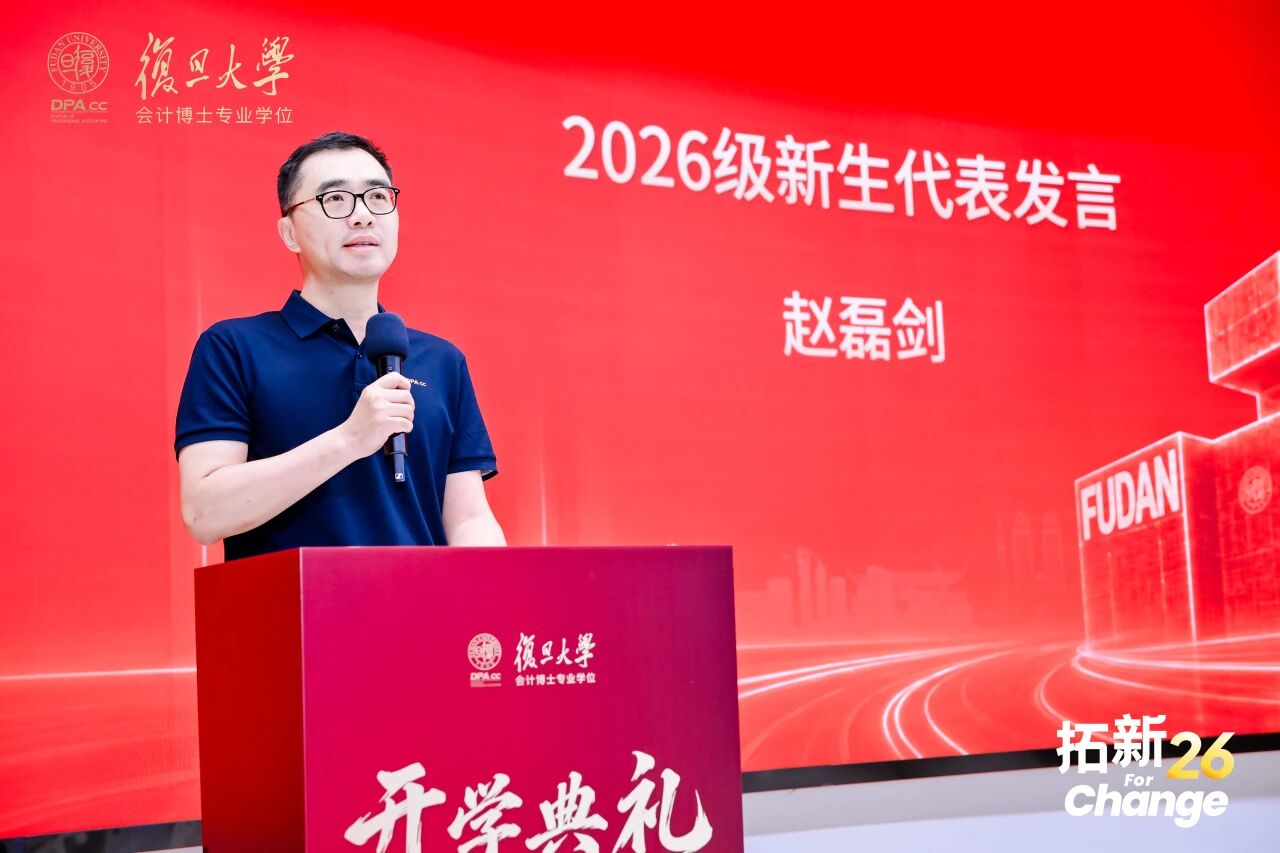
Leijian Zhao, a student representative of the inaugural 2026 Fudan DPAcc cohort, delivered remarks.
Zhao said that the inaugural DPAcc students are both pioneers of the program and respondents to the challenges of their time. Unlike a traditional academic doctorate, DPAcc is grounded in real problems from the Chinese context and creates a two-way link between theory and practice. It provides rigorous academic training while valuing the extensive industry experience each student brings, enabling students to bring authentic industry problems into the classroom and use academic tools to unpack complex real-world challenges.
At this new starting point, Zhao shared three commitments with his fellow students. First, they should approach scholarship with humility and respect. Whatever experience and achievements they may have accumulated in industry, they enter Fudan as students seeking knowledge. They should set aside habitual empiricism, learn humbly from faculty members, refine their research methods, and strengthen their foundations in accounting and finance theory.
Second, they should remain grounded in practice and unite knowledge with action. DPAcc derives its vitality from its practice orientation. Students should conduct research on real problems from their work, answer the School's call to write their research on the land of China, avoid scholarship detached from reality, and apply classroom learning to industry practice - allowing practice to pose the questions and scholarship to provide the answers.
Third, they should serve the country and respond to the issues of the times. Amid the development of new quality productive forces, accounting is not merely a professional tool within the industry; it is also an important force supporting the real economy and technological innovation. The students aspire to contribute to the high-quality development of Chinese enterprises through the professional perspective of doctoral-level accounting.
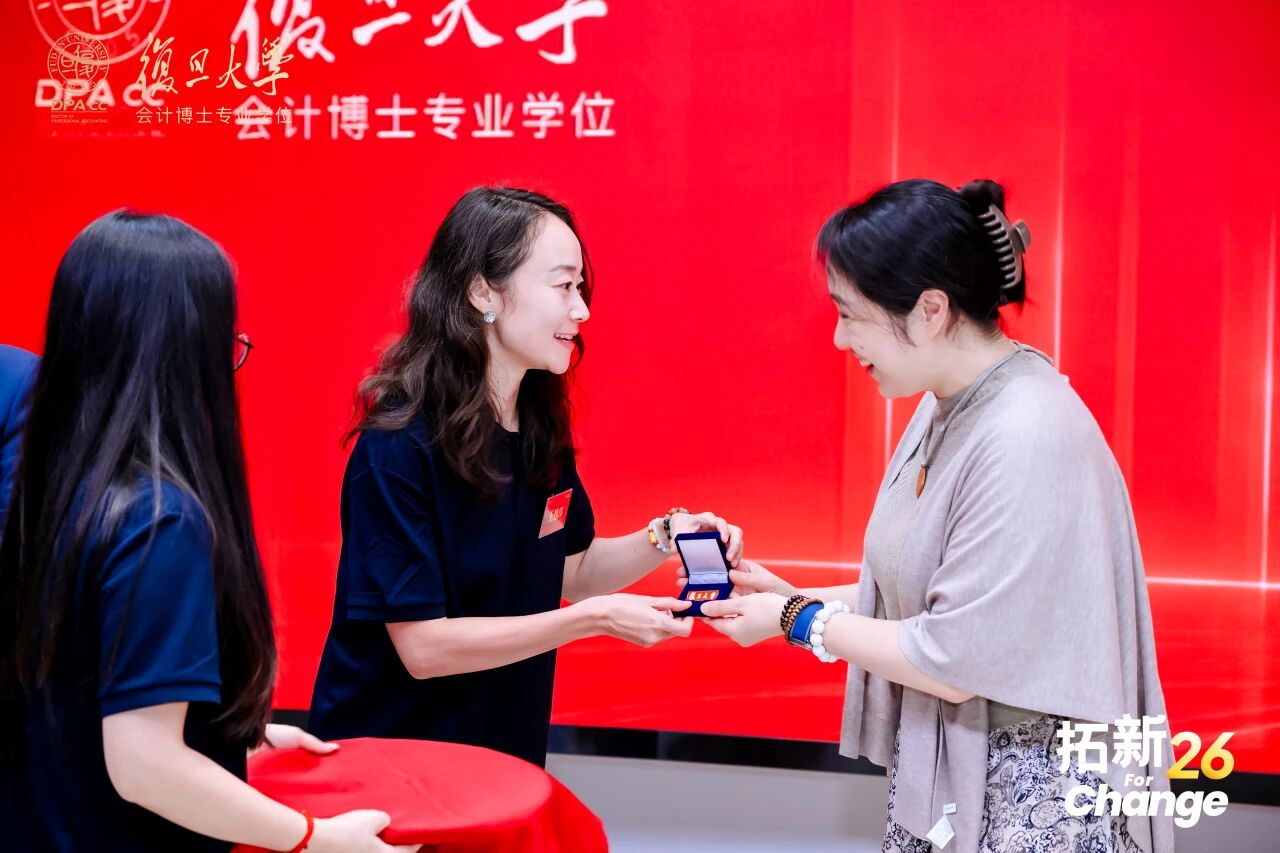
Vice Dean Menghan Xian of the Graduate School at Fudan University presented Fudan University badges to student representatives.
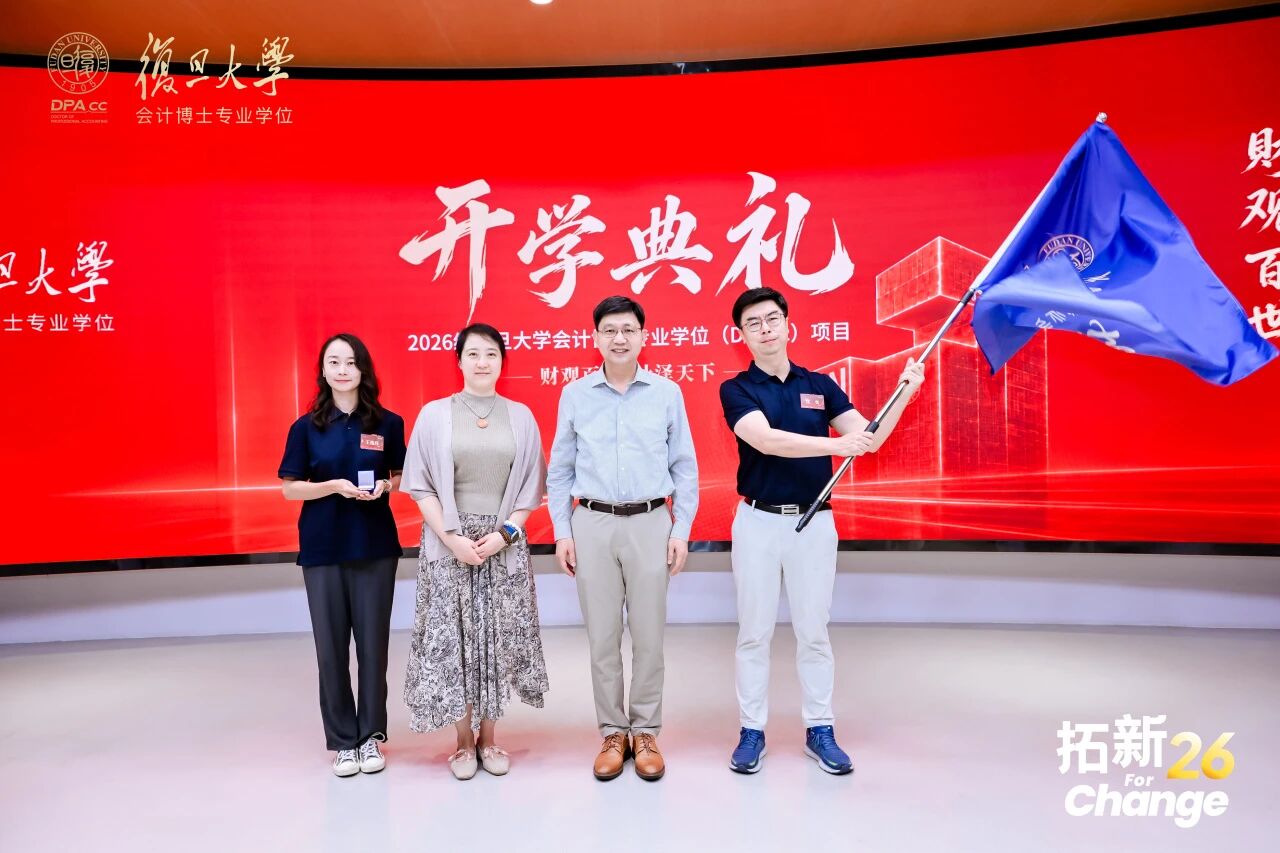
Dean Fuqiang Zhang of Fudan University School of Management presented the program flag to student representatives.
The First Class: Turning Real Business Problems into Genuine Academic Contributions
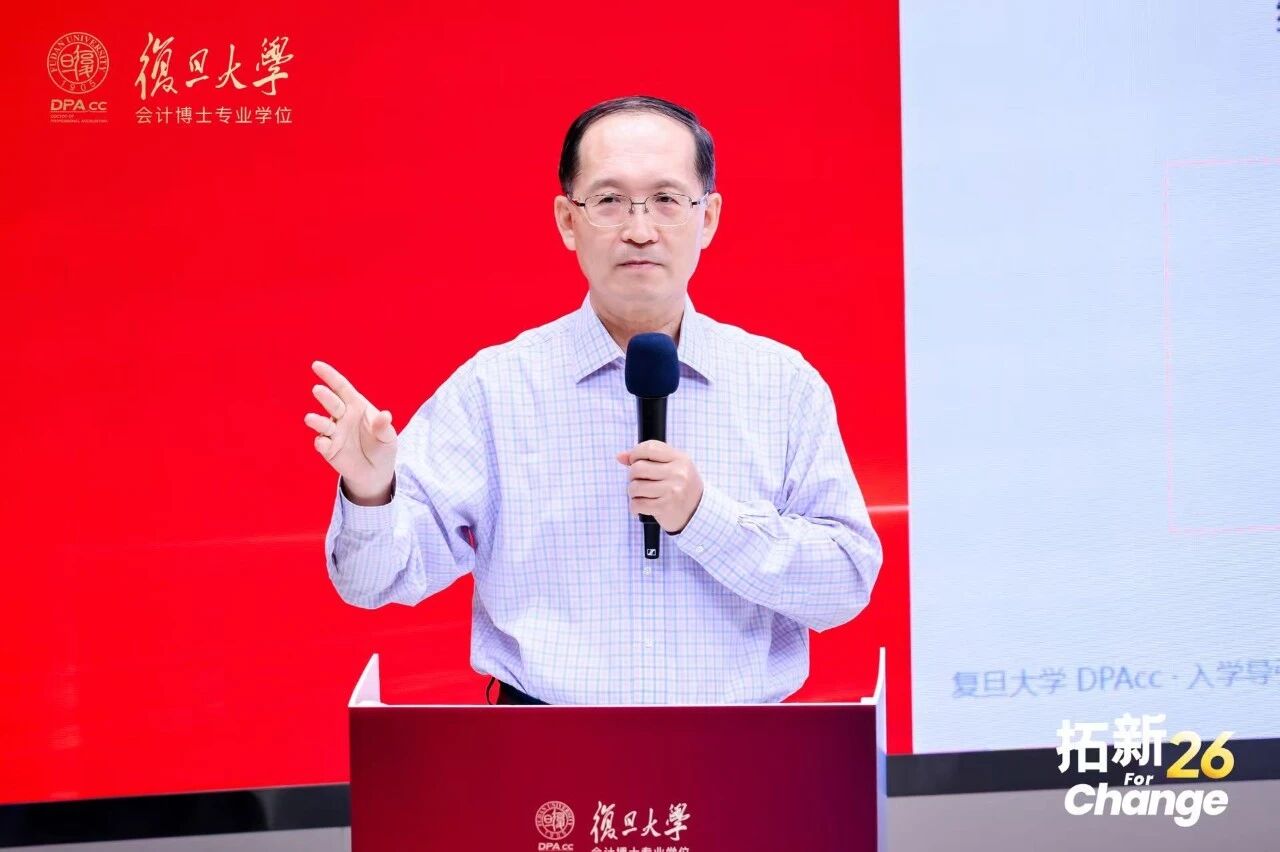
Professor Changjiang Lv, Vice Dean of Fudan University School of Management, Academic Director of the Fudan University DPAcc Program, and faculty member in the Department of Accounting, delivered an orientation lecture titled "A Guide to DPAcc Study and Research."
Designed to meet major national strategic needs and the demands of economic and social development, Fudan DPAcc aims to cultivate high-level, practice-oriented accounting leaders with solid foundations in accounting, finance, and management theory, outstanding practical capabilities, and the ability to solve problems innovatively.
DPAcc is neither an extension of EMBA nor a simplified PhD. Its distinctive value lies in transforming real problems from business practice into new knowledge with theoretical substance. Students' frontline business experience and practical insight constitute a major strength, but practical experience is not equivalent to academic achievement, nor is industry knowledge the same as theoretical innovation. Through systematic academic training, students must distill fragmented practical issues into researchable questions, organize them rigorously, and test them empirically using professional research methods. The ultimate goal is to produce high-quality research that combines theoretical originality, academic contribution, and practical industry value, thereby transforming experience into academic and industry value.
The program follows a rigorous, phased training pathway. Its curriculum covers three areas: Financial Strategy Planning and Control, Sci-Tech Innovation and Capital Operations, and Digital-Intelligent Accounting and Finance. Research-methods training runs throughout the program and constitutes a core educational module. Every course follows the central logic of transforming practical problems into academic research, guiding students to begin with management practice, formulate research questions, develop research frameworks, strengthen research systems, and build core academic capabilities.
Practical activities and workshops are also central to the program. Corporate field research, case workshops, thematic seminars, and academic presentations connect classroom knowledge with business problems. Students bring real corporate challenges into the classroom and refine their research topics through the complementary support of targeted faculty guidance and interdisciplinary peer discussion, ensuring that their work remains rooted in industry practice, responsive to industry needs, and both practically meaningful and academically rigorous.
The program seeks to develop students not only into experienced practitioners with deep industry expertise, but also into research-oriented interdisciplinary professionals who can distill industry patterns, generate academic knowledge, and advance their fields. Identifying scientific research questions from genuine industry pain points and producing outstanding scholarship capable of withstanding rigorous scrutiny and the test of time reflect both the educational purpose of Fudan DPAcc and the School's long-term mission to strengthen high-level accounting education and enable high-quality industry development.
Faculty Insights: Numbers in Sight, the World in Mind
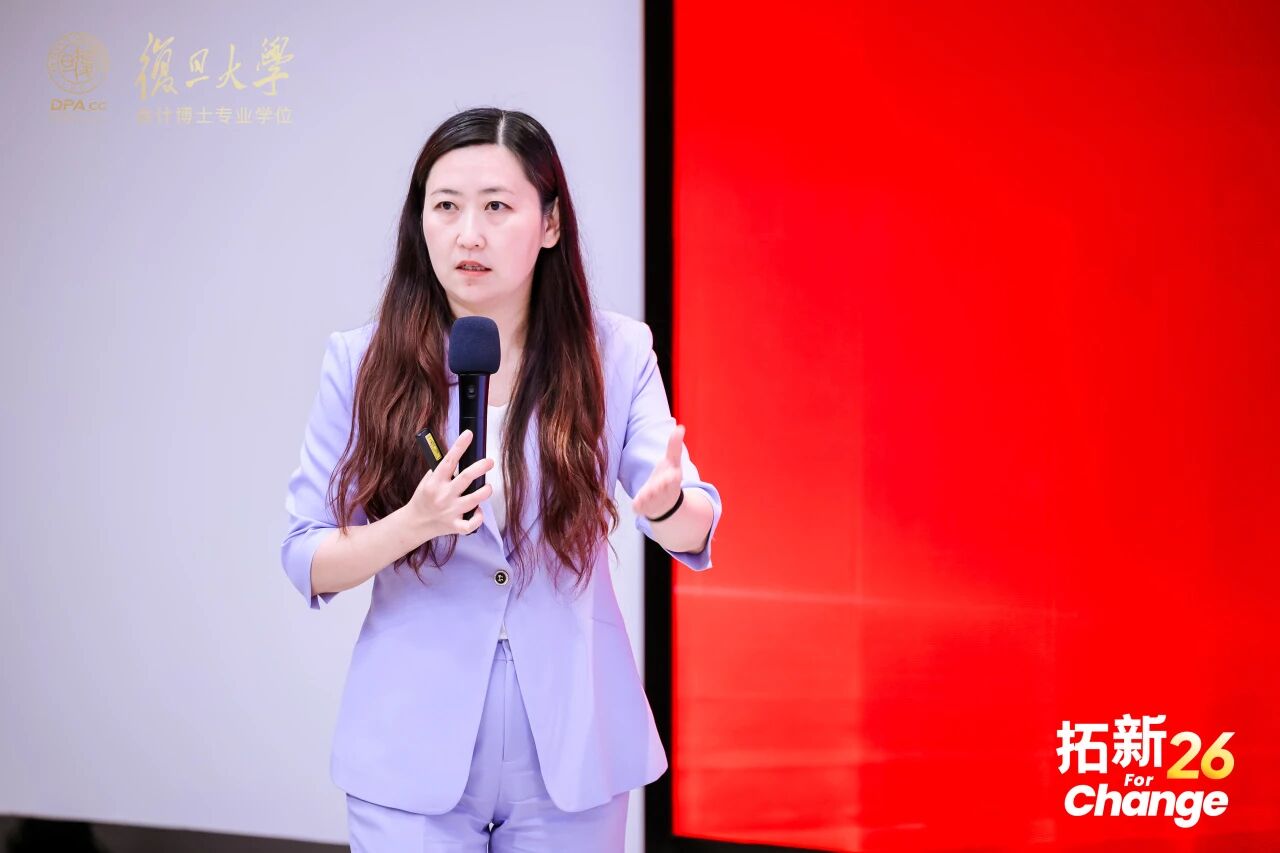
Professor Rong Huang, Assistant Dean and Li Dak Sum Chair Professor in the Department of Accounting at Fudan University School of Management, delivered a presentation titled "What Is the Role of Accounting in the Digital-Intelligence Era?"
Large models have permeated industries across the economy, and data have become a key national factor of production. Underlying technologies are fundamentally reshaping how accounting information is produced. AI can take over procedural work such as bookkeeping, reconciliation, and standardized report generation, but professional judgment, business-model interpretation, risk anticipation, and communication with decision-makers remain firmly in human hands. The more powerful the tools become, the scarcer independent human judgment will be. AI can generate countless answers, but asking the right questions and evaluating those answers will always remain essential.
In practice, most CFOs plan to increase investment in AI, yet few organizations have achieved implementation at scale. Blindly accumulating tools without redesigning business processes, weak data foundations, a lack of mechanisms for replication and scaling, and talent transformation that lags behind technological change are all major obstacles. At its core, Fudan DPAcc seeks to elevate knowledge by refining scattered practical experience into structured understanding.
Doctoral study cannot be confined to accounting alone. Students must also understand monetary credit, industrial finance, and institutional incentives, cross the boundaries of economics, data science, behavioral science, and other disciplines, and identify genuinely valuable research questions at their intersections. AI should be used effectively for mechanical tasks such as literature organization, data cleaning, and language polishing, but research-topic selection, research design, and academic insight must remain firmly in the hands of researchers.
Students were encouraged to write their research on the land of China and derive research questions from real business settings. Capital-market reform, state-owned enterprise governance, digital-intelligent transformation in finance, and ESG value creation all provide valuable research material.
Doctoral study involves three important transitions: from knowing how to do something to understanding why; from passively answering questions to actively defining them; and from individual industry experience to knowledge that can be shared publicly. A degree marks the end of one stage, but cognitive development remains a lifelong process.
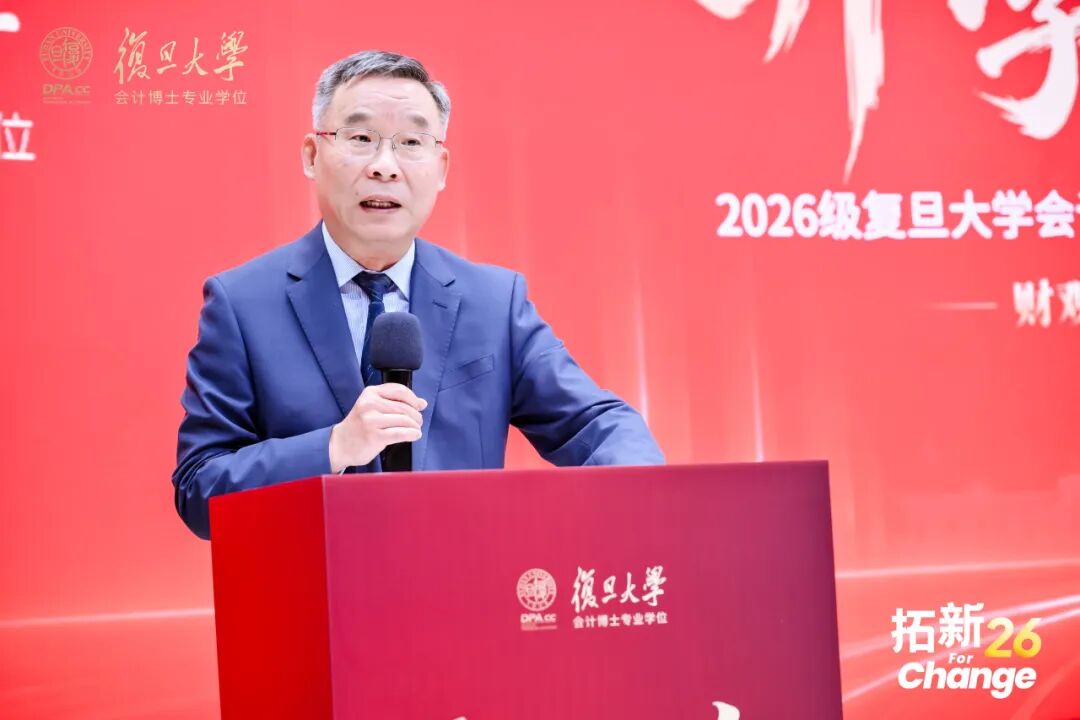
The opening ceremony was hosted by Associate Professor Hetong Lou of the Department of Accounting at Fudan University School of Management, Executive Director of the Fudan University MPAcc and DPAcc professional degree programs and Academic Director of the MPAcc Program.
Beginning on September 12, Professor Yu Shao, Chief Economist of the Sci-Tech Innovation Management Research Center at Fudan SoM and a faculty member in the Fudan DPAcc Program, will lead students through a two-day course titled "Traversing the Ultimate Bubble and Seeking the New Quality 50." The course will examine pivotal moments in major-power competition, map the evolution of a potential ultimate AI bubble, and help students understand the challenges and opportunities arising from changes unseen in a century.
Seek genuine knowledge and study real problems; remain true to the original mission and create genuine value. May every student gain knowledge, friendship, and personal growth, uniting knowledge with action and moving forward with perseverance.